FINANCE
Veterans Guide to Small Business Loans and Funding
Starting a business after military service can be an exciting way to build financial independence...
Learn More

 May 19, 2026
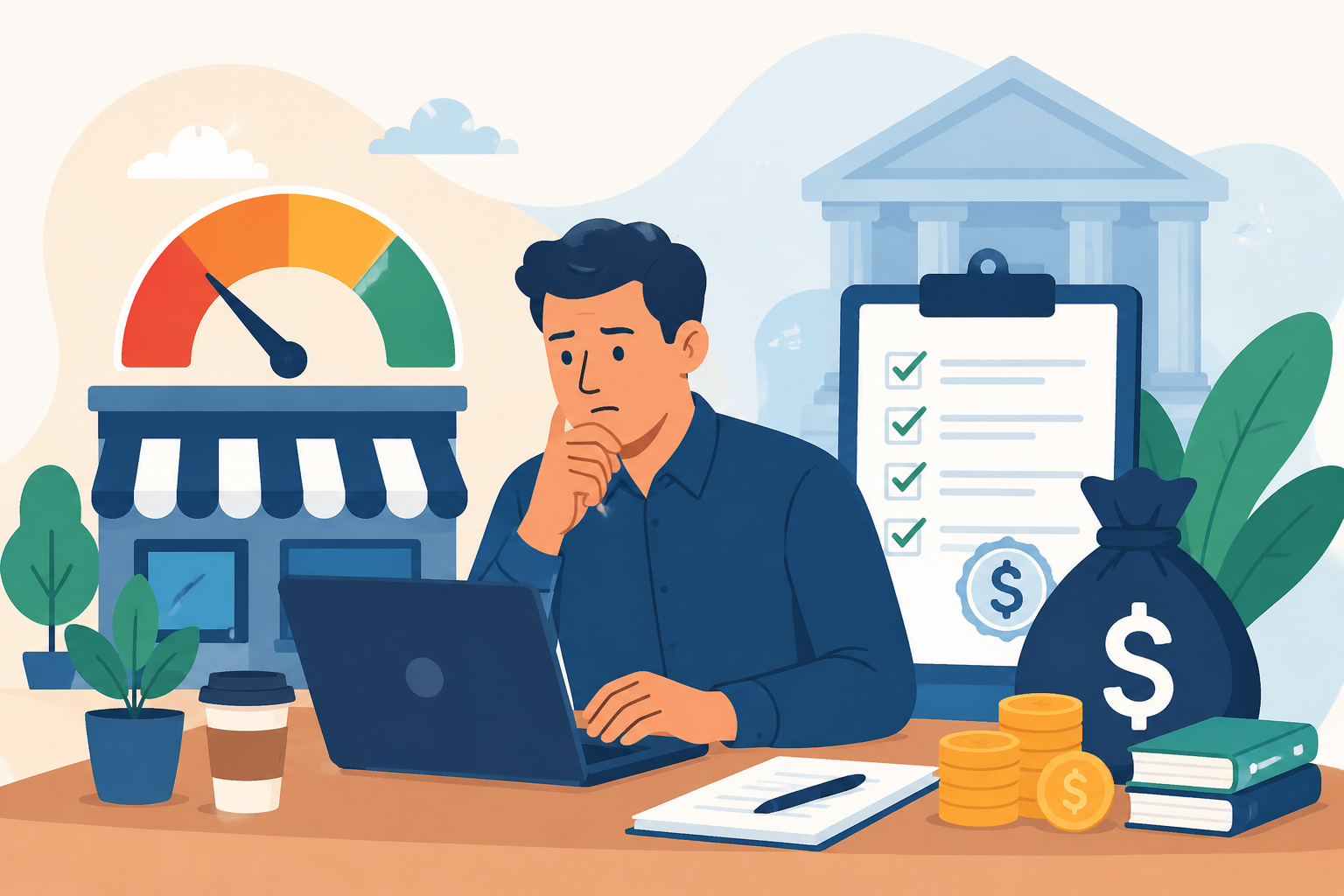
Starting or growing a business is challenging enough without credit issues getting in the way. Many entrepreneurs assume that a low credit score automatically disqualifies them from financing, but that’s not always true. While traditional lenders may have stricter approval standards, there are still several ways to secure funding and keep your business moving forward.
If you’re wondering how to get a small business loan with bad credit, the key is understanding your options, improving your financial profile, and applying strategically. Even with past credit challenges, many lenders and funding programs still consider factors like cash flow, business performance, and future growth potential.
Building stronger financial habits also matters. Learning how to improve your business credit profile can increase your approval chances over time and help you qualify for better funding terms.
When lenders review loan applications, they want to evaluate risk. Your personal and business credit scores help them determine how responsibly you manage debt and payments.
A low score does not automatically mean rejection, but it may affect:
Loan approval chances
Interest rates
Borrowing limits
Repayment terms
Required collateral
Traditional banks usually prefer applicants with strong credit histories. However, alternative lenders, online financing companies, and nonprofit organizations often take a more flexible approach.
Many lenders also review business revenue, time in operation, monthly cash flow, and overall financial stability in addition to your credit score.
Most lenders consider a credit score below 630 as “bad” or below average. However, approval standards vary depending on the lender and financing type.
| Credit Score | Financing Outlook |
|---|---|
| 720+ | Excellent approval odds |
| 680–719 | Good approval odds |
| 630–679 | Fair approval potential |
| Below 630 | Limited but possible options |
Even if your score falls below the preferred range, there are still financing opportunities available.
Not every financing solution requires perfect credit. Some programs are specifically designed to help small business owners who need flexible funding.
Online lenders are often more flexible than traditional banks. Many focus on business revenue and cash flow instead of relying heavily on credit scores.
Benefits include:
Faster approval times
Easier application process
Flexible qualification requirements
Funding within days
The tradeoff is that interest rates may be higher compared to traditional bank loans.
A merchant cash advance gives businesses upfront capital in exchange for a percentage of future sales.
This option is commonly used by businesses with:
Consistent card sales
Retail operations
Restaurants
Service businesses
While approval is often easier, repayment costs can become expensive if not managed carefully.
A business line of credit provides flexible access to funds whenever needed.
Instead of receiving one lump sum, you borrow only what you use. This can help businesses manage:
Payroll
Inventory
Emergency expenses
Seasonal fluctuations
Some lenders offer smaller credit lines even for businesses with lower credit scores.
The Small Business Administration (SBA) partners with nonprofit lenders to provide smaller loans to startups and underserved businesses.
SBA microloans may be easier to qualify for than traditional business loans, especially if you have:
A strong business plan
Stable income
Clear repayment strategy
These loans are commonly used for:
Equipment purchases
Inventory
Working capital
Startup expenses
Crowdfunding is another option for raising capital without relying entirely on credit history.
Platforms like Kickstarter and Indiegogo allow business owners to collect funding directly from supporters in exchange for products, rewards, or early access.
This approach works especially well for:
Innovative products
Creative businesses
Consumer-focused startups
Community-driven projects
The challenge is building a compelling campaign that attracts attention and trust.
Getting approved with bad credit requires preparation. Lenders want reassurance that your business can handle repayment responsibilities.
Here are several ways to strengthen your application.
One of the quickest ways to improve your score is reducing how much available credit you use.
High credit utilization signals financial strain to lenders. Keeping balances low demonstrates responsible borrowing habits.
Consistent, on-time payments help rebuild both personal and business credit profiles.
Even small improvements over several months can positively impact your financing opportunities.
Credit report mistakes happen more often than people realize.
Check your reports regularly for:
Incorrect balances
Duplicate accounts
Fraudulent activity
Payment reporting errors
Disputing inaccuracies can potentially increase your score faster than expected.
To better understand long-term financial habits that lenders value. You can also review resources about how to maintain a good credit score in good standing
Many small business owners initially mix personal and business expenses, which can create financial confusion.
Opening separate business accounts helps establish:
Better bookkeeping
Stronger financial credibility
Cleaner cash flow records
Improved lender confidence
A strong business plan can help offset credit concerns.
Include details such as:
Revenue projections
Business goals
Market analysis
Repayment strategy
Operational plans
Lenders are more likely to approve applicants who demonstrate financial planning and business direction.
Applying for financing can feel overwhelming, especially for newer business owners.
Experienced mentors can help you:
Identify suitable funding options
Review loan applications
Improve financial strategies
Avoid common mistakes
Organizations like SCORE and local business development centers often provide free mentorship and financial guidance.
Professional guidance may also help determine whether a traditional loan, line of credit, or alternative funding option is the best fit for your situation.
Some organizations offer grants, education, networking, and funding opportunities for small business owners.
One example is the National Association for the Self-Employed (NASE), which provides growth grants and business support resources.
Membership organizations may offer:
Funding opportunities
Business coaching
Tax guidance
Financial education
Marketing support
While grants are often competitive, they can still provide valuable supplemental funding.
Business owners with bad credit sometimes make avoidable mistakes that hurt approval chances further.
Multiple hard credit inquiries within a short period may lower your score further.
Research lenders carefully before submitting applications.
Taking on excessive debt creates unnecessary repayment pressure.
Only borrow what your business realistically needs and can repay comfortably.
Strong revenue alone does not guarantee loan approval.
Lenders want to see healthy cash flow management and consistent financial stability.
Missing documents or inconsistent information can delay approvals or trigger rejections.
Always prepare:
Tax returns
Bank statements
Profit and loss reports
Business licenses
Financial projections
If traditional financing remains difficult, there are still other ways to support business growth.
Equipment financing uses purchased equipment as collateral, reducing lender risk.
This option is commonly available even for lower-credit applicants.
Businesses with unpaid invoices can use invoice financing to access immediate working capital.
This helps improve cash flow without waiting for customer payments.
Peer-to-peer platforms connect borrowers directly with individual investors.
Approval requirements are sometimes more flexible than bank loans.
Some business credit cards are designed specifically for fair-credit applicants.
Used responsibly, they can also help rebuild your business credit profile over time.
Improving credit is a gradual process, but progress can happen faster than many business owners expect.
Positive habits like:
Paying on time
Lowering balances
Monitoring reports
Reducing debt
can begin improving scores within several months.
Long-term consistency is what matters most.
The stronger your financial profile becomes, the more financing opportunities you’ll unlock in the future.
Timing matters when applying for financing.
You may improve approval odds if you apply after:
Increasing monthly revenue
Reducing outstanding debt
Improving credit scores
Establishing longer business history
Building consistent cash flow
Patience and preparation often lead to better loan terms and approval success.
Getting a small business loan with bad credit may feel difficult, but it is far from impossible. Today’s lending landscape includes more flexible financing options than ever before, especially for small businesses with strong revenue potential and responsible financial management.
The key is approaching financing strategically. Improve your credit where possible, organize your financial records, and explore lenders that work specifically with business owners facing credit challenges.
Over time, consistent financial habits can open the door to larger funding opportunities and more favorable borrowing terms.
Businesses that stay proactive, patient, and financially organized are often the ones that successfully secure the funding they need to grow.
Yes, some online lenders and alternative financing companies may approve applicants with credit scores around 500. Approval usually depends on revenue, cash flow, and overall business performance.
Many lenders review both personal and business credit scores, especially for newer businesses without an established credit history.
Merchant cash advances, invoice financing, and some online business loans are often easier to qualify for compared to traditional bank loans.
Pay bills on time, reduce credit utilization, dispute report errors, and avoid opening unnecessary new accounts.
Some SBA microloan programs may still be available to borrowers with lower credit scores if they demonstrate strong business potential and repayment ability.
Crowdfunding can work well for businesses with strong product ideas or community support because approval is not based on traditional credit checks.
Need financial assistance? JNA Financing can help!


How to Sell Business Internet Services to Small Businesses
Oct 23, 2026
Telecom Sales Call Quality Assurance: A Practical Guide
Oct 22, 2026
Telecom Dealer KPIs: Metrics That Drive Better Results
Oct 21, 2026

Telecom Sales Scripts That Help Turn Leads Into Sales
Oct 20, 2026
Telecom Lead Management: Follow Up Without Losing Sales
Oct 19, 2026

12
Oct, 2026
FINANCE
Starting a business after military service can be an exciting way to build financial independence...
8
Oct, 2026
BUSINESS LOAN
Choosing the best location for your business can have a major impact on visibility, customer...
29
Sep, 2026
FINANCE
If you are thinking about applying for a personal or business loan, it is important...