FINANCE
Veterans Guide to Small Business Loans and Funding
Starting a business after military service can be an exciting way to build financial independence...
Learn More

 July 7, 2026
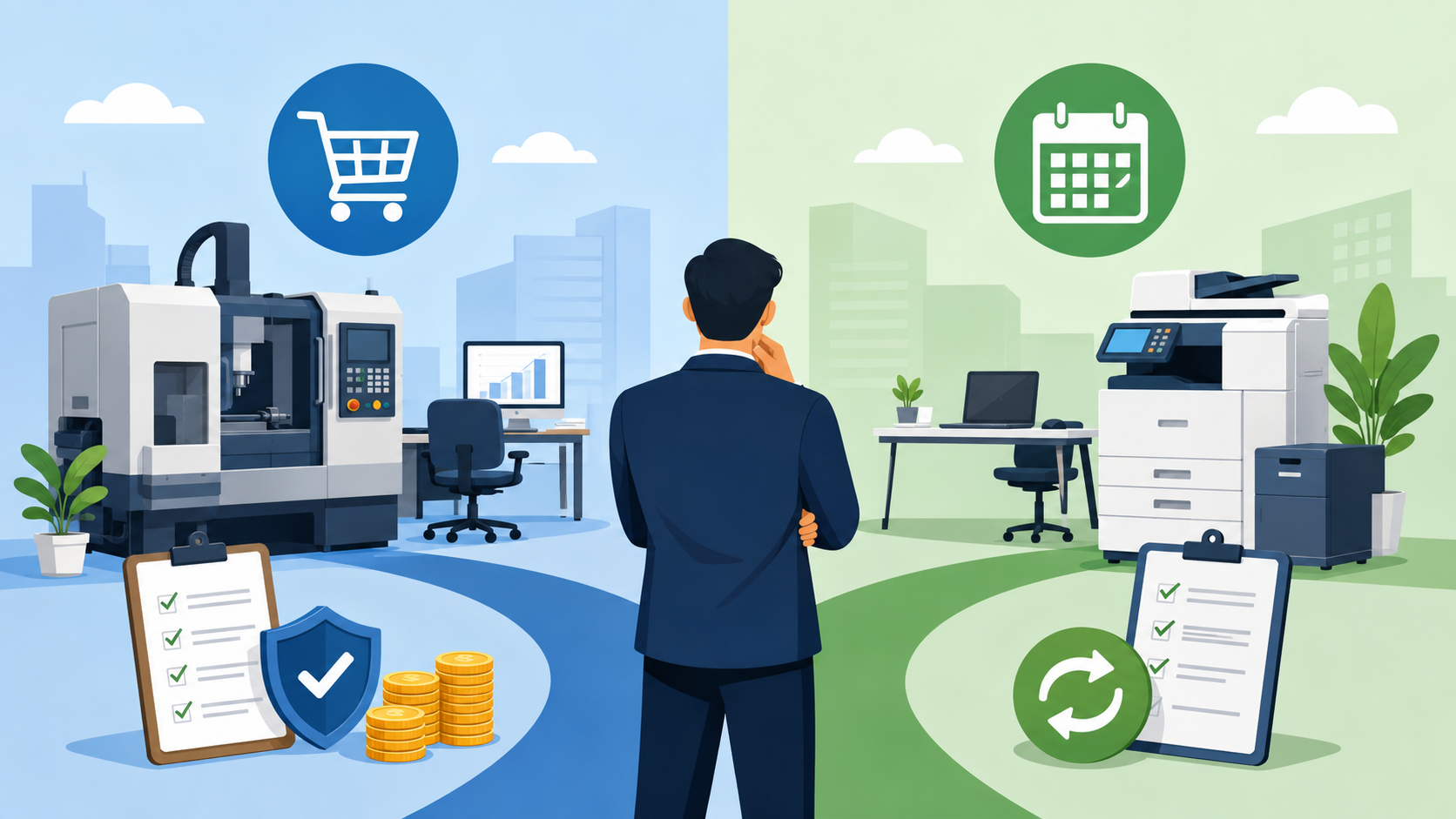
Choosing the right equipment is one of the biggest financial decisions a business owner can make. Whether you’re launching a startup, expanding your operations, or replacing outdated tools, deciding whether to buy or lease business equipment can have a lasting impact on your cash flow, profitability, and long-term growth.
While buying gives you full ownership and long-term value, leasing offers flexibility, lower upfront costs, and easier access to the latest technology. The best option depends on your budget, business goals, and how quickly the equipment is likely to become outdated.
In this guide, we’ll break down the advantages and disadvantages of buying versus leasing business equipment, explain the key differences, and help you determine which option makes the most financial sense for your business.
The decision to lease or buy business equipment is similar to choosing between leasing or purchasing a vehicle. Both options allow you to use the equipment your business needs, but they differ significantly in terms of ownership, cost, flexibility, and long-term financial impact.
When you buy equipment, it becomes a business asset that belongs to your company. Leasing, on the other hand, allows you to rent the equipment for a fixed period while making scheduled monthly payments.
Understanding these differences will help you make a smarter investment that aligns with your company’s financial strategy.
Leasing allows your business to use equipment without purchasing it outright. Instead of making a large upfront investment, you pay a fixed monthly amount for the duration of the lease agreement.
Depending on the leasing company, you may be required to make a small down payment before the lease begins. The agreement outlines the payment schedule, lease length, maintenance responsibilities, and what happens once the lease expires.
For example, if you lease commercial printing equipment for five years, you’ll have full access to it throughout that period without owning it. At the end of the lease, you may have several options depending on your contract:
For businesses looking to preserve working capital, leasing can be an attractive solution. Instead of tying up cash in expensive machinery, you can invest those funds into hiring employees, marketing, inventory, or business expansion.
Maintaining healthy cash flow is especially important for growing businesses, which is why many entrepreneurs also explore strategies for improving small business cash flow before making major equipment investments.
Leasing is often preferred by businesses that need flexibility or frequently upgrade their equipment.
Some of the biggest advantages include:
Leasing is especially beneficial for industries where technology changes quickly, such as healthcare, construction, manufacturing, and information technology.
Buying equipment means your business owns the asset once the purchase is complete. You can pay in cash or finance the purchase through a business loan or equipment financing program.
Although purchasing usually requires a larger initial investment, ownership provides long-term financial benefits. Once the equipment has been paid off, there are no recurring lease payments, allowing you to continue using the equipment for years without additional financing costs.
The equipment also becomes part of your company’s assets, which can strengthen your balance sheet and potentially increase the overall value of your business.
However, purchasing equipment can significantly reduce available cash if paid upfront. If financing is required, you’ll need to qualify for a loan and make monthly payments until the balance is paid.
If you’re considering financing instead of paying cash, understanding how to get a business loan despite past financial challenges can help you secure the funding needed to move forward.
Ownership provides more freedom and long-term value than leasing.
Some key advantages include:
For equipment that will remain useful for many years, purchasing often delivers better long-term returns than leasing.
Both options have clear advantages, but neither is universally better. The right decision depends on your business priorities, financial position, and future plans.
Leasing can help businesses stay flexible while protecting cash flow.
Some of the biggest benefits include:
Businesses that prioritize growth often prefer leasing because it keeps more working capital available for daily operations.
Buying is typically the better choice for equipment you’ll rely on for many years.
Key advantages include:
If your business plans to use equipment for a decade or more, ownership often produces greater financial value over time.
Business owners preparing for a major equipment purchase should also evaluate how to determine the right amount of business financing you actually need before committing to a loan or financing agreement.
While leasing offers flexibility, it isn’t without disadvantages.
At the end of the lease, the equipment usually belongs to the leasing company unless your agreement includes a purchase option.
Although monthly payments are lower, leasing for several years may cost more than purchasing the equipment outright.
Most leases include terms regarding usage, maintenance, and early termination. Ending a lease early may result in penalties or additional fees.
Unlike purchased equipment, leased equipment generally cannot be depreciated as a business asset, although lease payments may still qualify for certain tax deductions depending on your circumstances.
Here’s Part 2 of the fully optimized blog, continuing seamlessly from Part 1.
Owning equipment offers long-term value, but it also comes with additional responsibilities and upfront costs. Before deciding to purchase, it’s important to understand the potential drawbacks.
Buying equipment often requires a significant amount of capital. Whether you’re paying cash or financing the purchase, the initial investment can reduce your available working capital and limit your ability to cover other business expenses.
Once you own the equipment, all maintenance, repairs, and replacement costs become your responsibility. Depending on the type of equipment, these expenses can add up over time and should be factored into your total cost of ownership.
Technology evolves quickly in many industries. Equipment that is cutting-edge today may become obsolete within a few years, requiring another substantial investment to stay competitive.
If you finance your equipment purchase, the loan appears as a liability on your balance sheet. This could affect your ability to qualify for additional financing in the future.
Every business has unique financial goals, operational needs, and growth plans. Asking the right questions before making a decision can help you choose the option that delivers the greatest long-term value.
One of the biggest factors is the expected lifespan of the equipment.
If you’ll rely on it for many years and it’s unlikely to become outdated, buying often provides better value. Since you’ll own the equipment, you can continue using it long after the financing is paid off.
On the other hand, if the equipment is likely to become obsolete within a few years—such as computers, servers, or specialized technology—leasing may be the smarter choice. It gives you the flexibility to upgrade without investing in equipment that quickly loses value.
Your current business goals should influence your decision.
If your focus is rapid growth, preserving cash is often more important than owning assets. Leasing keeps upfront costs low, allowing you to invest more capital into hiring employees, expanding inventory, launching marketing campaigns, or opening new locations.
If your goal is maximizing long-term profitability, purchasing may offer greater financial returns. Once the equipment is paid off, you eliminate recurring lease payments while continuing to benefit from the equipment for years.
Cash flow is one of the most important considerations when evaluating equipment financing.
Businesses with healthy reserves may find purchasing more cost-effective over time because it avoids ongoing lease expenses.
However, if cash flow is limited or unpredictable, leasing can reduce financial pressure by spreading costs into manageable monthly payments. This helps maintain liquidity for payroll, inventory, unexpected repairs, and other operational expenses.
If you’re exploring financing options to preserve working capital, understanding how inventory loans work for growing businesses can help you compare different funding solutions beyond equipment financing.
Ownership comes with ongoing responsibilities.
When you buy equipment, your business handles routine servicing, repairs, replacement parts, and unexpected breakdowns. These costs should always be included when calculating the true cost of ownership.
Many equipment lease agreements include maintenance services, reducing both operational downtime and surprise repair expenses. If minimizing maintenance responsibilities is important to your business, leasing may offer greater peace of mind.
It’s easy to focus on monthly payments, but looking at the complete financial picture is far more important.
Compare factors such as:
Evaluating the total cost of ownership helps ensure you’re making a decision based on long-term value rather than short-term affordability.
There isn’t a one-size-fits-all answer.
Leasing is often the better option if your business:
Buying may be the smarter investment if your business:
The best decision comes down to balancing your current financial position with your long-term business strategy.
Choosing whether to lease or buy business equipment is about more than comparing monthly payments. It’s a strategic financial decision that affects your company’s cash flow, operational flexibility, tax planning, and future growth.
Leasing provides flexibility, easier upgrades, and lower upfront costs, making it ideal for businesses focused on preserving capital or using rapidly evolving technology.
Buying, meanwhile, offers ownership, long-term savings, and the opportunity to build valuable business assets. For equipment with a long useful life, purchasing often delivers greater value over time.
Before making your decision, evaluate your budget, expected equipment lifespan, maintenance responsibilities, financing options, and growth goals. Taking a comprehensive approach will help ensure your investment supports your business both today and in the years ahead.
Neither option is universally better. Leasing is ideal for businesses that want lower upfront costs and flexibility, while buying is often more cost-effective for equipment that will be used for many years.
Yes. Many lease agreements include a buyout option, allowing you to purchase the equipment at the end of the lease term. Be sure to review your contract for specific terms and conditions.
In many cases, lease payments may qualify as deductible business expenses. However, tax rules vary depending on your location and business structure, so it’s always wise to consult a qualified tax professional.
Buying makes sense when the equipment has a long useful life, won’t become obsolete quickly, and your business has the financial capacity to make the investment.
Startups, growing businesses, and companies in technology-driven industries often benefit from leasing because it preserves cash flow while providing access to the latest equipment.

Telecom Lead Management: Follow Up Without Losing Sales
Oct 19, 2026
Franchise Law Basics: What Every Owner Should Know
Oct 16, 2026
How Cox Business Products Help Dealers Drive Growth
Oct 15, 2026
7 Reasons to Become a Vivint Authorized Reseller
Oct 14, 2026

Why Become an Internet Provider Dealer? 7 Key Benefits
Oct 13, 2026

12
Oct, 2026
FINANCE
Starting a business after military service can be an exciting way to build financial independence...
8
Oct, 2026
BUSINESS LOAN
Choosing the best location for your business can have a major impact on visibility, customer...
29
Sep, 2026
FINANCE
If you are thinking about applying for a personal or business loan, it is important...