DEALER
Telecom Lead Management: Follow Up Without Losing Sales
Telecom lead management is the process of organizing, qualifying, contacting, and following up with potential...
Learn More

 August 14, 2026
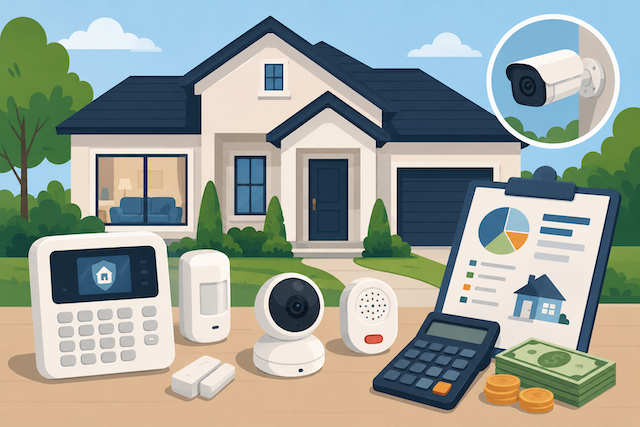
Home security system cost typically falls between $100 and $2,000 or more for equipment, plus monthly monitoring fees that generally range from around $10 to $65 or higher depending on the provider and plan tier — though these figures vary with market conditions, system type, and provider, and should be verified against current pricing before making any purchasing decision. Understanding exactly where that money goes — and what it buys — is the difference between a system that protects your home and one that drains your budget without delivering real value.
A home security system is a network of sensors, cameras, control panels, and monitoring services designed to detect unauthorized entry, fire, carbon monoxide, and environmental hazards in a residential property.
The components you pay for fall into four broad categories:
Every cost discussion starts here because buyers frequently compare price quotes that cover completely different combinations of these components. A $199 “starter system” from one provider and a $499 system from another may include entirely different hardware counts.
Equipment cost is the largest variable in total home security spend. It depends on whether you purchase outright or lease, and whether you buy through a DIY retailer or a professional dealer.
DIY systems are purchased at retail and self-installed. As of 2026, common entry-level bundles include:
| System Type | Typical Bundle Contents | Typical Price Range |
|---|---|---|
| Basic DIY starter kit | Hub, 2 door sensors, 1 motion sensor | $100–$200 |
| Mid-range DIY kit | Hub, 4–6 sensors, 1 camera, keypad | $200–$450 |
| Full DIY package | Hub, 8+ sensors, 2–3 cameras, siren | $400–$800 |
SimpliSafe, Ring Alarm, and Abode are frequently cited examples at these price points, though exact bundle contents and prices change regularly and should be verified against current retailer listings before purchase. Equipment is owned outright, and there is no financing required.
The practical limitation with DIY systems is scalability. Adding components a la carte — an extra outdoor camera, a smart lock, a smoke detector — pushes costs higher faster than most buyers anticipate.
Professionally installed systems through brands such as Vivint and Brinks typically include more advanced hardware and are often financed through the provider. Equipment financing terms vary by provider and may spread cost over a range of months — commonly cited windows include 24 to 60 months, though the available terms differ by brand and should be confirmed directly with the provider before signing — which lowers the entry barrier but increases total expenditure.
When hardware is bundled into a financing contract, annualised equipment costs can vary significantly depending on the system tier and financing terms — calculating this figure explicitly for any specific offer is worthwhile before committing to a provider.
Key cost considerations for professionally installed systems:
Installation cost depends almost entirely on whether you go DIY or professional.
DIY installation costs nothing beyond your time. Most modern systems use peel-and-stick magnetic sensors and rechargeable cameras that require no drilling, no wiring, and no technical knowledge.
Professional installation ranges from $0 to $200 or more for most standard setups, though complex installations can exceed that. Several major providers offer free professional installation as part of a promotional package — but “free” installation is typically recouped through higher monthly monitoring fees or a longer minimum contract term.
For a mid-tier system in a typical single-family home, professional installation commonly falls in the $100–$200 range for basic sensor placement. Larger homes or those requiring hardwired cameras, smart door lock integration, or full smart home configuration can see installation charges of $250–$500+.
Monthly monitoring fees are where costs diverge most between providers. This is where the long-term price difference becomes significant. It is also where home security dealers earn residual income — because monitoring fees recur for the life of the customer relationship.
Self-monitoring (free or $3–$10/month)
The system sends push notifications to your phone when sensors trigger. No dispatch center is involved. You decide whether to call emergency services yourself. This tier works for budget-conscious homeowners in low-crime areas who are reliably reachable by phone.
Basic professional monitoring ($10–$25/month)
A 24/7 dispatch center receives alerts and contacts you before notifying emergency services. Response is reactive rather than integrated — the center relies on your instructions.
Full-service professional monitoring ($25–$50/month)
Includes 24/7 dispatch, smoke and CO monitoring, flood and temperature alerts, and in most cases cellular backup so the system stays live during a power outage or internet disruption. This tier represents the most common choice for homeowners with families.
Premium smart home monitoring ($50–$65+/month)
Integrates full home automation — smart locks, thermostats, lights, garage doors — with professional monitoring. Vivint’s higher-tier plans and ADT Pulse operate in this category.
| Monitoring Tier | Monthly Fee Range | Who It Suits Best |
|---|---|---|
| Self-monitoring | $0–$10 | Budget buyers, frequent phone users |
| Basic professional | $10–$25 | Renters, small homes, low-crime areas |
| Full professional | $25–$50 | Families, primary residences |
| Premium smart home | $50–$65+ | Tech-forward homeowners, larger properties |
Contract length is one of the most consequential decisions in home security, yet it receives far less attention than equipment price.
DIY systems are almost universally month-to-month. You pay a monthly monitoring fee and cancel at any time with no penalty.
Professionally installed systems typically require 24–60 month contracts. According to the Federal Trade Commission, long-term home security contracts are a frequent source of consumer complaints, particularly when relocation triggers early cancellation clauses.
Early termination fees (ETFs) are calculated in several ways:
A homeowner canceling a $45/month contract 18 months early on an 80%-of-remaining-balance formula owes $648.
This figure does not appear in most advertising.
What to check before signing:
Comparing two home security offers requires calculating total cost of ownership (TCO) over the same period — typically 36 months, since that aligns with common contract lengths.
TCO formula:
Equipment cost + Installation cost + (Monthly monitoring fee × Contract months) + Estimated additional sensors/cameras
Example A — DIY system:
Example B — Professionally installed with financing:
The professionally installed system costs nearly three times as much over the same period.
That difference does not automatically make it the wrong choice — the hardware quality, professional response time, and integrated smart home features may justify it — but the comparison must be made explicitly before committing.
Not every home security need is identical, and in practice, lower cost does not always mean better value.
Factors that justify higher monthly spend:
According to the Insurance Information Institute, a monitored system can cut homeowner’s insurance premiums by 5–20%. On a $1,800 annual premium, that saves $90–$360 per year. That alone can cover several months of monitoring fees.
Factors that support a lower-cost approach:
An expensive system that goes unarmed is less effective than a modest system used every day. Home security sales professionals know that recommending the right fit for the customer’s actual situation — not the highest-margin product — drives long-term retention and referrals.
Buying equipment outright gives you ownership, portability, and the freedom to switch monitoring providers. Leasing ties you to the provider but often lowers the initial cash outlay to zero.
In practice, leased equipment causes problems at cancellation. Customers who want to leave discover their hardware belongs to the provider. It must be returned or paid off before they can switch.
That realization — arriving at cancellation rather than at purchase — generates the most consumer frustration in the industry.
The financially superior option for most homeowners is purchasing equipment outright and choosing a month-to-month monitoring plan. The upfront cost is higher, but total ownership cost over three to five years is consistently lower, and flexibility is preserved.
The exception: homeowners who are certain they will remain at the same property for the contract term and who want full professional installation, integrated smart home capability, and a single accountable provider. In that specific scenario, a financed professional system with a bundled contract may be a rational choice.
Monthly home security costs average $25–$50 for professionally monitored systems. Self-monitored DIY plans can run as low as $0–$10 per month, while premium smart home monitoring plans from providers like Vivint reach $60 or more. The exact figure depends on system tier, contract length, and add-on features such as video storage or environmental monitoring.
Professional installation is worth the cost when your home has complex entry points, requires hardwired cameras, or when the provider’s smart home integration demands precise placement calibration. For standard single-family homes with wireless sensors, DIY installation achieves equivalent security outcomes at significantly lower cost, and most modern systems are designed to be installed in under two hours without technical expertise.
The most common hidden fees in home security contracts are early termination fees (calculated as a percentage of remaining payments), equipment lease buyout charges, permit fees required by local municipalities, service call fees for non-emergency technician visits, and equipment upgrade costs mid-contract. Always request a complete fee schedule in writing before signing.
Yes. According to the Insurance Information Institute, a professionally monitored home security system can reduce homeowner’s insurance premiums by 5–20%. The discount varies by insurer and requires proof of monitoring. Contact your insurance provider directly to confirm the qualifying criteria and discount percentage for your specific policy.
Self-monitoring means the system sends alerts directly to your smartphone when sensors activate — no third-party response center is involved. Professional monitoring connects your system to a 24/7 dispatch center that contacts you and, if necessary, emergency services on your behalf. Professional monitoring provides a meaningful safety advantage when you are unavailable, asleep, or unable to respond to an alert in time.
This depends on whether you own or lease your equipment. Owned equipment is portable and can typically be reinstalled at a new address. Leased equipment belongs to the provider and usually cannot be relocated without provider approval, which may include a service and reinstallation fee. DIY wireless systems are the most portable option — sensors detach without damage and reinstall in minutes.
Home security costs are predictable when you know what to measure. Calculate total cost of ownership across the contract period, not just the monthly fee. Understand what you own versus what you lease. Read the early termination clause before you sign anything.
For most homeowners, a mid-range DIY system with full professional monitoring at the $25–$35/month tier delivers the strongest combination of protection, flexibility, and cost control. Professionally installed smart home systems are a legitimate step up — but only when the math supports the decision over the full contract term.
If you are looking to sell home security products rather than buy them, the JNA Dealer Program gives authorized dealers access to leading brands, marketing support, and training to build a recurring-revenue security business without the capital requirement of a traditional franchise.

Telecom Lead Management: Follow Up Without Losing Sales
Oct 19, 2026

Franchise Law Basics: What Every Owner Should Know
Oct 16, 2026
How Cox Business Products Help Dealers Drive Growth
Oct 15, 2026
7 Reasons to Become a Vivint Authorized Reseller
Oct 14, 2026

Why Become an Internet Provider Dealer? 7 Key Benefits
Oct 13, 2026

19
Oct, 2026
DEALER
Telecom lead management is the process of organizing, qualifying, contacting, and following up with potential...
13
Oct, 2026
DEALER
Becoming an internet provider dealer can be an opportunity to build a business around services...

2
Oct, 2026
DEALER
Dealer programs give businesses a practical way to sell products or services while benefiting from...