FINANCE
Veterans Guide to Small Business Loans and Funding
Starting a business after military service can be an exciting way to build financial independence...
Learn More

 September 9, 2026
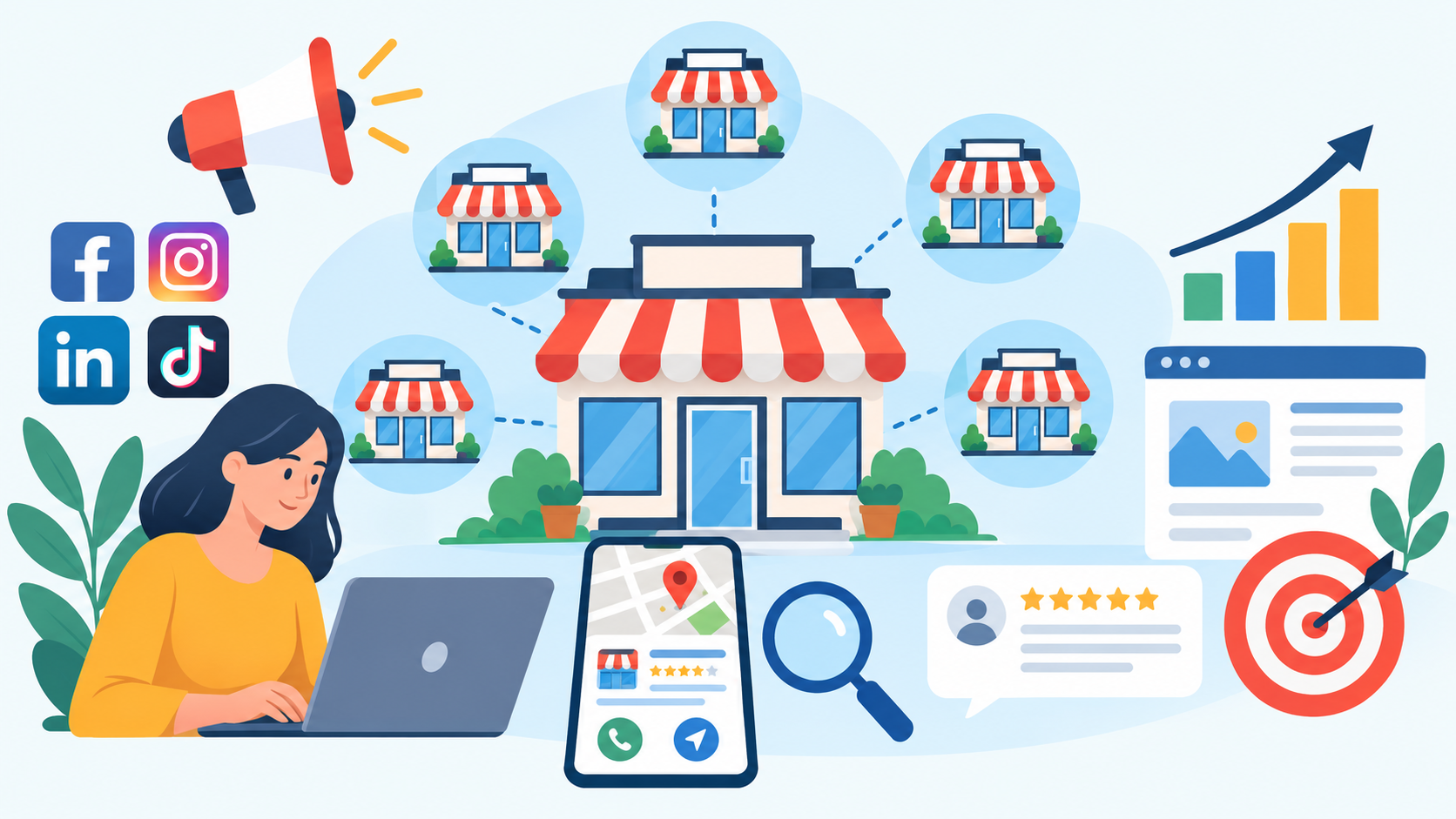
Marketing a franchise successfully requires more than simply promoting a brand. Franchise owners need a clear strategy that builds brand awareness, reaches the right customers, generates local visibility, and turns online interest into real business. Whether you are launching a new franchise location or trying to grow an established one, the right combination of digital marketing, local SEO, social media, content, and customer engagement can make a significant difference.
The most effective franchise marketing strategies begin with understanding your target audience. Knowing who your customers are, what they need, where they search for products or services, and what influences their purchasing decisions gives you a stronger foundation for every marketing campaign.
At the same time, franchise marketing has an important local component. Customers typically want to know what is available in their area, how much it costs, whether the business is trustworthy, and how easily they can contact or visit the location. Your marketing should answer those questions clearly while maintaining a consistent brand experience across every franchise location.
Before investing in advertising or creating content, determine exactly who you are trying to reach. A franchise can serve a broad market, but your marketing becomes much more effective when you understand the specific customers most likely to buy from you.
Start by identifying demographic information such as age, income, location, occupation, and household characteristics. Then look at behavioral factors, including what customers search for online, which problems they are trying to solve, and what makes them choose one business over another.
Market research can reveal the questions and concerns customers have before making a purchase. Search engines, customer reviews, social media comments, competitor websites, and conversations with your existing customers can all provide useful information.
For example, a customer searching for a local service may be comparing several businesses at once. They may be looking for pricing, availability, reviews, service areas, or specific features.
Understanding these factors allows you to create marketing messages that directly address customer needs rather than relying on generic advertising.
For franchise businesses, national brand recognition is valuable, but local relevance often determines whether a customer takes action.
Identify the cities, neighborhoods, and communities that each franchise location serves. Your marketing should reflect those geographic areas through location pages, local content, search optimization, advertising, and community involvement.
This approach can help individual locations compete for customers without weakening the consistency of the overall franchise brand.
A strong brand gives customers a reason to remember your franchise. Your marketing should communicate more than what you sell. It should explain what your business stands for and why customers should choose you.
Your brand story can highlight your company’s history, mission, values, customer service philosophy, or the problem your franchise was created to solve.
Every franchise needs a clear answer to one important question:
Why should customers choose your business instead of a competitor?
Your answer might involve better service, recognizable brands, competitive pricing, convenience, expertise, technology, selection, or a combination of factors.
Once you establish your value proposition, use it consistently across your website, advertising, social media profiles, email campaigns, and other customer-facing channels.
Franchise marketing becomes more complicated when multiple locations are involved. Customers should recognize the same brand regardless of which location they interact with.
Maintain consistent logos, colors, messaging, imagery, service descriptions, and brand standards while still allowing individual locations to highlight relevant local information.
A consistent brand combined with localized messaging gives franchise owners the best of both worlds: recognizable branding and strong community relevance.
Your website is one of the most important assets in a franchise marketing strategy. It serves as the central destination for customers who discover your business through search engines, social media, advertising, or referrals.
A successful franchise website should be easy to navigate, fast, mobile-friendly, visually appealing, and designed around the needs of potential customers.
A large percentage of online searches happen on smartphones, so your website must work properly across mobile devices, tablets, and desktop computers.
Responsive design ensures that pages, images, navigation menus, forms, and calls to action adapt to different screen sizes.
Mobile usability also affects the overall customer experience. If visitors have difficulty reading content or finding contact information, they may leave before contacting your franchise.
Content marketing can help your franchise attract customers throughout the buying process.
Create pages and articles that answer common questions, explain your services, address customer concerns, and provide useful information related to your industry.
For example, you might create content about pricing, product comparisons, common problems, frequently asked questions, maintenance, local services, or what customers should expect when visiting your location.
Use relevant keywords naturally throughout your content. The goal should be to create genuinely useful information rather than repeatedly inserting the same keyword.
Images, videos, graphics, and other visual elements can help visitors understand your franchise and create a stronger connection with the brand.
Use high-quality images of your locations, team members, products, services, and customer experiences. Video can also be particularly effective for explaining services, introducing employees, demonstrating products, or showcasing the franchise experience.
Every visual should support the page rather than simply fill space.
Local SEO is one of the most important components of franchise marketing. When customers search for a business near them, you want your franchise location to appear prominently in relevant search results.
A strong local SEO strategy combines accurate business information, location-specific content, customer reviews, citations, and a technically sound website.
Each eligible franchise location should have an accurate and properly maintained Google Business Profile.
Make sure important information such as the business name, address, phone number, website, business hours, services, and photos is accurate and consistent.
Customer reviews are also important. Encourage satisfied customers to share honest feedback and respond professionally to both positive and negative reviews.
Regular activity and accurate information can make your local presence more useful to customers searching for your services.
If you are researching franchise ownership as part of your broader business plans, understanding the different franchise opportunities available to entrepreneurs can also help you evaluate potential markets and business models.
If your franchise operates in multiple cities, avoid relying on one generic location page.
Create dedicated pages for individual locations when there is enough unique information to make those pages useful. Include the location’s address, phone number, hours, service area, available services, photos, directions, and relevant local information.
Location pages should provide genuine value rather than simply replacing the city name on an identical template.
Your business information should be consistent across relevant directories, review platforms, industry websites, and other online listings.
Pay particular attention to your business name, address, and phone number, commonly referred to as NAP information.
Consistent business information helps search engines understand your location and can support your broader local search optimization strategy.
Social media provides franchise owners with an opportunity to interact directly with their communities.
Rather than using social media exclusively for promotions, create content that gives customers a reason to follow and engage with your business.
You do not need to maintain an active presence on every social network.
Focus on the platforms where your target customers are most likely to spend time. Depending on your industry, this could include Facebook, Instagram, LinkedIn, TikTok, YouTube, or other platforms.
The important factor is consistency. A well-maintained presence on two platforms is usually more valuable than inactive profiles across six different networks.
Your social media strategy can include:
Customer testimonials
Product announcements
Short educational videos
Behind-the-scenes content
Team introductions
Promotions
Frequently asked questions
Local events
Community involvement
Helpful industry tips
Mix promotional content with educational and community-focused posts. This creates a more natural relationship with your audience and prevents your social profiles from becoming a constant stream of advertisements.
Franchise locations have an advantage that national brands cannot always replicate: local relationships.
Participating in community events, supporting local organizations, partnering with nearby businesses, and highlighting local customers can strengthen your connection with the market.
These activities can also create content that feels more authentic and relevant to people in the area.
Organic marketing takes time. Paid advertising can help a franchise reach potential customers more quickly, especially when launching a new location or promoting a specific offer.
Search advertising can target people actively looking for relevant products or services, while social media advertising can reach audiences based on demographics, interests, behaviors, and geographic areas.
Franchise advertising should be carefully segmented by location.
Instead of running one broad campaign across an entire state or country, consider creating campaigns for individual markets when the budget and customer base justify it.
Localized campaigns make it easier to customize messaging, measure performance, and adjust spending based on the results from each market.
Sending every advertisement to your homepage is not always the best approach.
Create dedicated landing pages that match the intent of the advertisement. The page should clearly explain the offer or service, provide relevant information, and include a prominent call to action.
The closer the connection between the advertisement and landing page, the easier it is for visitors to understand what they should do next.
Online reviews can have a significant influence on purchasing decisions. Customers often check reviews before contacting an unfamiliar business.
Make collecting genuine customer feedback part of your ongoing marketing process.
Ask satisfied customers to leave honest reviews after a successful purchase or service experience. Make the process simple by providing a direct path to the appropriate review platform.
Responding to reviews shows that your business pays attention to customer feedback.
Thank customers who leave positive reviews and address negative feedback calmly and professionally. If a problem occurred, explain that you want to resolve it and provide an appropriate way for the customer to contact the business.
Never use fake reviews or attempt to manipulate customer ratings. Authentic feedback is far more valuable for building long-term trust.
Content marketing can help a franchise build visibility while establishing authority in its industry.
Instead of creating articles solely for search engines, focus on the questions potential customers ask before making a decision.
Your content should address customers at different stages of the buying process.
Someone unfamiliar with your industry may need basic educational information. Another customer may be comparing two products or services. A third may already be ready to contact a franchise location.
Create content for each stage.
For example:
Awareness: Explain common problems, terminology, and industry basics.
Consideration: Compare services, products, pricing factors, and important features.
Decision: Provide service details, customer reviews, location information, FAQs, and clear calls to action.
This approach allows your website to attract visitors while also helping them move closer to becoming customers.
Marketing decisions should be based on data rather than assumptions.
Use analytics and reporting tools to understand where your customers come from, which pages they visit, and which campaigns generate meaningful results.
Important metrics can include:
Organic search traffic
Local search visibility
Website conversions
Phone calls
Form submissions
Appointment requests
Advertising cost per lead
Conversion rate
Social media engagement
Customer acquisition cost
Return on advertising spend
For multi-location franchises, overall performance can hide problems at individual locations.
Track important metrics by franchise location whenever possible. This allows you to identify which markets are performing well and which locations need additional attention.
One location might generate strong organic traffic while another may depend heavily on paid advertising. Understanding those differences allows you to allocate resources more effectively.
Successful franchise marketing is not a one-time project. Search algorithms change, customer behavior evolves, competitors enter markets, and advertising costs fluctuate.
Review your performance regularly and identify opportunities to improve.
Test different headlines, landing pages, advertisements, calls to action, content formats, and promotional messages. Keep the strategies that produce measurable results and adjust those that do not.
At the same time, avoid changing everything at once. Testing one major variable at a time makes it easier to understand what actually influenced performance.
A successful franchise marketing strategy should combine national brand consistency with strong local execution.
The most important principles are:
Understand your target customers before creating campaigns.
Build a clear and recognizable franchise brand.
Maintain a fast, mobile-friendly, conversion-focused website.
Create useful content based on real customer questions.
Optimize each franchise location for local search.
Keep business information consistent across online directories.
Encourage genuine customer reviews and respond professionally.
Use social media to build relationships with local audiences.
Use paid advertising strategically to accelerate customer acquisition.
Track marketing performance by location and campaign.
Continuously improve your strategy based on measurable results.
The goal is not simply to generate more website traffic. Effective franchise marketing should generate qualified leads, new customers, repeat business, and sustainable growth.
The best approach combines several channels, including local SEO, a strong website, content marketing, social media, customer reviews, email marketing, and paid advertising. The right mix depends on the franchise’s industry, target audience, location, and budget.
Local SEO is extremely important for franchises because customers often search for businesses within a specific geographic area. Optimized location pages, accurate business listings, customer reviews, and consistent business information can improve local visibility.
Not necessarily. A centralized franchise website with dedicated location pages can provide a strong structure for many businesses. The important thing is that each location has accurate, useful, and locally relevant information.
Ask satisfied customers for honest feedback after a successful interaction. Make the process simple and provide clear instructions for leaving a review. Businesses should never purchase reviews or create fake customer feedback.
Social media can be highly valuable for building brand awareness and maintaining relationships with local customers. However, franchise owners should prioritize the platforms where their target audience is actually active rather than trying to maintain every social network.
SEO results vary depending on the competition, website authority, market, content quality, and current search visibility. Some local improvements may produce results relatively quickly, while competitive search terms can require sustained optimization over a longer period.
Paid advertising can complement organic marketing by generating visibility and leads while SEO efforts develop. Search and social advertising can be particularly useful when launching a new location, entering a competitive market, or promoting a specific offer.
Marketing a franchise successfully requires a balance between brand consistency and local relevance. Customers need to recognize your brand, but they also need to see why your particular location is the right choice for them.
By combining local SEO, useful content, social media, paid advertising, customer reviews, and a well-designed website, franchise owners can create a marketing system that attracts customers and supports long-term growth.
For businesses looking to expand through a proven franchise model, JNA Franchise Opportunities offers an exclusive retail store program featuring more than 16 established brands. JNA Dealer Program is one of the country’s largest internet service provider dealers, providing franchise opportunities designed around a diverse selection of trusted brands.
Explore the exclusive franchise retail store program to learn more about the opportunity and how you can get started.

How to Sell Business Internet Services to Small Businesses
Oct 23, 2026

Telecom Sales Call Quality Assurance: A Practical Guide
Oct 22, 2026

Telecom Dealer KPIs: Metrics That Drive Better Results
Oct 21, 2026

Telecom Sales Scripts That Help Turn Leads Into Sales
Oct 20, 2026

Telecom Lead Management: Follow Up Without Losing Sales
Oct 19, 2026


12
Oct, 2026
FINANCE
Starting a business after military service can be an exciting way to build financial independence...
8
Oct, 2026
BUSINESS LOAN
Choosing the best location for your business can have a major impact on visibility, customer...
29
Sep, 2026
FINANCE
If you are thinking about applying for a personal or business loan, it is important...