TELECOM SOLUTIONS
How to Succeed as a Telecom Dealer and Grow Your Business
Starting a telecom dealership can be one of the smartest business decisions in today’s connected...
Learn More

 April 21, 2026
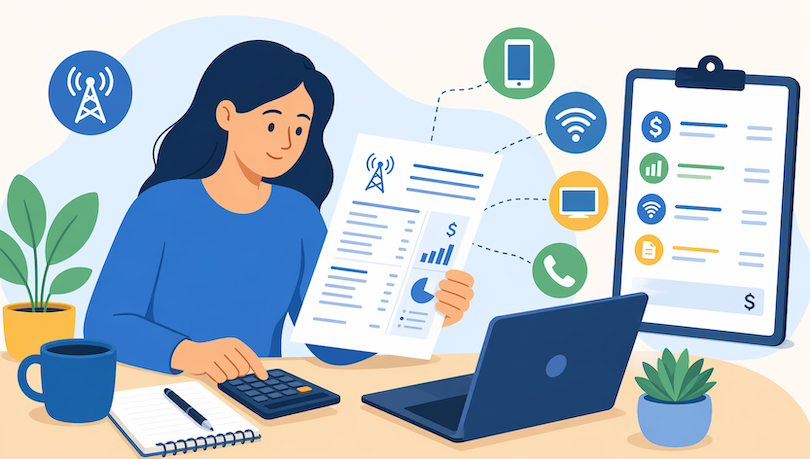
Telecommunication bills can feel harder to understand than they should be. Between service charges, taxes, equipment fees, data costs, and small line items buried in the details, many people end up paying more than they realize for mobile, internet, and bundled services.
If you have ever looked at your monthly statement and wondered why the total is higher than expected, you are not alone. Understanding telecommunication bills is one of the easiest ways to take control of recurring expenses, avoid unnecessary charges, and make smarter decisions about your plan. Once you know what each section means, it becomes much easier to spot hidden costs, compare providers, and lower your monthly bill without sacrificing the services you actually use.
Most households and businesses rely on telecom services every day. Internet access, mobile data, voice calls, messaging, and streaming have become part of daily life, which means telecommunication expenses often sit among the most consistent monthly costs.
The problem is that many people pay these bills on autopilot. They glance at the total, make the payment, and move on. Over time, that habit can lead to unnecessary spending. You may be paying for features you no longer use, extra lines you forgot to remove, or overage fees that could be avoided with a better plan.
A clear understanding of your telecommunication bill helps you do three important things. First, it lets you verify that the charges are accurate. Second, it helps you match your plan to your actual usage. Third, it gives you more confidence when you want to negotiate with your provider or switch to a better option.
That kind of clarity matters even more in a fast-changing industry. Telecom professionals build stronger long-term results in a changing market, success often comes down to understanding the details others ignore. Your monthly bill is one of those details.
Most telecommunication bills follow a similar structure, even if the wording varies by provider. Once you understand the common sections, the statement becomes much easier to read.
This is the core price of your plan. It usually covers the base cost of your mobile line, home internet package, or bundle of services. In many cases, this section includes unlimited talk and text, a certain amount of data, or a specified internet speed tier.
This is the first line to review because it tells you what you are actually subscribed to. If the plan no longer fits your needs, this part of the bill is where you will usually see the opportunity to save money.
Taxes and government-mandated charges can make a bill look more expensive than the advertised rate. These fees vary by region and service type. Some apply to wireless service, some to internet, and others to broadcast or cable packages.
While you usually cannot remove these charges, it is still important to recognize them. Knowing which fees are fixed and which are provider-driven helps you separate unavoidable costs from charges you may be able to reduce.
Many telecom bills include the cost of rented or financed equipment. This might be a modem, router, cable box, or smartphone installment plan. These charges often continue for months or years, which makes them easy to overlook.
If your equipment is already paid off but the charge is still appearing, that is worth questioning. If you are renting hardware, it may also be worth comparing the rental cost against buying your own compatible equipment.
Add-ons can include international calling, premium channels, device protection, hotspot access, cloud storage, or advanced security packages. Some of these services are useful. Others get attached during a promotion and remain on the account long after the promotional period ends.
A quick review of add-ons can reveal easy savings, especially if you have not looked closely at your account in several billing cycles.
A bill often becomes expensive not because of one major item, but because of several smaller charges that build up over time. These are the most common ones to watch.
If you have multiple mobile lines, you may be charged a separate access fee for each one. On family or business plans, these fees can add up quickly.
Review whether each line is still active for a good reason. Sometimes an unused tablet line, secondary device, or old family number continues generating monthly costs without much value.
Data overages happen when usage exceeds the plan allowance. This is especially common on older or limited data plans. Even one month of heavy streaming, large file downloads, or hotspot usage can trigger extra costs.
If you repeatedly see overage charges, the issue is usually not your behavior alone. It often means your current plan no longer matches how you actually use your service.
Roaming charges appear when you use your device outside your provider’s standard coverage area. International travel is a common trigger, but even domestic network differences can sometimes affect charges.
These fees can escalate fast, which is why it is important to understand your provider’s roaming policy before traveling.
Late fees are preventable, but they still appear often. If you miss the due date, the penalty can raise the total and sometimes affect your service status.
Autopay can help, but always verify whether your provider offers an autopay discount and whether that discount applies only when you pay using a bank account rather than a credit card.
These charges often appear when starting new service, upgrading a device, or making account changes. They may be reasonable in some cases, but they are still worth checking. Some providers will waive these fees during promotions or upon request.
The fine print is where small details turn into real costs. It may not be the most exciting part of your statement, but it can have a direct impact on what you pay each month.
Look closely at billing cycle dates, payment due dates, and any notes about promotional pricing. A plan that looks affordable at first may only stay discounted for a limited period. Once that introductory rate ends, the monthly cost can jump significantly.
You should also pay attention to contract terms, early termination fees, and device financing conditions. If you are thinking about switching providers, these details matter. Leaving too soon can trigger penalties or accelerate the remaining balance on a financed device.
Another area worth reviewing is usage breakdown. Bills often show how much data was used, whether additional charges were triggered, and which services were used outside the plan. This section gives you a clearer picture of whether you are on the right plan or wasting money on the wrong one.
Reducing your telecommunication bill does not always require a major change. In many cases, small adjustments can lead to meaningful savings over time.
Telecom needs change. A plan that made sense a year ago may not fit your current habits. Maybe you are using more Wi-Fi and less mobile data. Maybe your household is streaming more and needs faster internet. Maybe you no longer need a bundled cable package.
A quick review every few months helps you stay aligned with your actual usage instead of paying for outdated assumptions.
Optional add-ons often survive because they seem small. But several small charges can turn into a surprisingly large monthly expense.
If you are not using device protection, premium channels, international features, or extra cloud services, remove them. The best telecom bill is one that reflects what you truly use.
Mobile overages can often be reduced by connecting to reliable Wi-Fi at home, work, or other trusted locations. Streaming video, software updates, and large downloads are all better handled over Wi-Fi when possible.
This is a simple habit, but it can make a real difference if your plan has limited data.
Bundles can save money, but they can also hide costs. Sometimes a bundle offers value. Other times, you are paying for a service you barely use just to keep a discount.
Run the numbers both ways. The better deal is not always the one marketed as the more convenient option.
A surprising number of people keep paying a higher bill after a promotional rate ends simply because they do not notice the increase right away.
If your latest bill looks higher than usual, compare it to older statements. A promotion may have expired, and your provider may have a retention offer available if you ask.
Many people assume telecom pricing is fixed. In reality, there is often room to improve your plan, reduce fees, or secure a better rate, especially if you have been a long-time customer.
Start by reviewing your recent bills and identifying specific concerns. This could be a price increase, recurring overages, unused add-ons, or a better competing offer from another provider. When you speak with customer service, be clear and calm. Tell them what you want to change and why.
It helps to ask direct questions. Are there any lower-cost plans that match my usage? Are there promotions available for current customers? Can any fees be waived? Is there a loyalty discount on my account?
Preparation matters here. If you understand your telecommunication bill, you are in a much stronger position to negotiate because you can point to actual numbers instead of vague frustration.
Streaming has changed the way people use telecom services. Video streaming, music platforms, gaming downloads, cloud backups, and remote work tools all increase data usage.
For mobile users, this can lead to overages or throttling if the plan is too limited. For home internet users, it can push households toward faster speed tiers, especially when multiple people are streaming or working online at the same time.
The key is not to assume every higher-tier package is necessary. Instead, look at your real usage. If streaming habits have changed your needs, upgrading may be smarter than paying repeated penalties. But if your provider has placed you on an unnecessarily expensive package, you may be able to downgrade without noticing much difference in daily performance.
This is also why telecom cost management is no longer just about phone calls and text messaging. Today, your bill reflects a larger digital lifestyle, and understanding that shift is essential.
You do not have to manage everything manually. A range of digital tools can help you stay on top of your telecom usage and billing patterns.
Many providers offer mobile apps that show your current data usage, line activity, payment status, and billing history. These apps can help you spot problems before the bill arrives.
If one line is consistently using far more data than expected, you can address that early instead of reacting after the charge appears.
Comparison tools can help you evaluate other plans in the market. These are useful when you want to know whether your current provider is still competitive on price, speed, or service value.
Use them carefully, though. Promotional pricing can make a plan look cheaper than it really is over time, so always compare long-term cost, not just the first-month offer.
Sometimes negotiation works. Sometimes plan adjustments are enough. But there are situations where switching providers is the better choice.
If your monthly bill stays high despite repeated efforts to lower it, that is a warning sign. If your provider’s service quality is weak in your area, the cost becomes even harder to justify. The same is true if new customers get much better pricing than loyal existing customers with no clear way to match it.
Before switching, review your contract, equipment return rules, and device payoff obligations. A low advertised rate from another provider may not deliver real savings if you face termination fees or need to replace expensive hardware right away.
Still, switching can be worthwhile when another provider offers stronger coverage, more transparent billing, and a plan that better matches your usage.
Understanding telecommunication bills is not just about reading a statement. It is about taking control of one of the most common recurring expenses in modern life.
When you know how to identify service charges, taxes, equipment costs, overages, and optional features, you make better decisions. You can spot billing errors faster, avoid paying for services you do not need, and choose plans that actually fit your lifestyle or business needs.
The biggest advantage is confidence. Instead of feeling frustrated by unclear charges, you start seeing your bill as a tool. It shows where your money is going, where your plan may be out of sync, and where you may have room to save.
A telecommunication bill should never feel impossible to understand. With a little attention and the right approach, you can read it clearly, manage it smarter, and make sure every dollar you spend is working for you.

Franchise Law Basics: What Every Owner Should Know
Oct 16, 2026

How Cox Business Products Help Dealers Drive Growth
Oct 15, 2026

7 Reasons to Become a Vivint Authorized Reseller
Oct 14, 2026

Why Become an Internet Provider Dealer? 7 Key Benefits
Oct 13, 2026

Veterans Guide to Small Business Loans and Funding
Oct 12, 2026


15
Jun, 2026
TELECOM SOLUTIONS
Starting a telecom dealership can be one of the smartest business decisions in today’s connected...
8
May, 2026
DEALER
elecom dealers handle a massive amount of customer information every day, from billing details and...
23
Apr, 2026
DEALER
Telecommunication products are at the core of modern business operations. From enabling real-time communication to...