DEALER
Why Become an Internet Provider Dealer? 7 Key Benefits
Becoming an internet provider dealer can be an opportunity to build a business around services...
Learn More

 May 8, 2026
elecom dealers handle a massive amount of customer information every day, from billing details and service records to location data and communication logs. As privacy regulations continue to evolve worldwide, telecom businesses are under increasing pressure to protect sensitive information and maintain compliance with modern data protection laws.
For dealers, data privacy is no longer just an IT concern or legal requirement. It directly impacts customer trust, brand reputation, operational security, and long-term business growth. Whether you operate as an independent telecom reseller or participate in a larger dealer network, understanding telecom data privacy laws is essential for staying competitive and avoiding costly compliance issues.
This guide explains the most important telecom privacy regulations, how they affect dealers, and the practical steps businesses can take to strengthen customer data protection while building trust in today’s digital telecom landscape.
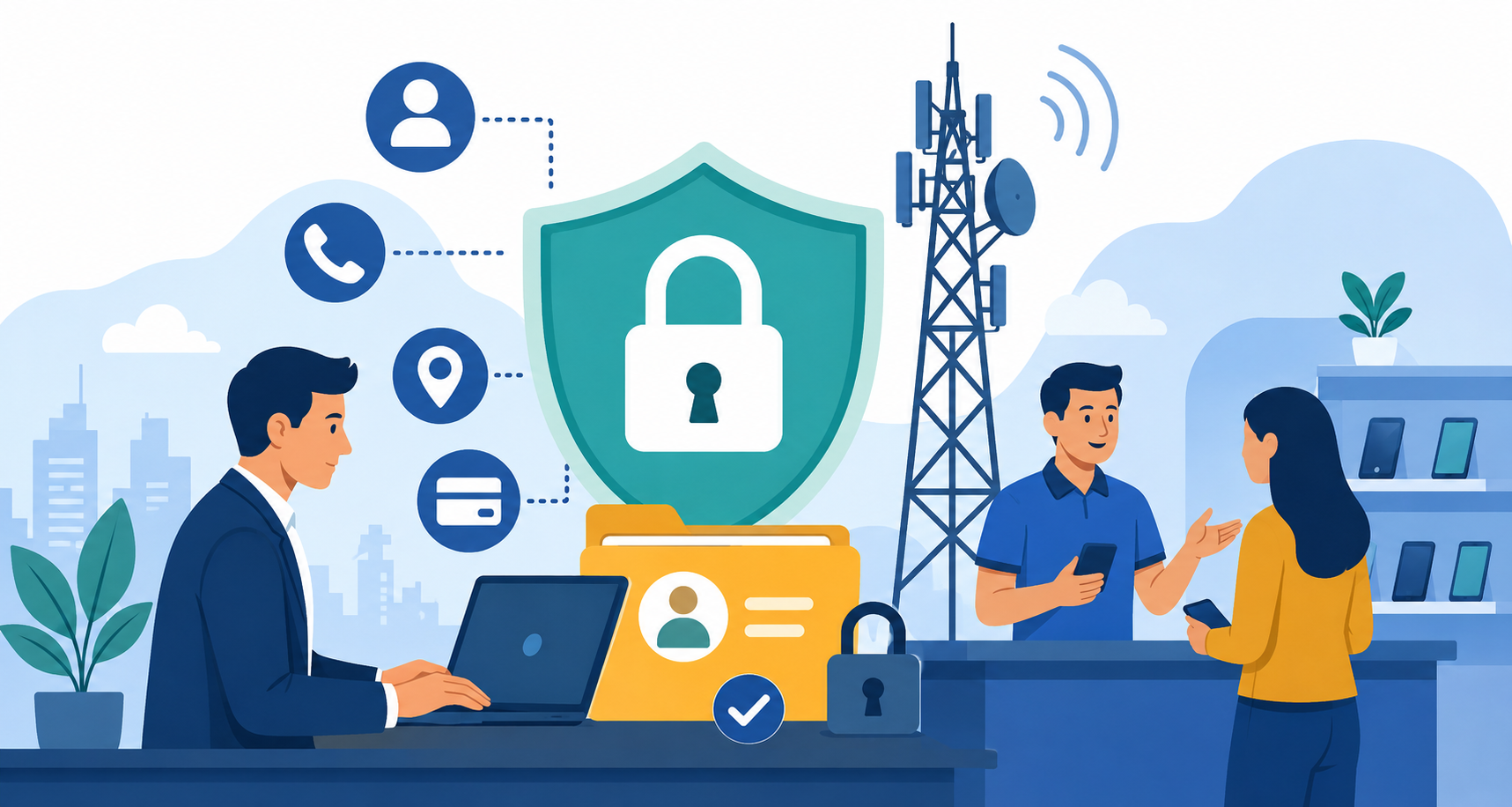
Telecommunications companies process some of the most sensitive personal information consumers share online. Telecom providers and dealers often have access to:
Full customer names and addresses
Phone numbers and email addresses
Billing and payment information
Call records and service usage
Device identifiers
Real-time location data
Because telecom businesses manage such valuable information, they are prime targets for cyberattacks, fraud, identity theft, and unauthorized data access.
At the same time, customers are becoming more aware of how businesses collect, use, and share their data. Consumers now expect transparency, accountability, and strong security standards from every company they interact with.
The telecom industry is rapidly evolving alongside digital innovation and connected technologies. As emerging telecom industry innovations and modern telecom businesses are becoming increasingly data-driven, making privacy protection more important than ever.
Many telecom dealers mistakenly assume that privacy compliance only applies to major carriers or large telecommunications corporations. In reality, dealers often collect and process customer information directly, which means privacy laws apply to them as well.
Dealers may gather customer data through:
New account activations
Device upgrades
Billing support
Customer service interactions
Marketing campaigns
Financing applications
CRM platforms and online portals
Even small telecom businesses can face serious penalties for mishandling consumer information.
Compliance is especially important for dealers that operate across multiple states or countries, where different privacy laws may apply simultaneously.
The General Data Protection Regulation is one of the world’s most influential privacy laws. Although it originates in the European Union, GDPR applies to businesses worldwide if they collect or process the personal data of EU residents.
GDPR focuses heavily on transparency, user consent, and consumer control over personal data.
Under GDPR, telecom dealers must:
Clearly explain how customer data is collected and used
Obtain explicit consent before processing certain information
Allow customers to access or delete their data
Report data breaches within 72 hours
Minimize unnecessary data collection
Failing to comply with GDPR can result in substantial financial penalties and reputational damage.
The California Consumer Privacy Act gives California residents greater control over their personal information.
Telecom dealers serving customers in California may need to comply with CCPA requirements, including:
Informing customers about collected data
Allowing customers to request data deletion
Providing opt-out options for data sharing or sales
Explaining how customer information is used
Even businesses outside California may fall under CCPA if they meet certain revenue or customer volume thresholds.
The Federal Communications Commission regulates telecom-related privacy practices in the United States through rules surrounding Customer Proprietary Network Information (CPNI).
CPNI includes sensitive telecommunications data such as:
Call history
Service plans
Usage patterns
Billing records
Telecom dealers must protect this information from unauthorized access and ensure customers provide consent before certain data-sharing activities occur.
FCC regulations also require businesses to implement employee training and secure internal systems.
Privacy laws continue expanding globally. Telecom dealers should monitor additional frameworks such as:
Virginia Consumer Data Protection Act (VCDPA)
Colorado Privacy Act (CPA)
Canada’s PIPEDA
Brazil’s LGPD
Asia-Pacific Economic Cooperation Privacy Framework
As privacy laws evolve, telecom dealers need proactive compliance strategies instead of reactive fixes.
Modern consumers expect greater visibility into how businesses manage their information.
In today’s digital marketplace, customers want clear answers to questions like:
Why is this data being collected?
How long is it stored?
Who has access to it?
Is it shared with third parties?
How is it protected?
Telecom businesses that communicate openly about data handling practices are more likely to earn long-term customer loyalty.
The shift toward digital communication platforms has dramatically changed customer expectations. Consumer behavior changes and transparency has become a core part of customer experience and brand trust.
One of the most common mistakes telecom dealers make is using vague or overly complicated privacy policies.
Your privacy policy should clearly explain:
What data you collect
Why you collect it
How long it is stored
How customers can manage their data
Who customers can contact with privacy concerns
Simple language improves customer understanding and builds trust.
Collect only the information necessary to provide services and complete transactions.
Over-collecting customer information increases both compliance risks and cybersecurity exposure.
Reducing unnecessary data storage can also lower operational costs and improve data management efficiency.
Outdated software and weak security infrastructure create major vulnerabilities for telecom businesses.
Dealers should invest in:
Encrypted databases
Secure cloud platforms
Multi-factor authentication
Access control systems
Endpoint protection software
Protecting stored customer information is just as important as securing data during transmission.
Human error remains one of the leading causes of data breaches.
Employees should receive ongoing training covering:
Password security
Phishing awareness
Proper customer verification
Safe data handling procedures
Incident reporting protocols
Strong internal security culture significantly reduces compliance risks.
Many telecom dealers rely on third-party software providers, payment processors, or marketing platforms.
However, third-party vendors can also become security vulnerabilities.
Businesses should carefully evaluate vendors for:
Security certifications
Privacy compliance standards
Data processing agreements
Breach response procedures
Your company may still be held responsible if a vendor mishandles customer data.
Privacy laws vary significantly between regions.
A compliance strategy that works in one state or country may not satisfy regulations elsewhere.
Dealers expanding into new markets should review local privacy requirements before launching services.
Privacy laws evolve frequently. Businesses that rarely update policies risk falling out of compliance.
Policies should be reviewed regularly to ensure they reflect current regulations and business practices.
Weak passwords and poor access management remain common cybersecurity issues.
Telecom dealers should require strong passwords, enforce password updates, and implement multi-factor authentication wherever possible.
Outdated systems often contain vulnerabilities that hackers actively target.
Routine software updates and security patches are essential for protecting customer data.
Holding unnecessary customer data creates avoidable risks.
Businesses should establish clear retention policies and securely delete outdated information when no longer needed.
Strong privacy practices can become a competitive advantage for telecom dealers.
Customers are more likely to trust businesses that:
Clearly communicate privacy practices
Respond quickly to concerns
Protect sensitive information
Demonstrate transparency
Prioritize cybersecurity
Trust directly influences customer retention, referrals, and long-term revenue growth.
Telecom dealers that position themselves as security-conscious businesses often stand out in crowded markets.
A successful telecom dealer growth strategiesand long-term success increasingly depends on balancing innovation with customer confidence and ethical business practices.
Modern cybersecurity tools help telecom businesses improve both security and compliance efficiency.
Artificial intelligence can identify suspicious activity faster than traditional manual monitoring systems.
AI tools help businesses detect:
Unauthorized access attempts
Fraudulent transactions
Unusual account behavior
Malware threats
Automation platforms can track regulatory changes, monitor policy adherence, and generate compliance reports.
This reduces administrative workload while improving accuracy.
Telecom businesses increasingly rely on APIs and cloud-based systems to deliver services.
Secure API management helps protect customer data from unauthorized access and external attacks.
Routine security testing helps identify vulnerabilities before they become major problems.
Audits should include:
Penetration testing
Access control reviews
Data storage assessments
Incident response evaluations
Some telecom dealers view privacy regulations as obstacles. In reality, strong data protection practices often strengthen business performance.
Privacy-focused businesses benefit from:
Greater customer trust
Improved brand reputation
Lower legal risk
Stronger cybersecurity resilience
Higher customer retention
Privacy compliance can also improve operational efficiency by encouraging better organization, cleaner data management, and stronger internal systems.
Businesses that embrace privacy as part of their overall strategy are often better positioned for long-term growth.
The infrastructure telecom dealers use directly impacts data protection capabilities.
Investing in business communication telecom solutions with built-in security features can simplify compliance while improving operational reliability.
Key features to look for include:
End-to-end encryption
Role-based user access
Activity monitoring
Secure cloud integration
Automated security updates
Compliance reporting tools
The right telecom systems help businesses reduce vulnerabilities while supporting modern customer expectations.
The telecom industry is entering a new era shaped by:
5G networks
Artificial intelligence
IoT devices
Cloud computing
Smart infrastructure
These technologies generate larger amounts of customer data while creating new security challenges.
As telecom ecosystems become more interconnected, privacy regulations will likely become stricter and more comprehensive.
Future-focused telecom dealers should prepare for:
Increased consumer rights
Stronger reporting requirements
Expanded cybersecurity regulations
Greater transparency expectations
Higher penalties for non-compliance
Businesses that prioritize privacy today will be better prepared for tomorrow’s digital landscape.
Data privacy has become one of the most important responsibilities telecom dealers face today. Customers expect businesses to protect their personal information, communicate transparently, and maintain strong security practices at every stage of service delivery.
Understanding privacy regulations like GDPR, CCPA, and FCC customer data rules is essential for reducing legal risks and maintaining customer confidence. But compliance goes beyond avoiding penalties. It helps telecom businesses build trust, strengthen brand reputation, and support long-term growth.
As technology continues reshaping the telecommunications industry, dealers that adopt privacy-first strategies will be better positioned to thrive in an increasingly connected world.
Telecom dealers often collect names, addresses, phone numbers, payment information, device details, service records, and usage data during account setup and customer support interactions.
Yes. GDPR may apply to businesses outside Europe if they process or store personal data belonging to European Union residents.
Violations can lead to financial penalties, lawsuits, regulatory investigations, customer loss, and long-term reputational damage.
Dealers can improve security through encryption, employee training, secure CRM systems, multi-factor authentication, and regular cybersecurity audits.
Customers are more likely to remain loyal to telecom businesses that demonstrate transparency, accountability, and strong data protection practices.

Franchise Law Basics: What Every Owner Should Know
Oct 16, 2026

How Cox Business Products Help Dealers Drive Growth
Oct 15, 2026

7 Reasons to Become a Vivint Authorized Reseller
Oct 14, 2026

Why Become an Internet Provider Dealer? 7 Key Benefits
Oct 13, 2026

Veterans Guide to Small Business Loans and Funding
Oct 12, 2026

13
Oct, 2026
DEALER
Becoming an internet provider dealer can be an opportunity to build a business around services...

2
Oct, 2026
DEALER
Dealer programs give businesses a practical way to sell products or services while benefiting from...

25
Sep, 2026
DEALER
The holiday season creates a valuable sales window for telecom dealers because customers are already...