BUSINESS IDEAS
How to Boost Consumer Conversion, Acquisition, and Retention
Turning potential customers into loyal buyers takes more than a great product or an effective...
Learn More

 April 2, 2026
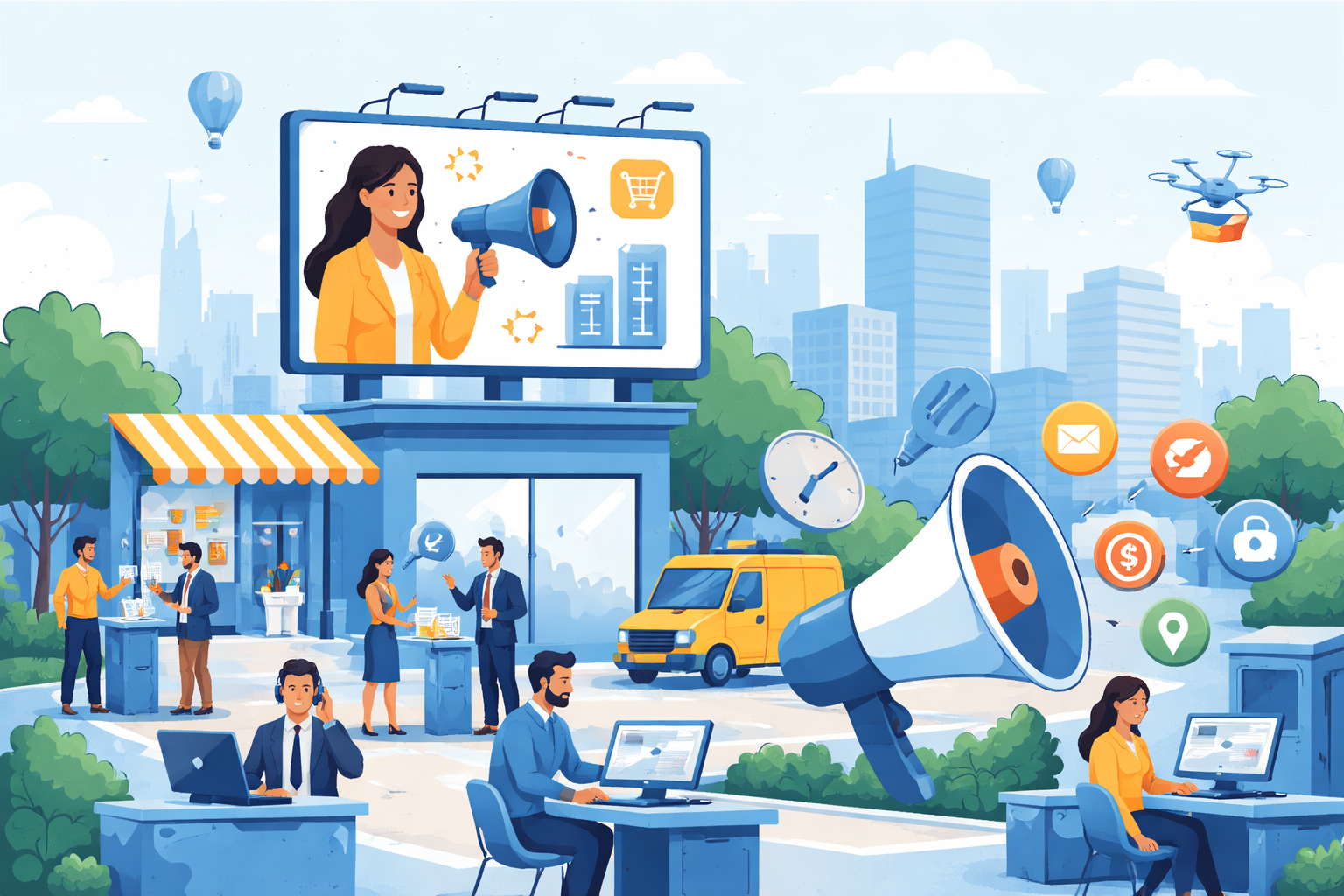
Outbound marketing remains one of the most recognizable and widely used strategies for reaching potential customers. While digital trends continue to evolve, businesses still rely on outbound methods to build awareness, generate leads, and drive immediate visibility.
At its core, outbound marketing is about initiating contact. Instead of waiting for customers to discover your brand, you actively deliver your message to them through various channels. These include television ads, billboards, cold emails, trade shows, and even traditional offline marketing strategies that increase sales like print materials and direct mail.
Outbound efforts continue to play a critical role—especially when used strategically. This guide breaks down what outbound marketing is, why it still matters, and how businesses can use it effectively today.
Outbound marketing refers to any marketing strategy where a business reaches out to potential customers first. Rather than waiting for interest, you take the initiative to present your product or service.
Common examples include:
TV and radio commercials
Billboard advertising
Email campaigns to purchased or targeted lists
Trade shows and events
Print ads in newspapers or magazines
These methods focus on delivering your message to a broad or targeted audience, often without prior engagement.
The key difference lies in how the interaction begins:
Outbound marketing: You initiate contact
Inbound marketing: Customers find you through search, content, or social media
While inbound marketing builds long-term trust and organic growth, outbound marketing delivers immediate exposure and faster reach.
Despite the rise of digital-first strategies, outbound marketing continues to deliver value. Businesses that ignore it often miss opportunities to expand their reach beyond online audiences.
Here’s why it still works.
One of the biggest advantages of outbound marketing is its ability to reach large audiences in a short period.
Channels like TV, radio, and billboards are designed for mass visibility. Unlike highly targeted digital campaigns, outbound efforts cast a wider net, allowing your message to reach people across different demographics.
This broad exposure helps:
Increase brand awareness
Build familiarity with your business
Create top-of-mind recall
Even if only a small percentage responds, the scale makes it worthwhile.
Repeated exposure plays a major role in how people remember brands.
When consumers repeatedly see your ads—whether on billboards, TV, or print—it reinforces your presence. Over time, this builds trust and credibility.
People are more likely to choose a brand they recognize, even if they haven’t interacted with it directly.
Outbound marketing accelerates this process by putting your message in front of large audiences consistently.
While younger audiences lean heavily toward digital platforms, older generations still engage with traditional media.
Many individuals in Gen X and baby boomer groups:
Watch television regularly
Read newspapers or magazines
Pay attention to physical advertisements
This makes outbound marketing especially effective for reaching these segments.
If your target audience includes older consumers, relying solely on digital strategies may limit your reach. Combining outbound with digital ensures broader coverage.
Inbound marketing is powerful, but it takes time.
Content marketing, SEO, and organic growth strategies often require months before producing measurable results. Outbound marketing, on the other hand, can generate immediate visibility.
For example:
A billboard campaign can drive awareness instantly
A cold email campaign can generate leads within days
A trade show can produce direct conversations and conversions
This makes outbound marketing ideal for:
New product launches
Brand awareness campaigns
Short-term promotions
Outbound campaigns are generally straightforward to execute.
Unlike inbound strategies that require continuous content creation, optimization, and tracking, outbound marketing can be launched quickly with clear deliverables.
For instance:
Designing and placing a billboard
Running a TV or radio ad
Sending out a targeted email blast
These actions require planning, but they don’t demand the same ongoing effort as content-driven marketing.
Outbound marketing often relies on visual and audio elements, making it highly effective at triggering emotional responses.
Humans process visual information faster and tend to remember it longer. This is why:
TV commercials use storytelling
Billboards rely on bold visuals
Print ads focus on striking imagery
A well-crafted outbound campaign can create an emotional connection that drives action.
This emotional engagement is one reason traditional methods remain powerful, even in a digital-first world.
Unlike digital platforms, outbound marketing is largely one-directional.
There’s no immediate comment section, public review thread, or viral backlash loop. This reduces the risk of negative feedback spreading quickly.
While customers can still share opinions, it requires more effort compared to online platforms where reactions are instant and visible.
This gives businesses more control over their messaging and brand perception.
To use outbound marketing effectively, businesses need a clear structure. It’s not just about pushing messages—it’s about delivering them strategically.
Even though outbound marketing often reaches broad audiences, targeting still matters.
Define:
Age group
Location
Interests
Buying behavior
This helps you choose the right channels and craft messaging that resonates.
Different channels serve different purposes.
For example:
Billboards: High visibility and brand awareness
Cold calls: Direct engagement and sales
Email campaigns: Scalable outreach
Events and trade shows: Personal interaction
Selecting the right mix ensures your campaign aligns with your goals.
Your message needs to be simple, direct, and compelling.
Focus on:
What you offer
Why it matters
What action to take
Avoid overcomplicating. Outbound marketing works best when the message is instantly understood.
Outbound campaigns often require upfront investment.
Plan your:
Advertising costs
Production expenses
Distribution channels
Also define how long your campaign will run and what results you expect.
Even traditional marketing can be measured.
Use methods like:
Unique phone numbers
Custom landing pages
Promo codes
Customer surveys
Tracking performance helps you refine future campaigns and improve ROI.
Outbound marketing hasn’t disappeared—it has evolved.
Today, many outbound strategies integrate with digital tools, creating a hybrid approach.
Examples include:
Paid social ads targeting cold audiences
Display ads across websites
Sponsored email campaigns
Retargeting ads
These modern versions combine the reach of outbound marketing with the precision of digital analytics.
The most effective marketing strategies don’t rely on one approach alone.
Instead, they combine outbound and inbound methods.
Outbound marketing brings visibility.
Inbound marketing builds trust and nurtures relationships.
For example:
A billboard introduces your brand
A customer searches online and finds your content
Your website converts them into a lead
This combination creates a seamless customer journey.
To better connect with younger audiences who rely on digital trust signals, understanding how to build brand trust with millennials becomes essential.
While outbound marketing is powerful, it’s not foolproof. Avoid these common pitfalls.
Reaching a large audience is not enough. If your message doesn’t resonate, it won’t convert.
Always align your campaign with your target audience.
Outbound marketing works best with simplicity.
Too much text or complex messaging reduces impact.
Keep it clear and focused.
Without measurement, you won’t know what works.
Always include tracking mechanisms to evaluate success.
Outbound marketing is effective, but it shouldn’t stand alone.
Combine it with digital and inbound strategies for better long-term results.
Outbound marketing continues to be a powerful tool for businesses looking to expand their reach and generate immediate visibility.
While digital strategies dominate modern marketing conversations, traditional outbound methods still offer unique advantages:
Broad audience reach
Faster results
Strong brand recall
Effective targeting for specific demographics
When used alongside inbound marketing, outbound efforts create a balanced and highly effective strategy.
The key is not choosing one over the other—but understanding how both work together to drive growth.
Telecom Lead Management: Follow Up Without Losing Sales
Oct 19, 2026
Franchise Law Basics: What Every Owner Should Know
Oct 16, 2026
How Cox Business Products Help Dealers Drive Growth
Oct 15, 2026
7 Reasons to Become a Vivint Authorized Reseller
Oct 14, 2026
Why Become an Internet Provider Dealer? 7 Key Benefits
Oct 13, 2026

9
Oct, 2026
BUSINESS IDEAS
Turning potential customers into loyal buyers takes more than a great product or an effective...
7
Oct, 2026
BUSINESS IDEAS
Effective sales training is about more than giving employees a collection of videos, PDFs, or...

5
Oct, 2026
MARKETING
Building a successful small business is not only about attracting new customers. It is also...