DEALER
Telecom Dealer KPIs: Metrics That Drive Better Results
Total sales can tell you how much your telecom dealership is selling, but they cannot...
Learn More

 October 22, 2026
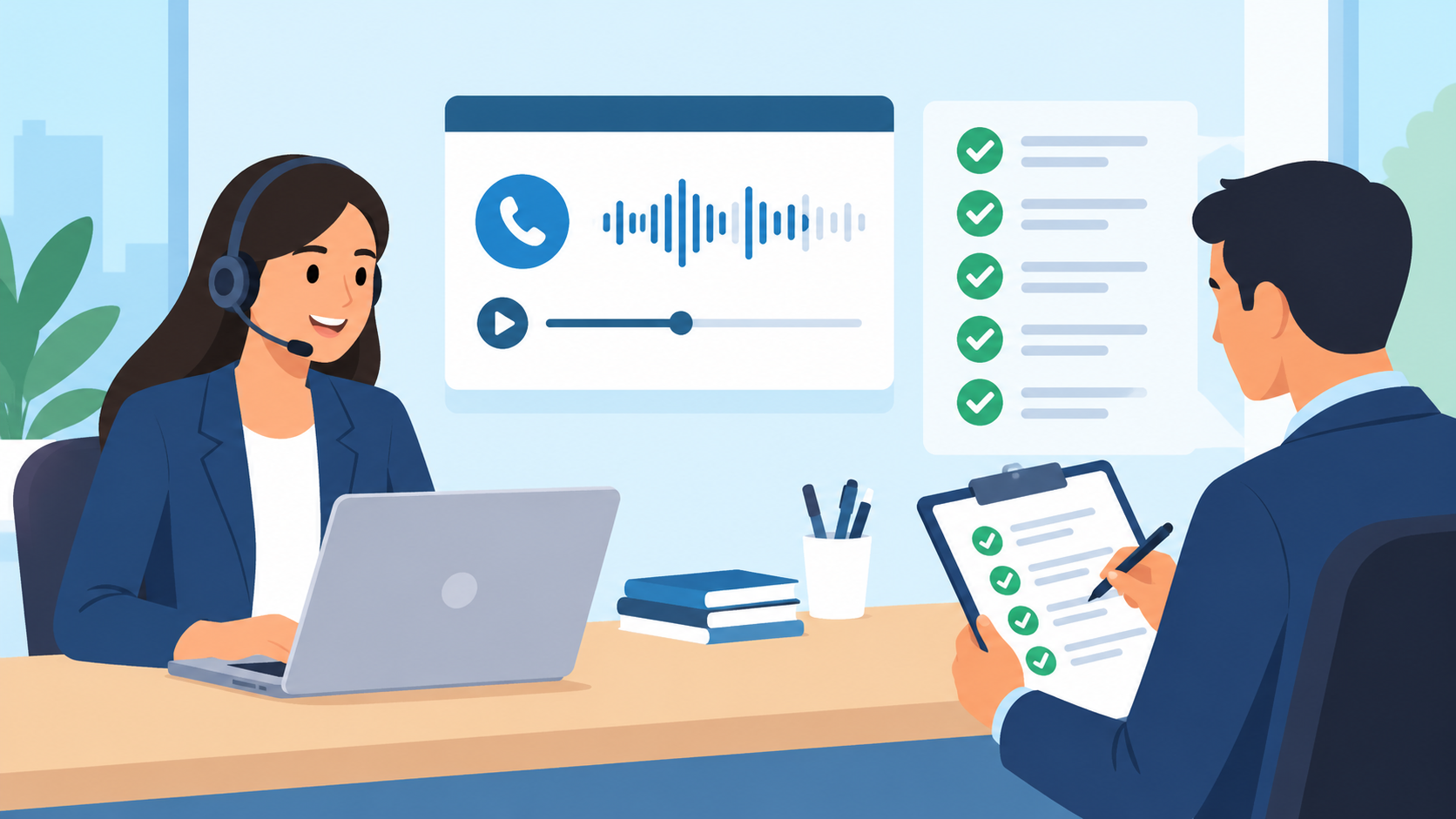
Telecom sales call quality assurance is the process of reviewing sales conversations to ensure representatives communicate accurately, follow applicable compliance requirements, understand customer needs, and provide a consistent customer experience. For telecom dealers, a structured quality assurance (QA) process helps identify sales errors, improve representative performance, reduce preventable complaints, and build customer trust.
Making more calls does not automatically lead to better sales results. Representatives must also explain services clearly, verify important details, obtain required consent, and ensure customers understand what they are agreeing to. A practical call quality checklist gives managers a repeatable way to evaluate these activities and coach their teams.
Whether you manage a small dealership or a growing team of telecom sales representatives, this guide explains how to review calls, measure quality, document findings, and turn feedback into better sales conversations.
Telecom sales call quality assurance is a structured review process used to evaluate the accuracy, professionalism, compliance, and effectiveness of sales calls. It helps dealers determine whether representatives follow approved procedures and provide customers with reliable information before a sale moves forward.
Unlike measuring performance by call volume alone, quality assurance examines what happens during the conversation. A representative might complete many calls but still lose opportunities because of unclear explanations, inaccurate product information, incomplete documentation, or missed consent requirements.
A strong QA process evaluates several areas:
These categories give managers a consistent framework for evaluating calls and identifying specific opportunities for improvement.
Call quality assurance helps telecom dealers catch mistakes early, protect customer trust, and improve the consistency of their sales operations. It also provides managers with evidence they can use to make training and process decisions.
When sales conversations are not reviewed, small problems can become recurring issues. Representatives might use outdated information, skip required explanations, misunderstand product eligibility, or make promises that the provider cannot fulfill.
A consistent review process can help dealers:
Quality assurance should not be treated as a way to punish employees for every mistake. Its primary purpose is to establish clear expectations, correct problems, and encourage better performance while addressing serious compliance violations appropriately.
A telecom sales call quality checklist should cover the entire customer conversation, from the opening introduction to the final confirmation. The most useful checklist measures observable behaviors that managers can evaluate consistently.
The following framework can be adapted to internet, cable, wireless, home security, and other authorized telecom sales programs. Always adjust it to the applicable provider requirements and the specific service being sold.
The opening of a sales call should establish who is speaking and why the representative is contacting the customer. A clear introduction helps customers understand the purpose of the conversation before discussing products or sharing information.
Review whether the representative:
Representatives should never imply that they work directly for a provider if that statement is inaccurate. They should also avoid suggesting that a customer must continue a conversation or purchase a service when that is not the case.
Effective sales conversations begin with understanding what the customer actually needs. Representatives should ask relevant questions before recommending a service instead of assuming that every prospect needs the same package.
Evaluate whether the representative:
For example, a customer seeking reliable internet for remote work may have different priorities from someone looking for a basic household connection. A quality conversation identifies those differences before presenting an offer.
Accurate product explanations are essential because customers rely on representatives to understand what they are purchasing. Managers should verify that the representative communicated the offer correctly and did not invent benefits or guarantee outcomes that the provider has not confirmed.
Check whether the representative accurately explained:
Not every call requires every detail. The checklist should reflect the actual product, the stage of the transaction, and the disclosures required for that interaction.
Representatives must provide required disclosures and obtain valid consent when applicable. Managers should verify that required information was communicated at the correct point in the conversation and that any necessary consent was obtained and documented according to applicable law and provider policy.
Review whether the representative:
Requirements vary by jurisdiction, communication channel, offer, and provider. A dealer should maintain an approved compliance checklist rather than relying on a generic script as its only safeguard.
A high-quality sales call should be clear, respectful, and easy for the customer to follow. Representatives should explain technical information in plain language and give customers a reasonable opportunity to ask questions.
Assess whether the representative:
The goal is not to force every representative to sound identical. Instead, quality assurance should establish a consistent standard for accuracy, respect, and clarity while allowing natural communication.
Good objection handling helps customers make informed decisions without feeling pressured. Managers should evaluate whether representatives address concerns with accurate information instead of dismissing questions or pushing customers toward an unsuitable offer.
Review whether the representative:
If a representative cannot answer a question confidently, the appropriate response is to verify the information or escalate the issue—not to invent an answer.
A sales call should end with a clear understanding of what happens next. Before completing a transaction, representatives should confirm the relevant details and make sure required records are complete.
Check whether the representative:
A clear closing reduces misunderstandings and makes it easier for other team members to support the customer after the call.
A call scoring system assigns points to defined quality criteria so managers can compare performance across representatives and review periods. The score should reflect both routine service quality and critical compliance requirements.
The following is an illustrative scorecard that a dealer can customize to its own operations.
| Evaluation Category | Weight |
|---|---|
| Opening and Identification | 10 points |
| Customer Needs and Qualification | 15 points |
| Product and Offer Accuracy | 20 points |
| Disclosures and Consent | 20 points |
| Communication and Professionalism | 15 points |
| Objection Handling | 10 points |
| Closing and Documentation | 10 points |
| Total | 100 points |
Calculate the overall score by adding the points earned across all categories. For example, a representative who earns 85 out of 100 receives an 85% quality score.
Use the following example bands as an initial internal framework, not as universal industry standards:
| Score | Suggested Interpretation | Recommended Action |
|---|---|---|
| 95–100 | Strong performance | Recognize effective behaviors and maintain monitoring |
| 85–94 | Meets the initial target | Address specific improvement opportunities |
| 70–84 | Needs improvement | Provide targeted coaching and schedule a follow-up review |
| Below 70 | Significant quality gaps | Conduct a detailed review and create an improvement plan |
Critical compliance failures require separate treatment. A high overall score should never override a serious issue, such as a missing mandatory authorization or a materially misleading product claim. Establish clear escalation rules for these situations, regardless of the numerical score.
Managers should review enough calls to identify recurring patterns while keeping the process manageable for the size of the team. The appropriate sample depends on call volume, risk, staffing, and the results of previous reviews.
A practical starting approach is to review a small, consistent sample from each representative every week and increase monitoring when problems emerge.
Consider reviewing:
Use a documented sampling method instead of reviewing only the calls that managers happen to notice. Random sampling can reveal everyday performance, while targeted sampling helps investigate specific risks.
Reviewing only successful sales is also insufficient. Calls that do not convert can reveal whether representatives are qualifying prospects properly, explaining offers clearly, and responding appropriately to customer concerns.
Call recording and monitoring must follow applicable legal requirements, company policies, and provider rules. Before recording or accessing calls for QA purposes, dealers should establish a documented process for determining when recording is permitted, what notices or consent are required, and how recordings must be protected.
Requirements differ across jurisdictions and circumstances. A process that is lawful in one location may not be appropriate in another, particularly when callers and customers are in different states.
Before implementing call recording, confirm the following:
Do not assume that an announcement alone satisfies every applicable legal requirement. Where required, the process must obtain valid consent before recording or continuing the affected activity.
Dealers should consult qualified legal counsel when requirements are unclear. They should also distinguish recording consent from other obligations, such as consent to receive marketing calls or text messages.
Recordings should be accessible only to authorized personnel who need them for legitimate business purposes. Use appropriate access controls, retention schedules, secure storage, and documented procedures for handling sensitive customer information.
Avoid downloading recordings to personal devices or sharing them through unapproved messaging platforms. If a recording is used for coaching, disclose only the information necessary for that purpose and follow the company’s privacy and security procedures.
QA results improve performance when managers convert observations into specific, measurable coaching actions. A score alone tells a representative how a call performed, but useful feedback explains what happened, why it matters, and what to do differently next time.
Use this repeatable coaching process:
For example, if a representative repeatedly gives incomplete explanations of promotional pricing, the coaching plan should focus on explaining the promotional period, applicable conditions, and regular price accurately.
This approach is more useful than telling the employee to improve communication generally. It gives both the manager and representative a clear standard to follow.
For additional context on measuring sales outcomes, JNA’s guide to telecom dealer performance metrics explains why activity, conversion, and completed sales should be evaluated using consistent definitions.
Dealers should combine call quality scores with operational and customer outcome metrics to understand whether coaching is producing meaningful improvements. No single metric provides a complete picture of sales performance.
Useful metrics include:
| Metric | What It Measures | How to Use It |
|---|---|---|
| Average QA Score | Overall quality across reviewed calls | Track changes over time |
| Critical Failure Rate | Percentage of reviewed calls with a critical compliance or process failure | Identify urgent risks |
| Disclosure Completion Rate | Percentage of applicable reviewed calls with required disclosures completed | Identify training or process gaps |
| Documentation Completion Rate | Percentage of reviewed calls with required records completed | Improve recordkeeping |
| Repeat Error Rate | Frequency of previously identified mistakes | Assess coaching effectiveness |
| Complaint Rate | Complaints relative to a defined call or transaction volume | Investigate recurring customer issues |
| Order Rejection Rate | Percentage of submitted orders rejected under a consistent definition | Identify potential accuracy or process problems |
Define every metric consistently. For example, specify whether the complaint rate is calculated per 100 completed sales or per 1,000 calls. Changing the denominator can make comparisons misleading.
Review trends alongside call samples and relevant business conditions. A rising rejection rate may indicate inaccurate qualification, but it could also reflect provider eligibility changes or technical processing issues. Investigate the cause before assigning responsibility.
For a broader view of the customer journey, JNA’s article on telecom lead management covers the process of organizing inquiries and tracking prospects through the sales pipeline.
The most common QA mistakes are inconsistent scoring, vague feedback, insufficient monitoring, and a focus on sales results without evaluating how those results were achieved. These problems make it difficult to identify genuine risks or improve representative performance.
Avoid these common pitfalls:
Managers should also avoid treating every deviation from a preferred script as a failure. Representatives should meet required standards, but natural conversations can differ while remaining accurate, professional, and compliant.
A repeatable QA program requires written standards, trained reviewers, consistent sampling, documented findings, and a clear process for correcting problems. Start with a manageable system, then expand it as call volume and operational needs grow.
Use this implementation checklist:
For teams selling several types of services, maintain a common core scorecard and add product-specific criteria where necessary. This makes performance comparisons easier without overlooking the differences between internet, wireless, television, and home security offers.
JNA’s multi-service telecom dealership guide provides additional context for managing different service categories within one dealership operation.
A well-organized dealer operation combines effective training, reliable processes, and appropriate support resources. JNA Dealer Program describes its offerings as including dealer training, marketing support, and access to multiple telecommunications and related service opportunities.
Dealers interested in strengthening their sales operations can explore the JNA Dealer Program website to learn more about its dealership opportunities and available support. The specific training, tools, and procedures applicable to a dealer should be confirmed with JNA and the relevant provider.
Quality assurance remains the dealer’s responsibility as an ongoing management process. A written checklist, consistent reviews, and focused coaching provide a practical foundation for improving the customer experience while maintaining accurate and compliant sales practices.
Telecom sales call quality assurance is the systematic review of sales conversations to assess accuracy, compliance, professionalism, customer understanding, and documentation. It helps dealers identify problems and improve representative performance.
A telecom sales call QA checklist should cover representative identification, customer needs, product accuracy, required disclosures, consent, communication, objection handling, closing procedures, and documentation. The criteria should reflect the relevant service and applicable requirements.
Sales calls should be reviewed on a consistent schedule based on team size, call volume, risk, and previous findings. Weekly sampling can be a useful starting point, with additional reviews for new representatives, complaints, or identified compliance issues.
A high overall score should not override a critical compliance failure. Dealers should define mandatory requirements and escalation procedures separately from the numerical scorecard so serious issues receive appropriate attention.
Consent and notice requirements depend on applicable laws and the circumstances of the call. Dealers should determine the governing requirements before recording and should not assume that a single universal rule applies to every customer or jurisdiction.
Compare follow-up call scores, repeat error rates, disclosure completion, documentation quality, and relevant customer outcomes before and after coaching. Use consistent definitions and review enough calls to distinguish genuine improvement from normal variation.
Call quality measures how well a representative conducts a conversation, including accuracy, compliance, and customer service. Sales performance measures outcomes such as conversion and completed sales. Evaluating both helps dealers improve results without sacrificing customer trust or compliance.
Telecom sales call quality assurance gives dealers a practical way to improve sales conversations, identify compliance gaps, and deliver a more consistent customer experience. The process works best when representatives understand the standards, managers use objective evaluation criteria, and coaching focuses on specific behaviors that can be improved.
Start with a clear checklist, establish a regular review schedule, and treat critical compliance failures seriously. Then use the findings to improve training, refine procedures, and recognize effective sales behaviors.
Over time, a consistent QA program can help a telecom dealership build stronger sales practices, more reliable documentation, and greater customer confidence—without relying on call volume alone to measure success.
Telecom Sales Call Quality Assurance: A Practical Guide
Oct 22, 2026

Telecom Dealer KPIs: Metrics That Drive Better Results
Oct 21, 2026

Telecom Sales Scripts That Help Turn Leads Into Sales
Oct 20, 2026
Telecom Lead Management: Follow Up Without Losing Sales
Oct 19, 2026

Franchise Law Basics: What Every Owner Should Know
Oct 16, 2026

21
Oct, 2026
DEALER
Total sales can tell you how much your telecom dealership is selling, but they cannot...
20
Oct, 2026
DEALER
Telecom sales scripts help dealers turn customer conversations into sales by asking better questions, explaining...
19
Oct, 2026
DEALER
Telecom lead management is the process of organizing, qualifying, contacting, and following up with potential...