BUSINESS IDEAS
How to Boost Consumer Conversion, Acquisition, and Retention
Turning potential customers into loyal buyers takes more than a great product or an effective...
Learn More

 June 11, 2026
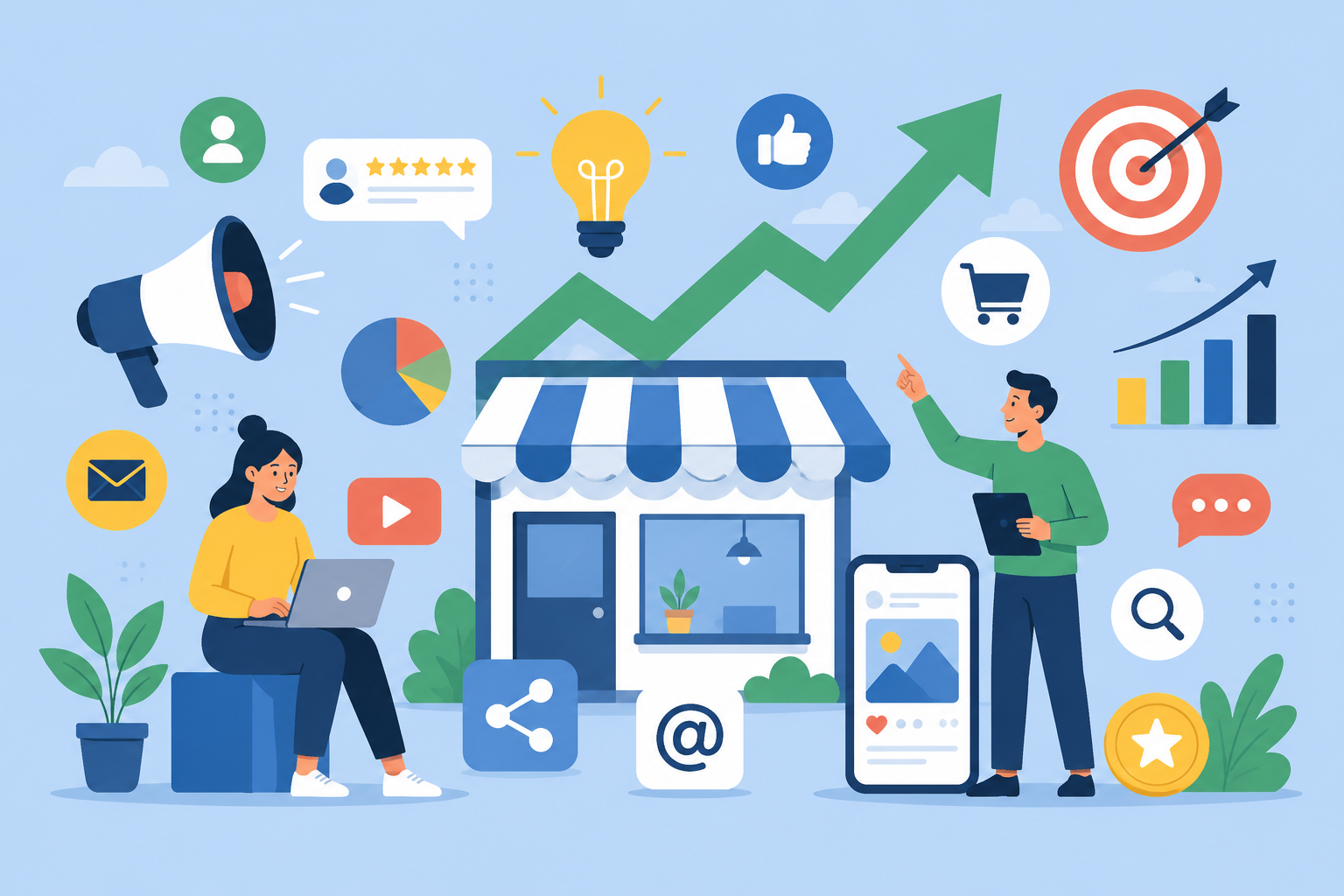
Growing a small business takes more than offering a great product or service. To attract new customers, build brand awareness, and increase revenue, you need a marketing strategy that consistently delivers results. The good news is that effective marketing doesn’t always require a massive budget. With the right combination of digital marketing, customer engagement, and data-driven decisions, even small businesses can compete with larger brands.
Whether you’re launching a startup or looking for ways to improve your existing marketing efforts, these practical small business marketing hacks will help you reach more customers, strengthen your online presence, and create sustainable business growth.
Many small businesses struggle because they focus almost exclusively on operations while giving marketing minimal attention. In today’s competitive marketplace, customers have countless choices. Businesses that stay visible, provide value, and build trust are the ones that earn long-term loyalty.
Effective marketing helps you:
Instead of chasing every new marketing trend, focus on proven strategies that align with your business goals.
A business plan isn’t just for securing investors or applying for funding. It also serves as the foundation of your marketing strategy.
Your business plan should clearly define:
Once these elements are established, every marketing campaign becomes more focused and measurable.
People prefer buying from businesses they know and trust.
Networking remains one of the most affordable and effective marketing techniques available. Attend local business events, industry conferences, trade shows, and community gatherings where your ideal customers or business partners are likely to be.
Online networking is equally important. Stay active on LinkedIn, Facebook, industry forums, and professional communities where you can answer questions, share expertise, and build meaningful relationships.
The stronger your network becomes, the easier it is to generate referrals and repeat business.
Many entrepreneurs use business financing to purchase equipment or expand operations, but marketing should also be part of that investment.
When planning your budget after preparing your business loan application documents, allocate funds toward activities that produce measurable returns, such as:
Appear in front of customers actively searching for your products or services.
Reach highly targeted audiences based on demographics, interests, and online behavior.
A faster, user-friendly website can significantly increase conversions.
Strong branding improves customer recognition and builds long-term credibility.
Marketing should be viewed as an investment that generates future revenue—not simply another expense.
Customers connect with authentic stories.
Whether you’ve secured funding, expanded your team, launched a new service, or overcome business challenges, sharing those milestones humanizes your brand.
Consider creating:
Authenticity builds trust far more effectively than overly polished sales messages.
Even businesses with physical storefronts benefit from having an online sales channel.
Customers increasingly expect to browse products, compare prices, and make purchases online.
An e-commerce presence allows you to:
Promote your online store through email campaigns, search engine optimization, and social media to maximize visibility.
Content marketing remains one of the highest-return marketing strategies available for small businesses.
Instead of constantly promoting your products, create content that answers your customers’ questions.
Examples include:
Publishing valuable content consistently helps improve search engine rankings while positioning your business as a trusted authority.
Social media isn’t simply about posting promotional graphics.
Successful businesses use social platforms to educate, entertain, and engage their audiences.
Focus on creating content such as:
Help customers solve everyday problems.
Show real-world results from your products or services.
Social media algorithms change constantly.
Email marketing gives you direct access to your audience without relying on third-party platforms.
Build your email list by offering:
Segment your subscribers based on interests and purchasing behavior to send more relevant content that improves open and conversion rates.
Influencer marketing isn’t reserved for major brands.
Micro-influencers often have highly engaged audiences and charge significantly less than celebrity creators.
Choose influencers whose audience closely matches your target customers.
Successful partnerships can include:
Authentic partnerships typically outperform overly scripted promotional campaigns.
Online reviews influence purchasing decisions more than ever before.
Positive reviews increase credibility while improving local search visibility.
Ask satisfied customers to leave reviews after completing a purchase or receiving your service.
Equally important is learning how to respond professionally when fake online reviews affect your business reputation. Handling negative feedback effectively demonstrates professionalism and builds customer confidence.
Always respond politely, thank customers for feedback, and address concerns promptly.
Acquiring a new customer often costs significantly more than retaining an existing one.
Customer retention strategies include:
Reward repeat purchases.
Recommend products based on previous purchases.
Fast, helpful service creates long-term loyalty.
Give returning customers access to promotions before the general public.
Businesses that prioritize building stronger customer retention strategies for long-term growth typically experience higher lifetime customer value and more consistent revenue.
If your business serves a local community, local SEO is essential.
Optimize your online presence by:
Appearing in local search results increases visibility among customers ready to purchase nearby.
Marketing decisions should be guided by data—not assumptions.
Track important performance metrics such as:
Regular analysis helps identify what’s working and where improvements are needed.
Small adjustments based on real data often produce significant long-term gains.
Customers should recognize your business immediately, whether they visit your website, social media pages, or physical location.
Maintain consistency across:
Strong branding builds familiarity, which naturally increases trust over time.
No marketing strategy remains perfect forever.
Customer behavior changes.
Markets evolve.
Platforms introduce new features.
Successful businesses continually test new ideas while measuring results.
Experiment with:
Small improvements made consistently can produce substantial growth over time.
Many businesses waste valuable time and money by making avoidable marketing mistakes.
Some of the most common include:
Avoiding these pitfalls allows your marketing efforts to generate stronger long-term results.
The most effective strategy combines search engine optimization, content marketing, email marketing, social media engagement, and excellent customer service. A balanced approach creates sustainable growth rather than relying on a single marketing channel.
Many businesses allocate between 5% and 10% of annual revenue toward marketing, although startups often invest more aggressively to build brand awareness.
Yes. High-quality content improves search engine rankings, builds customer trust, generates organic traffic, and supports long-term lead generation without relying solely on paid advertising.
Retaining existing customers is generally more cost-effective than constantly acquiring new ones. Loyal customers also spend more over time and are more likely to recommend your business.
Review key marketing metrics monthly, while monitoring advertising campaigns weekly. Regular analysis helps identify opportunities for optimization before budgets are wasted.
Successful small business marketing isn’t about finding a single secret tactic—it’s about consistently applying proven strategies that build trust, increase visibility, and generate measurable results.
Focus on understanding your customers, creating valuable content, strengthening your online presence, and making informed decisions based on data. As your business grows, continue refining your marketing approach and adapting to changing customer behavior.
The businesses that succeed over the long term aren’t necessarily the ones with the biggest budgets. They’re the ones that market consistently, provide real value, and never stop improving.
Telecom Lead Management: Follow Up Without Losing Sales
Oct 19, 2026

Franchise Law Basics: What Every Owner Should Know
Oct 16, 2026

How Cox Business Products Help Dealers Drive Growth
Oct 15, 2026

7 Reasons to Become a Vivint Authorized Reseller
Oct 14, 2026

Why Become an Internet Provider Dealer? 7 Key Benefits
Oct 13, 2026

9
Oct, 2026
BUSINESS IDEAS
Turning potential customers into loyal buyers takes more than a great product or an effective...

7
Oct, 2026
BUSINESS IDEAS
Effective sales training is about more than giving employees a collection of videos, PDFs, or...

5
Oct, 2026
MARKETING
Building a successful small business is not only about attracting new customers. It is also...