BUSINESS IDEAS
How to Boost Consumer Conversion, Acquisition, and Retention
Turning potential customers into loyal buyers takes more than a great product or an effective...
Learn More


 June 17, 2026
Growing a small business today requires more than just a great product or service. You need visibility, customer engagement, brand awareness, and consistent lead generation to stay competitive. Fortunately, achieving those goals doesn’t always require a large marketing budget.
Many of the best marketing tools for small businesses offer powerful free plans that help business owners improve their online presence, streamline marketing efforts, and attract more customers. From email marketing and social media management to analytics and customer feedback, the right tools can make a significant difference in your growth strategy.
Whether you’re launching a new business or looking to improve your existing marketing efforts, these free marketing tools can help you work smarter while keeping costs under control.
Marketing technology has become essential for businesses of all sizes. Even the smallest companies compete in a digital environment where customers expect fast responses, valuable content, and seamless online experiences.
The right marketing tools help you:
Increase brand visibility
Generate more leads
Improve customer engagement
Track marketing performance
Automate repetitive tasks
Build stronger customer relationships
Make data-driven business decisions
Many free platforms now provide features that were once available only to large companies with substantial marketing budgets.
One of the most effective ways to gain credibility is through media exposure.
Help a Reporter Out (HARO) connects journalists, bloggers, and media outlets with expert sources. Business owners can respond to relevant media requests and potentially earn mentions in reputable publications.
Benefits of using HARO include:
Free public relations opportunities
Increased brand credibility
High-quality backlinks
Improved search engine visibility
Enhanced industry authority
When your business is featured in trusted publications, potential customers are more likely to view your brand as an expert in your field.
Email marketing remains one of the highest-performing digital marketing channels. Unlike social media platforms, your email list is an audience you directly own and control.
Mailchimp continues to be one of the most popular email marketing platforms for small businesses. Its free plan provides essential features for businesses that are building their subscriber base.
Email campaign creation
Audience segmentation
Marketing automation
Performance reporting
Signup forms and landing pages
Building an email list helps businesses maintain direct communication with customers while reducing dependence on changing social media algorithms.
Businesses focused on customer retention often combine email marketing with strategies for creating stronger customer loyalty and long-term brand engagement.
Understanding what people are saying about your business online is crucial.
Google Alerts is a free monitoring tool that sends notifications whenever your chosen keywords appear online. This can include mentions of your company, products, industry topics, or competitors.
Track brand mentions
Monitor competitors
Discover backlink opportunities
Stay informed about industry trends
Manage online reputation
Setting up alerts for your company name allows you to quickly respond to reviews, media mentions, and customer discussions.
Customer feedback is one of the most valuable resources for business growth.
Typeform allows businesses to create interactive surveys, questionnaires, quizzes, and feedback forms that feel more conversational than traditional forms.
User-friendly design
Mobile-responsive forms
Higher completion rates
Easy data collection
Customer satisfaction measurement
Understanding customer needs helps businesses refine products, improve services, and identify new growth opportunities.
LinkedIn has evolved into one of the most powerful platforms for business networking, lead generation, and thought leadership.
Whether you operate a B2B company or a local service business, LinkedIn can help you connect with decision-makers, industry professionals, and potential customers.
Build brand credibility
Share industry expertise
Connect with potential clients
Recruit talent
Generate business partnerships
Publishing valuable content regularly can position your business as an authority within your industry.
Companies looking to strengthen professional outreach often benefit from applying proven approaches used in modern B2B marketing strategies that generate qualified leads.
Previously known as Google My Business, Google Business Profile remains one of the most important free marketing tools for local businesses.
When customers search for nearby products or services, businesses with optimized profiles are more likely to appear in local search results and Google Maps.
Ensure your business name, address, phone number, website, and operating hours are always current.
Photos help customers understand what to expect and often improve engagement.
Positive reviews build trust and improve local search rankings.
Use posts to share promotions, events, announcements, and new products.
For many local businesses, an optimized Google Business Profile can significantly increase calls, website visits, and foot traffic.
Maintaining a consistent social media presence can be challenging for busy business owners.
Buffer simplifies social media management by allowing users to schedule content across multiple platforms from a single dashboard.
Schedule posts in advance
Maintain consistent publishing
Save time on content management
Analyze post performance
Manage multiple platforms
Instead of posting manually every day, businesses can plan content weeks in advance and focus on other growth activities.
Google Analytics 4 (GA4) is currently the standard analytics platform for tracking website performance and user behavior.
Understanding how visitors interact with your website helps you make smarter marketing decisions.
Website traffic sources
User demographics
Most popular pages
Conversion tracking
Customer journey analysis
Engagement metrics
Rather than guessing what works, business owners can use data to identify successful campaigns and areas for improvement.
Visual content plays a major role in modern marketing. Businesses that consistently publish high-quality graphics tend to attract more engagement across websites, social media, and email campaigns.
Canva has become one of the most widely used design platforms because it allows non-designers to create professional-looking content quickly.
Social media graphics
Marketing flyers
Presentations
Infographics
Website banners
Product promotions
Business documents
The free plan includes thousands of templates, stock photos, and design elements that make content creation accessible to businesses of any size.
While many small businesses focus on analytics, they often overlook Google Search Console.
This free tool provides valuable information about how your website performs in Google Search.
Monitor keyword rankings
Identify indexing issues
Track search performance
Analyze click-through rates
Search Console helps business owners understand which pages attract organic traffic and where optimization opportunities exist.
Businesses that consistently publish useful content often see stronger search performance when combining Search Console insights with well-planned content marketing tactics designed for growing businesses.
Not every business needs every marketing platform.
When selecting tools, consider:
Determine whether your primary focus is lead generation, customer retention, local visibility, or brand awareness.
Some platforms require ongoing management, while others are largely automated.
Choose tools that support the channels where your audience spends the most time.
Look for solutions that can grow with your business as your needs evolve.
Starting with a few core tools and expanding gradually is often the most effective approach.
Marketing success doesn’t depend on having the biggest budget. It depends on using the right tools strategically.
Platforms like Mailchimp, Google Analytics 4, Canva, Buffer, Typeform, Google Business Profile, Google Alerts, LinkedIn, HARO, and Google Search Console provide small businesses with powerful capabilities at little to no cost.
By leveraging these free marketing tools, business owners can increase visibility, build stronger customer relationships, improve marketing efficiency, and make better decisions based on real data.
The best approach is to start with the tools that align most closely with your goals, master them, and gradually expand your marketing stack as your business grows.
There is no single best option. Google Business Profile is excellent for local visibility, Mailchimp is strong for email marketing, and Google Analytics 4 provides valuable performance insights.
Many free tools offer enough functionality for startups and small businesses. As your business grows, premium plans may provide additional automation and advanced features.
Email marketing allows businesses to communicate directly with customers, promote offers, nurture leads, and build long-term relationships without relying solely on social media platforms.
Yes. Google Business Profile remains one of the most important local SEO tools for businesses that serve customers in specific geographic areas.
Canva is one of the most popular content creation tools because it allows businesses to design professional graphics without advanced design skills.
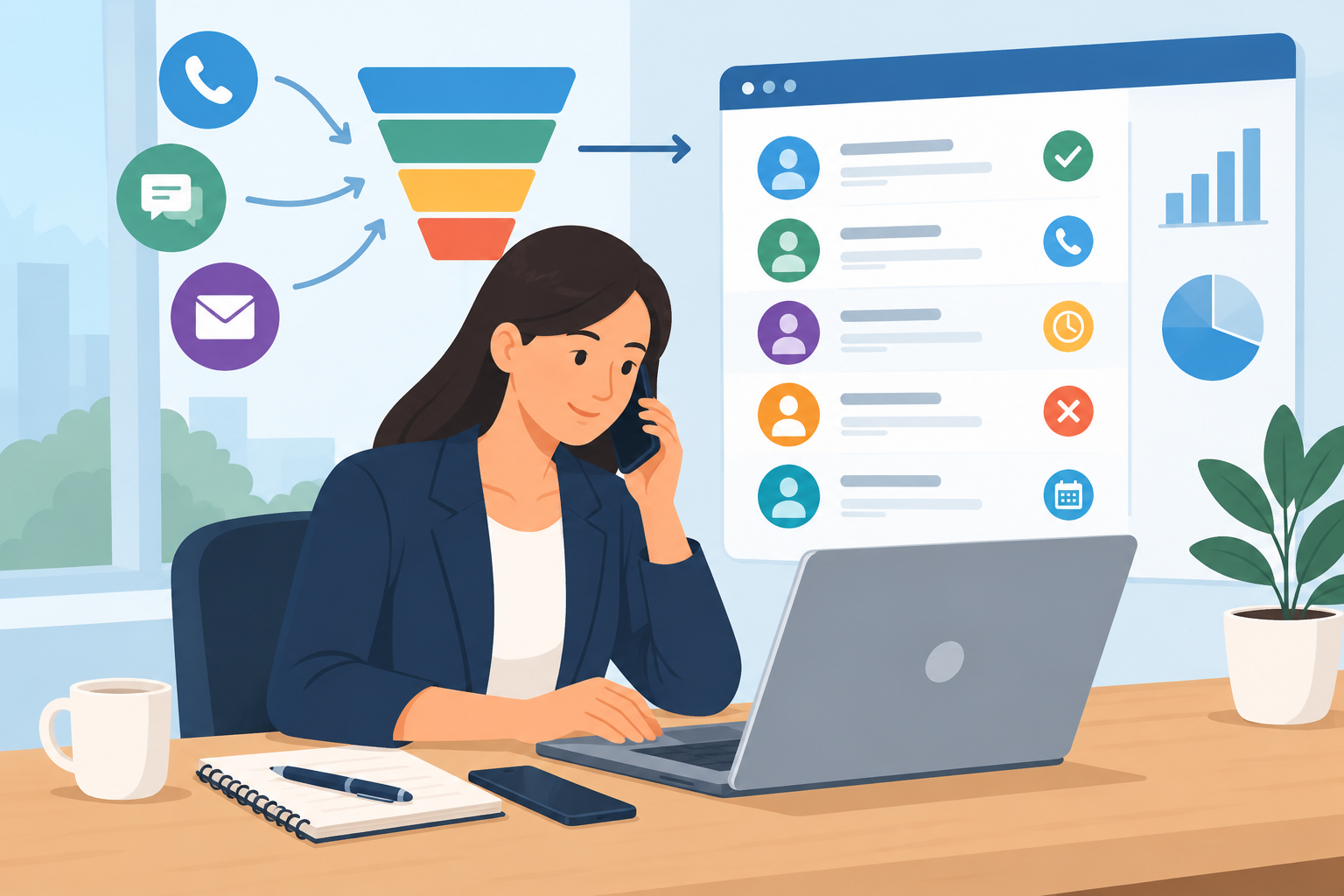
Telecom Lead Management: Follow Up Without Losing Sales
Oct 19, 2026

Franchise Law Basics: What Every Owner Should Know
Oct 16, 2026

How Cox Business Products Help Dealers Drive Growth
Oct 15, 2026

7 Reasons to Become a Vivint Authorized Reseller
Oct 14, 2026

Why Become an Internet Provider Dealer? 7 Key Benefits
Oct 13, 2026


9
Oct, 2026
BUSINESS IDEAS
Turning potential customers into loyal buyers takes more than a great product or an effective...

7
Oct, 2026
BUSINESS IDEAS
Effective sales training is about more than giving employees a collection of videos, PDFs, or...

5
Oct, 2026
MARKETING
Building a successful small business is not only about attracting new customers. It is also...