FRANCHISING
Franchise Law Basics: What Every Owner Should Know
Franchising can offer entrepreneurs a way to operate an established business while giving brands an...
Learn More

 October 9, 2026
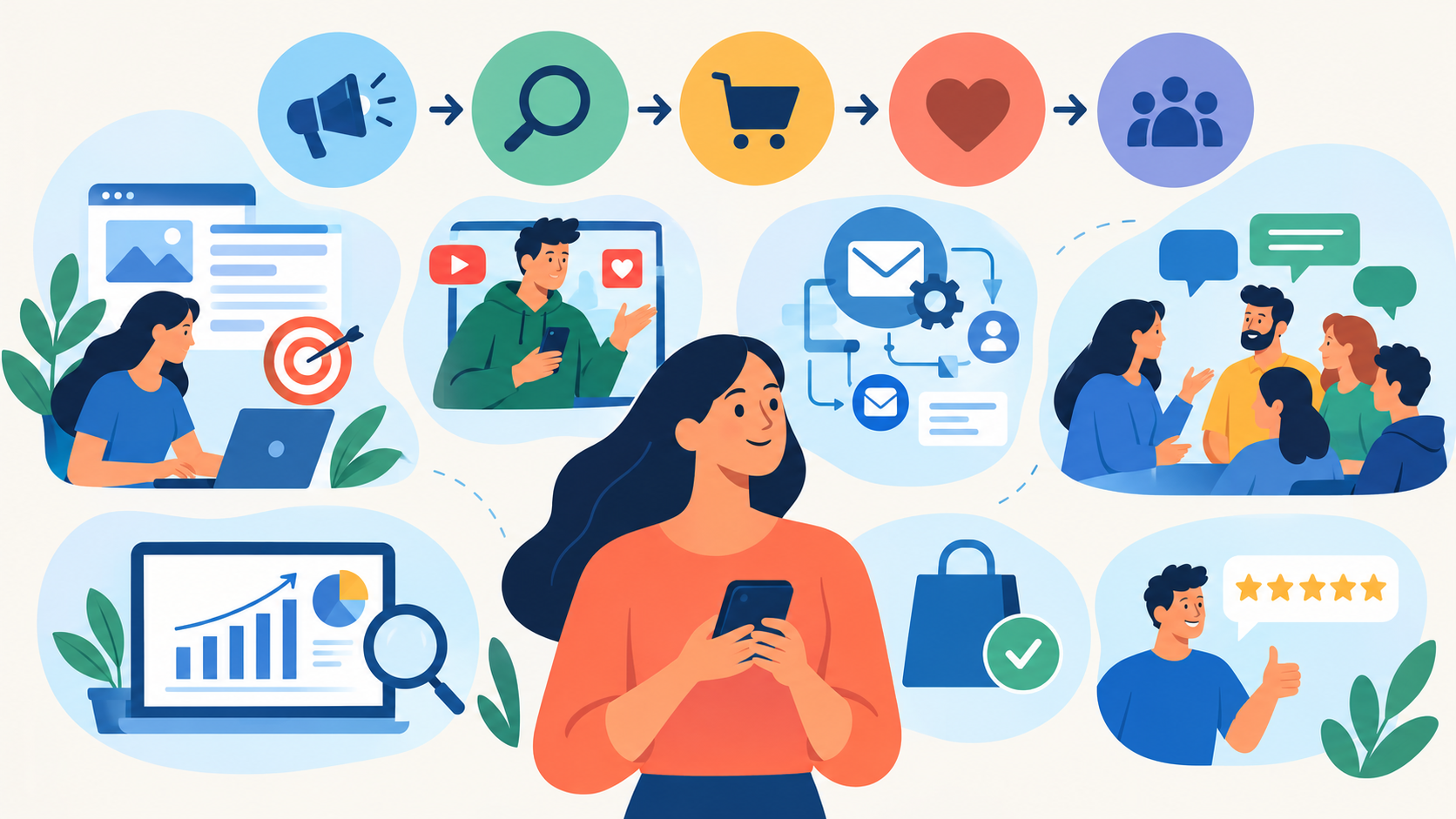
Turning potential customers into loyal buyers takes more than a great product or an effective advertising campaign. Businesses need to understand what customers value, address their concerns, and create experiences that make purchasing easier and more rewarding. A strong customer marketing strategy combines data-driven insights, relevant messaging, and meaningful relationships to improve consumer conversion, customer acquisition, and long-term retention.
Today’s consumers have access to more information, more choices, and more ways to compare brands than ever before. They expect businesses to understand their needs, provide useful information, and demonstrate how a product or service can improve their lives.
To meet these expectations, companies must move beyond traditional promotional tactics and focus on delivering value throughout the customer journey. From brand storytelling and personalized communication to marketing automation and community building, the right strategies can help businesses attract qualified prospects, increase conversions, and encourage repeat purchases.
Whether you manage an established company, a growing startup, or a franchise, these practical approaches can help you build stronger customer relationships and create sustainable business growth.
Understand customer needs: Use customer feedback, behavioral data, and market research to identify what motivates purchasing decisions.
Tell a compelling brand story: Communicate your company’s values and show customers how your products or services solve real problems.
Improve the customer experience: Remove unnecessary steps, provide clear information, and make purchasing straightforward.
Build meaningful relationships: Use conversations, online communities, and personalized communication to strengthen customer loyalty.
Use targeted marketing: Reach relevant audiences through micro-influencers, educational advertising, and customer-focused campaigns.
Automate repetitive tasks: Use marketing automation to improve follow-ups, organize leads, and deliver timely messages.
Measure performance: Track conversion rates, acquisition costs, customer retention, and customer lifetime value to identify opportunities for improvement.
Successful consumer marketing begins with understanding how people discover, evaluate, purchase, and continue using a product or service. Customers rarely move directly from seeing an advertisement to making a purchase. They may research alternatives, compare prices, read reviews, ask questions, and wait until they feel confident about their decision.
Businesses that recognize these behaviors can create more relevant marketing experiences at every stage.
Customer data helps businesses understand which messages attract attention, which channels generate qualified leads, and what prevents prospects from purchasing.
Useful information may include website analytics, search queries, customer surveys, purchase history, support conversations, and email engagement. When analyzed together, these sources reveal patterns that can inform marketing decisions.
For example, if visitors frequently view a product page but leave before checkout, the problem might be unclear pricing, unexpected shipping costs, insufficient product information, or a complicated payment process.
Rather than immediately increasing advertising spending, investigate the reasons behind the drop-off and address the underlying issue.
A customer journey map outlines the steps people take before and after purchasing. It helps identify where customers encounter confusion, lose interest, or need additional support.
A practical customer journey includes these stages:
Awareness: Prospects discover your brand through search engines, advertising, social media, or referrals.
Consideration: Potential customers compare solutions, read reviews, and evaluate your offering.
Conversion: Customers complete a purchase, submit a lead form, or take another meaningful action.
Retention: Customers receive ongoing support, useful communication, and reasons to continue buying.
Advocacy: Satisfied customers recommend your business, leave reviews, or share their experiences.
Each stage requires a different approach. Awareness campaigns should communicate relevance, while consideration-stage content should address questions and comparisons. Conversion-focused messaging should reduce uncertainty, and retention campaigns should reinforce the value customers receive after buying.
Brand storytelling helps customers understand what a business stands for and why its products or services matter. Instead of focusing exclusively on product features, an effective brand story connects the company’s purpose with the needs, challenges, and aspirations of its audience.
Customers are more likely to remember a brand when its message feels relevant to their experiences.
Your brand message should explain three things: who you serve, what problem you solve, and why customers should trust your solution.
Avoid vague claims that could apply to any business. Instead, describe specific benefits and demonstrate how your offering helps customers achieve their goals.
For example, a telecommunications dealer could focus on helping small businesses find dependable internet and communication solutions that support daily operations. This message is more useful than simply claiming to provide excellent service.
Consistency also matters. Your website, social media profiles, advertisements, and sales conversations should communicate the same core value proposition.
Customer experiences often provide more convincing evidence than promotional claims. Testimonials, case studies, customer interviews, and real-world examples can show how your business solves problems.
When developing customer stories, explain the challenge, the solution provided, and the outcome. Use specific details whenever they are available and approved for publication.
Businesses can also use customer testimonials to establish credibility and trust. Authentic feedback helps prospective buyers evaluate whether your offering is appropriate for their needs.
The objective is not to make every story sound perfect. It is to communicate genuine value in a way that helps prospective customers make informed decisions.
Marketing channels, consumer expectations, and purchasing behaviors continue to evolve. Businesses that rely on a single advertising platform or an outdated campaign structure may struggle when audience behavior changes.
A more resilient marketing strategy focuses on customer needs while adapting to new opportunities.
Marketing should not be treated as a disconnected list of activities, such as publishing social media posts, sending emails, or running advertisements. Each activity should support a broader business objective.
Before launching a campaign, ask what customers need to know, what action you want them to take, and how the campaign contributes to the customer journey.
For example, a social media advertisement might introduce a product, while a landing page explains its benefits and an email sequence answers common questions. Together, these touchpoints can create a more coherent experience than isolated campaigns.
Emerging platforms, short-form video, interactive content, and AI-assisted marketing can provide new ways to reach customers. However, adopting every new trend is rarely a sustainable strategy.
Start by evaluating whether a channel matches your audience, budget, and objectives. Test a focused campaign, measure its results, and compare performance with existing channels.
Businesses should also maintain accurate first-party customer data and obtain appropriate consent for its use. This helps support more reliable personalization while reducing unnecessary dependence on third-party platforms.
Customer feedback provides valuable information about what people appreciate, what frustrates them, and what they expect from a business.
A lack of complaints does not necessarily indicate customer satisfaction. Some dissatisfied customers will leave quietly rather than contact support or explain why they stopped purchasing.
Regular conversations help businesses identify problems before they lead to lost customers.
Provide convenient opportunities for customers to express their opinions. These may include post-purchase surveys, follow-up emails, customer support conversations, review requests, and short feedback forms.
Ask focused questions that produce useful answers. For example:
What influenced your decision to choose our business?
Was any part of the purchasing process confusing?
What could we improve about our product or service?
What additional support would make your experience better?
Keep surveys concise and avoid asking for information you do not need.
Collecting feedback is only the first step. Businesses must organize responses, identify recurring concerns, and decide which issues deserve attention.
If several customers report difficulty understanding a service package, simplify the explanation and update the relevant website pages. If customers frequently ask about delivery or installation, make those details more visible before checkout.
It is also helpful to communicate improvements to customers when appropriate. Showing that feedback has led to meaningful changes demonstrates that the company takes customer concerns seriously.
Customers appreciate relevant communication that reflects their needs and preferences. However, personalization should be based on appropriate data and used to make the experience more helpful.
A returning customer might receive product recommendations based on previous purchases, while a new prospect might receive introductory information about the business.
The key is to deliver useful messages at the right time rather than overwhelming customers with repetitive promotions.
A brand community gives customers opportunities to connect with the business and with other people who share similar interests or goals.
Communities can strengthen customer relationships by creating a sense of belonging that extends beyond individual transactions. They also give businesses opportunities to understand their audience and encourage meaningful participation.
Depending on customer preferences, a community might operate through a private social media group, an online forum, live events, webinars, or a customer membership program.
Choose a platform that makes participation convenient rather than opening multiple channels that are difficult to maintain.
For example, a franchise business could organize virtual networking sessions where franchise owners exchange operational ideas. A local service provider might use social media to share project updates, answer common questions, and highlight customer experiences.
A successful community offers more than promotional messages. It provides practical information, opportunities to ask questions, and access to experiences that members find valuable.
Consider hosting live question-and-answer sessions, sharing expert insights, featuring customer success stories, or inviting members to provide feedback on new offerings.
Respond consistently and establish clear community guidelines. Customers should feel that their participation is welcomed and that discussions remain useful and respectful.
For franchise businesses, social media marketing strategies for franchise growth can help create consistent brand communication while allowing individual locations to connect with their local audiences.
Over time, an engaged community can encourage repeat business, strengthen brand recognition, and generate referrals through genuine customer advocacy.
Micro-influencers are content creators who serve a focused audience, often within a particular industry, location, or interest group. Although their audiences may be smaller than those of major influencers, their content can be highly relevant to the people they reach.
For businesses targeting specific customer segments, this relevance can make micro-influencer partnerships worth testing.
Follower count alone is not a reliable indicator of influencer quality. Businesses should evaluate audience relevance, engagement quality, content consistency, and the creator’s reputation.
A local restaurant, for example, might collaborate with food creators whose followers are interested in dining in the same city. A business-to-business company could work with an industry specialist who regularly explains products or services to decision-makers.
Review previous sponsored content and check whether the creator communicates naturally with their audience.
Effective influencer campaigns give audiences a clear reason to pay attention. Instead of relying exclusively on scripted endorsements, consider demonstrations, product walkthroughs, behind-the-scenes content, or honest explanations of how a service works.
Set measurable objectives before launching a partnership. Depending on the campaign, these might include qualified website visits, tracked inquiries, completed purchases, or promotional-code redemptions.
Use unique tracking links or campaign codes to evaluate performance where practical. Make sure sponsorships are disclosed in accordance with applicable advertising requirements.
Working with several relevant micro-influencers can expand reach across different audience segments. However, measure the quality and cost of the results rather than assuming that more creators will automatically generate more sales.
Marketing automation helps businesses manage repetitive tasks, deliver timely communications, and coordinate campaigns across multiple channels.
When implemented properly, automation can reduce manual work while helping marketing and sales teams respond to prospects more consistently.
A typical automated workflow begins when someone completes a form, downloads a resource, requests a quote, or subscribes to receive updates.
The system can record the inquiry, assign the lead to the appropriate team member, send a confirmation message, and schedule a follow-up based on the prospect’s needs and preferences.
For example, a potential customer who requests information about a service could receive an immediate acknowledgment followed by relevant details. A sales representative could then contact the prospect when human assistance is appropriate.
These workflows reduce the risk of missed inquiries and help businesses maintain consistent communication.
Automation platforms can segment audiences according to relevant characteristics, such as previous purchases, expressed interests, or interactions with marketing content.
A customer who recently purchased a product might receive setup instructions, while a prospect who abandoned a quote request might receive a reminder or an opportunity to ask questions.
Personalization should remain helpful and proportionate. Avoid sending excessive messages or using sensitive information without an appropriate legal basis and customer consent where required.
Automation is not a substitute for strategy. Poorly configured workflows can send irrelevant messages, duplicate contacts, or continue promoting products after a customer has already purchased them.
Review your workflows regularly and monitor metrics such as email engagement, lead response time, conversion rate, unsubscribe rate, and qualified lead volume.
Keep contact records accurate, establish access controls, and follow applicable privacy and data-protection requirements. Human oversight remains essential when a workflow affects customer relationships or important purchasing decisions.
Consumers often encounter too many advertisements, product claims, and competing offers. When the information is confusing or incomplete, they may postpone a purchase or choose a competitor that makes the decision easier.
Informative advertising addresses this problem by helping potential customers understand a product, evaluate its benefits, and determine whether it meets their needs.
Product features describe what an offering includes. Benefits explain why those features matter to the customer.
For example, a software company might advertise automated reporting as a feature. A more customer-focused message would explain that automated reporting reduces repetitive administrative work and makes performance information easier to review.
Connect every major benefit to a real customer need. Avoid exaggerated promises that cannot be substantiated.
Customers may hesitate because they are uncertain about pricing, product suitability, implementation, warranties, or ongoing costs.
Use advertisements and landing pages to answer these questions clearly. Depending on the business, useful information may include:
Transparent pricing or a clear explanation of how quotes are calculated.
Product comparisons and practical use cases.
Service coverage, delivery details, or implementation requirements.
Customer reviews and substantiated case studies.
Frequently asked questions about common concerns.
Clear explanations of warranties, limitations, and cancellation terms.
Educational content can support the sales process for improving profit margins by helping customers understand the value of an offering rather than focusing exclusively on the lowest price.
An effective advertisement should lead to a landing page that continues the same message. If an advertisement promises a specific benefit, visitors should be able to find that information immediately after clicking.
Use a clear headline, concise benefit statements, relevant supporting evidence, and a prominent call to action. Remove unnecessary form fields and distractions that make it harder to complete the desired action.
Test different headlines, page layouts, calls to action, and form lengths. Evaluate the results using actual conversions and lead quality, not just clicks.
Even strong marketing campaigns can underperform when the purchasing experience is difficult. A customer may be interested in a product but abandon the process if the website loads slowly, pricing is unclear, or the checkout requires unnecessary steps.
Improving conversion rates often begins with removing these obstacles.
Review the complete purchasing process from the customer’s perspective. Identify confusing navigation, repetitive form fields, unexpected charges, and unclear instructions.
For ecommerce businesses, this may mean offering convenient payment options and explaining shipping costs before checkout. For service businesses, it could involve simplifying quote requests and making consultation scheduling easier.
Every additional step should have a clear purpose.
Customers need to feel confident that they understand what they are buying and what happens next.
Display accurate business contact information, clear policies, secure payment options where applicable, and credible customer feedback. Explain how inquiries are handled and when customers can expect a response.
Avoid misleading urgency claims, hidden fees, or complicated cancellation procedures. Short-term pressure tactics can damage trust and create long-term retention problems.
Many customers research and purchase products through smartphones. A page that works well on a desktop computer may still be difficult to use on a smaller screen.
Check that text is readable, buttons are easy to tap, forms work properly, and important information is visible without excessive scrolling. Monitor page performance and fix issues that interfere with navigation or checkout.
A smoother mobile experience can help businesses convert more of the traffic they already attract.
Marketing performance should be evaluated against business outcomes rather than activity alone. Impressions, clicks, and social media engagement can provide useful context, but they do not necessarily show whether a campaign generates profitable customers.
A consistent measurement framework helps businesses allocate resources more effectively.
Customer acquisition cost (CAC) measures how much a business spends to acquire a customer.
A basic calculation is:
CAC = Total acquisition costs ÷ Number of new customers acquired
Include the relevant advertising, marketing, sales, and other acquisition expenses when calculating the figure. Be consistent about the period and costs included.
Compare CAC across campaigns and customer segments to identify which acquisition channels are delivering sustainable results.
Conversion rate measures the percentage of eligible visitors or prospects who complete a defined action.
Conversion rate = (Number of conversions ÷ Number of eligible visitors or prospects) × 100
For example, if 50 out of 1,000 landing-page visitors submit an inquiry form, the conversion rate is 5%.
Define conversions carefully. A completed purchase, qualified lead, booked consultation, and email subscription represent different outcomes and should not be treated as interchangeable.
Customer retention measures how effectively a business continues serving its existing customers over time. Depending on the business model, retention may be tracked through repeat purchases, renewals, active subscriptions, or ongoing service relationships.
Customer lifetime value (CLV) estimates the value a customer generates over the duration of the relationship. It can help businesses evaluate how much they can reasonably invest in acquisition and retention.
Review retention alongside customer satisfaction, repeat-purchase rate, churn, and support issues. A business that attracts many new customers but loses them quickly may need to improve its product, onboarding, service quality, or ongoing customer experience.
Use a regular review process to determine which changes produce meaningful results. Establish a baseline, change one important variable where practical, and evaluate performance over a suitable period.
Avoid drawing conclusions from very small samples or short-term fluctuations. Consider differences in traffic quality, seasonality, campaign spending, and customer intent before deciding whether an approach is successful.
Acquiring a customer is only the beginning of the relationship. Long-term growth depends on delivering the value customers expected and giving them good reasons to return.
Retention strategies should begin immediately after the first conversion rather than waiting until a customer becomes inactive.
Provide clear instructions, realistic expectations, and accessible support after a purchase. Customers should understand how to use the product, access the service, or contact your team if they need assistance.
For service businesses, this might include a confirmation message, an explanation of the next steps, and a scheduled follow-up. For product-based businesses, it could involve setup instructions, maintenance information, or relevant product recommendations.
Timely support can prevent confusion and help customers recognize the value of their purchase.
Loyalty programs, exclusive benefits, renewal incentives, and relevant offers can encourage repeat purchases when they align with customer preferences.
However, discounts should not be the only reason customers return. Reliable service, consistent quality, convenient processes, and responsive support are often more important to sustaining a long-term relationship.
Use customer feedback and purchase patterns to identify what makes customers stay. Address recurring dissatisfaction before introducing additional promotional campaigns.
Satisfied customers can help attract new prospects through recommendations, reviews, and referrals.
Make it easy for customers to share honest feedback after a positive experience. If you operate a referral program, communicate its terms clearly and comply with applicable disclosure requirements.
Customer advocacy is most sustainable when it grows from genuine satisfaction rather than pressure to promote the business.
Consumer conversion occurs when a potential customer completes a desired action, such as making a purchase, submitting a lead form, booking a consultation, or subscribing to a service. The specific conversion depends on the business objective and the stage of the customer journey.
Start by identifying where prospects abandon the buying process. Improve landing-page clarity, explain benefits, address common objections, simplify forms, strengthen trust signals, and make the next step obvious. Measure the impact of changes using conversion data and lead quality.
Customer acquisition focuses on attracting and converting new customers. Customer retention focuses on keeping existing customers engaged and encouraging them to continue purchasing or using a service. Both contribute to sustainable growth, but they require different strategies and performance metrics.
Customer feedback helps businesses identify barriers to purchasing, service problems, and unmet expectations. Acting on this information can improve the buying experience, reduce customer frustration, and reveal opportunities to strengthen products and services.
Marketing automation helps businesses capture leads, organize customer information, send timely follow-ups, and coordinate campaigns. It can improve consistency and reduce manual work, allowing teams to respond to prospects more efficiently. Its effectiveness depends on relevant messaging, accurate data, and appropriate human oversight.
Micro-influencers can be effective when their audiences match a business’s target market and their content generates meaningful engagement. Small businesses should evaluate relevance, credibility, campaign costs, and measurable outcomes instead of choosing creators solely by follower count.
Important metrics include conversion rate, customer acquisition cost, qualified lead volume, customer retention rate, repeat-purchase rate, customer lifetime value, and return on advertising spend. Select metrics that align with specific objectives and evaluate them together to understand overall performance.
Businesses can build loyalty through reliable products, responsive customer support, convenient purchasing, personalized communication, and useful post-purchase assistance. Customers are more likely to remain when they consistently receive the value they expected and feel that their concerns are taken seriously.
Improving consumer conversion, acquisition, and retention requires a customer-focused strategy that connects marketing activity with real business outcomes. Strong brand storytelling, meaningful customer conversations, community engagement, targeted influencer partnerships, and informative advertising can help businesses attract the right prospects and build trust.
Marketing automation and performance measurement can make these efforts more efficient, while a straightforward buying process and reliable post-purchase support encourage customers to return.
The most effective approach is to understand what customers need, remove barriers that prevent them from taking action, and deliver consistent value after the sale. By continuously listening, testing improvements, and measuring results, businesses can build stronger customer relationships and create a more sustainable path to growth.

Telecom Sales Scripts That Help Turn Leads Into Sales
Oct 20, 2026
Telecom Lead Management: Follow Up Without Losing Sales
Oct 19, 2026
Franchise Law Basics: What Every Owner Should Know
Oct 16, 2026
How Cox Business Products Help Dealers Drive Growth
Oct 15, 2026

7 Reasons to Become a Vivint Authorized Reseller
Oct 14, 2026

16
Oct, 2026
FRANCHISING
Franchising can offer entrepreneurs a way to operate an established business while giving brands an...

7
Oct, 2026
BUSINESS IDEAS
Effective sales training is about more than giving employees a collection of videos, PDFs, or...

5
Oct, 2026
MARKETING
Building a successful small business is not only about attracting new customers. It is also...