FRANCHISING
Franchise Law Basics: What Every Owner Should Know
Franchising can offer entrepreneurs a way to operate an established business while giving brands an...
Learn More

 April 8, 2026
Protecting your credit cards and personal finances has become more important than ever. With the rise of digital payments, online shopping, and contactless transactions, financial security risks have evolved—and so have the tactics used by fraudsters.
Today, thieves don’t need physical access to your wallet to steal your money. Data breaches, phishing scams, and unauthorized transactions can happen quietly and quickly. That’s why building strong credit card security habits is essential.
The good news is that protecting your money doesn’t require complicated tools or advanced knowledge. With the right strategies and consistent awareness, you can significantly reduce your risk and keep your financial information safe.
Taking a proactive approach is the most effective way to prevent fraud. These foundational habits can help you safeguard your credit card information and avoid unnecessary financial stress.
Your credit card details should always remain private—even among people you trust.
While friends or family members may not misuse your information intentionally, sharing it increases the risk of exposure. If their devices or accounts are compromised, your financial data could be affected as well.
Always remember: the fewer people who have access to your card details, the safer your finances will be.
Online shopping is convenient, but it also comes with risks if you’re not careful.
Before entering your credit card details, check the website URL. Secure sites begin with https://, where the “s” indicates encrypted communication. You should also look for security badges or trust seals from recognized providers.
Avoid unfamiliar or suspicious websites, especially those offering deals that seem too good to be true. These are often designed to collect your personal and financial information.
One of the simplest yet most effective ways to detect fraud is by reviewing your statements consistently.
Look for:
Unauthorized transactions
Duplicate charges
Small recurring deductions
Some fraud schemes involve small charges over time to avoid detection. By reviewing your statements carefully, you can identify issues early and take immediate action.
If you notice anything unusual, report it to your bank or card issuer right away.
Your financial statements and receipts contain sensitive information that can be used for identity theft.
Instead of throwing them away intact, shred any documents that include:
Credit card numbers
Billing addresses
Account details
This simple step prevents others from accessing your personal data through discarded materials.
For additional strategies on managing debt safely, you can explore smart credit card debt consolidation methods that also emphasize financial awareness.
While digital payments are common, carrying cash still requires careful handling. Developing a few practical habits can help you keep your money safe in everyday situations.
Keeping all your cash in one obvious place can make you an easy target.
Instead, consider distributing your money across different secure spots, such as:
Hidden compartments in your bag
Inner pockets of clothing
Minimal-carry wallets
These small adjustments can make a big difference in reducing the risk of theft.
Only bring the amount of cash you actually need for the day.
Carrying large amounts increases your exposure to loss or theft. Digital payments and cards can handle most transactions, so there’s rarely a need to carry more than necessary.
Beyond basic habits, there are modern tools designed specifically to enhance your financial security.
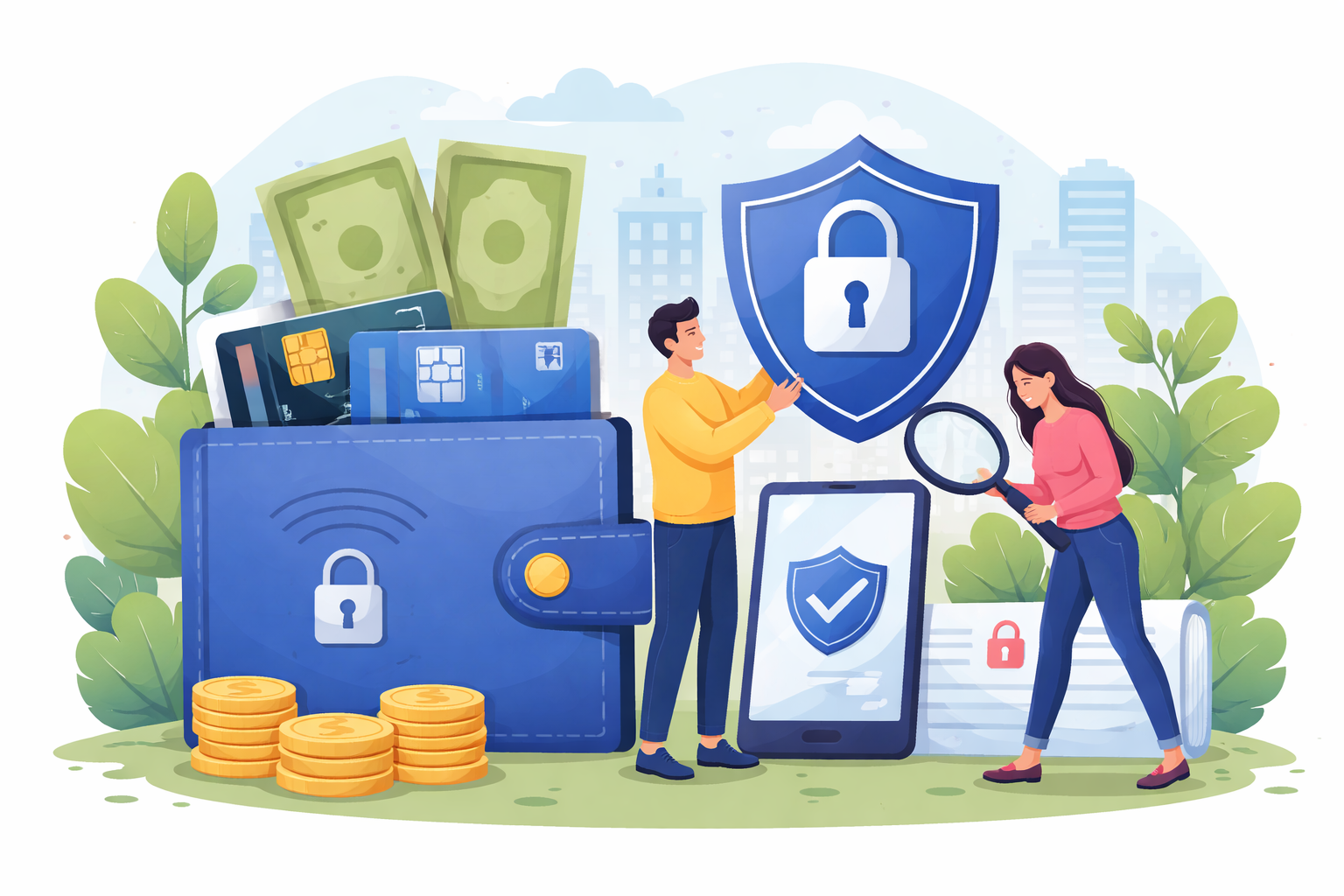
Many credit cards now use RFID (Radio Frequency Identification) technology, allowing contactless payments. While convenient, this technology can be exploited if someone uses a scanner to access your card data.
RFID-blocking wallets are designed to prevent unauthorized scanning by blocking electromagnetic signals.
Bifold Wallets
Ideal for everyday use, offering a balance between storage and compact design.
Trifold Wallets
Best for those who carry multiple cards and need extra storage space.
Money Clip Wallets
Perfect for minimalists who prefer carrying only essential cards and cash.
Using RFID protection adds an extra layer of defense without changing your daily habits.
Front-pocket wallets are not only more secure but also more comfortable.
Because they’re stored in your front pocket, they’re harder for pickpockets to access compared to traditional back-pocket wallets. They also help reduce strain on your lower back when sitting for extended periods.
Your credit card isn’t the only source of sensitive information. Financial documents can also expose critical details if not handled properly.
Keep your statements, receipts, and financial records in a safe and organized place.
Options include:
Locked drawers or cabinets
Home safes
Secure digital storage (encrypted files)
Losing these documents can create opportunities for identity theft, so proper storage is essential.
Recurring charges are easy to overlook but can become a source of financial leakage.
Review all subscriptions and automatic payments regularly. Cancel any services you no longer use and verify that all recurring charges are legitimate.
If you’re looking to optimize your monthly expenses, reviewing practical ways to reduce monthly bills can help you stay in control of your finances.
Even with strong precautions, issues can still happen. Knowing how to respond quickly can minimize damage.
If you suspect fraud:
Contact your bank or card provider
Freeze or block your card
Dispute unauthorized transactions
The faster you act, the better your chances of recovering lost funds.
After a security issue, keep a close eye on your credit reports and account activity.
Look for:
New accounts you didn’t open
Changes in your credit score
Suspicious inquiries
Early detection helps prevent long-term financial damage.
If you’re managing multiple financial tools, understanding the differences between personal loan versus credit card options can help you make smarter financial decisions moving forward.
Protecting your credit card and money isn’t a one-time effort—it’s an ongoing process.
The most effective approach combines:
Awareness of risks
Consistent monitoring
Smart use of tools and technology
By developing these habits, you create a strong foundation for financial security that adapts to changing threats.
Keeping your credit card and money safe doesn’t have to be complicated. Simple, consistent actions—like monitoring your accounts, avoiding risky transactions, and using protective tools—can significantly reduce your exposure to fraud.
In today’s digital environment, staying informed and proactive is your best defense. With the right approach, you can confidently manage your finances while minimizing risks.

How to Sell Business Internet Services to Small Businesses
Oct 23, 2026
Telecom Sales Call Quality Assurance: A Practical Guide
Oct 22, 2026
Telecom Dealer KPIs: Metrics That Drive Better Results
Oct 21, 2026

Telecom Sales Scripts That Help Turn Leads Into Sales
Oct 20, 2026
Telecom Lead Management: Follow Up Without Losing Sales
Oct 19, 2026


16
Oct, 2026
FRANCHISING
Franchising can offer entrepreneurs a way to operate an established business while giving brands an...

12
Oct, 2026
FINANCE
Starting a business after military service can be an exciting way to build financial independence...

9
Oct, 2026
BUSINESS IDEAS
Turning potential customers into loyal buyers takes more than a great product or an effective...