DEALER
What Happens After a Telecom Dealer Submits an Order?
When a telecom dealer submits a customer order, the provider begins processing the application to...
Learn More


 November 23, 2026
Artificial intelligence (AI) and automation are helping telecom dealers manage daily operations more efficiently, from qualifying sales leads to tracking customer applications and monitoring team performance. By using the right technology, dealerships can reduce repetitive administrative work, improve response times, organize customer information, and give sales representatives more time to focus on closing legitimate sales.
For telecom dealerships handling multiple providers, customer inquiries, sales representatives, and service applications, these improvements can make a meaningful difference. Instead of relying entirely on manual processes, dealers can use AI-powered tools and automated workflows to create a more organized and scalable business.
This guide explains how AI for telecom dealers works, which dealership operations can benefit from automation, and how to introduce these technologies without compromising customer service or data security.
AI and automation help telecom dealerships complete routine tasks, analyze business information, and coordinate workflows with less manual intervention. AI can interpret information and generate recommendations, while automation follows predefined rules to perform repetitive actions.
Although these technologies are often used together, they serve different purposes.
For example, an AI-powered system can analyze an incoming customer inquiry, identify the requested internet service, and recommend a suitable sales representative. An automation workflow can then assign the lead, create a CRM record, and send a notification to the representative.
The objective is not to replace dealership employees. It is to give them better tools to manage their responsibilities.
AI is changing telecom dealership operations by making customer information, sales activity, and business performance easier to understand. Instead of manually reviewing every interaction or report, managers can use AI-powered tools to identify patterns and organize information.
Here are some practical applications.
AI can help telecom dealers evaluate incoming leads by analyzing customer inquiries, service preferences, location information, and other relevant details. This allows sales teams to prioritize prospects who are more likely to be interested in available services.
Lead qualification is particularly important for dealerships receiving inquiries through websites, advertisements, referrals, and phone calls.
AI-powered lead qualification can help with:
For example, when someone submits a website inquiry asking about business internet, an AI system can identify the request as a business-related opportunity and categorize it accordingly.
A CRM automation can then assign the inquiry to a representative responsible for business customers.
However, AI-generated lead scores should be treated as recommendations rather than guarantees. Representatives should verify customer needs and service availability before making recommendations.
Telecom sales automation helps representatives spend less time on repetitive administrative work and more time communicating with potential customers.
A dealership may have representatives handling dozens of inquiries, follow-up reminders, applications, and customer questions every day. Managing these activities manually can become difficult as the business grows.
Sales automation can simplify several responsibilities:
For instance, when a new lead enters the CRM, an automation workflow can assign it to an available representative and create a follow-up task.
If the representative does not update the lead within the designated period, the system can send a reminder.
This creates a more consistent sales process and reduces the likelihood of inquiries being overlooked.
Dealership owners can also improve sales quality by combining automation with established procedures for verifying customer information and reviewing applications. This is particularly important when working with multiple telecommunications providers.
Yes. AI can improve telecom customer service by helping dealerships respond to common questions, organize customer requests, and route inquiries to the appropriate support team.
Customer service often involves repetitive questions about internet packages, installation schedules, application status, billing concerns, and provider requirements.
AI-powered customer service tools can assist with these interactions through:
For example, a customer asking about the status of an internet installation can interact with a chatbot that provides approved information or directs the inquiry to the appropriate team.
If the issue requires access to provider-specific records or account details, the system should route the request to an authorized employee rather than generate an unsupported answer.
AI should support customer service representatives, not replace human judgment in situations involving complaints, account changes, sensitive information, or complex service issues.
For more guidance on maintaining strong customer relationships, dealers can also review JNA’s guide on how telecom dealers can spot and prevent customer churn.
Telecom dealerships can automate several administrative and operational tasks without changing their entire business structure. The most effective starting point is identifying repetitive activities that consume employee time or frequently create delays.
The following examples illustrate where automation can provide practical value.
Automated lead distribution helps ensure that incoming inquiries reach the right sales representative.
A dealership can establish rules based on:
For example, business internet inquiries can be routed to representatives who handle commercial accounts, while residential internet inquiries can go to the appropriate residential sales team.
Automated reminders help representatives maintain consistent communication with interested customers.
A CRM system can schedule reminders when:
These reminders help prevent potential opportunities from being forgotten.
Order monitoring is another area where automation can improve dealership operations.
Representatives and managers often need to know whether applications are pending, approved, rejected, delayed, or successfully activated.
When the provider or authorized system makes status information available through a supported integration, automation can update internal records and notify the responsible employee.
A typical workflow may look like this:
The system should only report verified status information. If an integration is unavailable, employees should continue using the provider’s approved portal or communication process.
For additional guidance, see JNA’s article on why telecom orders get delayed and how dealers can fix them.
Automated reporting allows dealership owners to monitor business performance without manually collecting information from multiple employees.
A reporting dashboard can organize information such as:
AI tools can also summarize reporting trends and highlight unusual changes.
For example, if one representative consistently receives inquiries but completes fewer applications than the rest of the team, a manager can investigate whether additional training, better lead distribution, or process improvements are needed.
The goal is to use reporting to identify opportunities for improvement rather than relying on assumptions.
AI-powered document tools can help employees extract information, summarize business documents, and organize administrative records.
Depending on the system and document type, these tools may assist with:
However, AI-generated document summaries should not replace reviewing original agreements, provider requirements, or compliance documents.
Employees should verify important information before approving applications or making business decisions.
Manual operations rely primarily on employees completing and coordinating tasks themselves. Automated operations use software to handle predefined activities, organize information, and trigger notifications.
The right approach depends on the dealership’s size, available systems, and operational requirements.
Consider these examples:
Manual process:
Automated process:
Automation does not eliminate the need for managers. It reduces the amount of manual coordination required to keep everyday processes moving.
AI can help dealership owners make better operational decisions by analyzing historical business information and identifying patterns that may not be immediately obvious.
Rather than reviewing individual records one at a time, managers can use AI tools to summarize larger datasets and identify areas that deserve attention.
Depending on the quality and availability of dealership data, AI tools can help analyze:
Sales performance
Customer activity
Operational performance
For example, a dealership may notice that applications from a particular service category experience more delays than others.
AI can help summarize the available records and identify recurring issues. Management can then investigate the cause and determine whether additional training or a process adjustment is needed.
AI-generated findings should always be checked against reliable business records before management makes decisions.
Telecom dealers do not need to automate every department immediately. A better approach is to start with a few repetitive tasks, evaluate the results, and gradually introduce additional tools.
Here is a practical implementation process.
Start by reviewing the dealership’s daily operations.
Identify tasks that require employees to repeatedly enter information, send notifications, update records, or coordinate with other team members.
Examples include:
Prioritize tasks that consume significant time or frequently result in missed updates.
A CRM system should serve as a central location for managing customer information, lead activity, and sales opportunities.
Look for tools that support:
Not every dealership needs an expensive enterprise platform. Smaller operations can begin with a basic CRM and expand as their requirements increase.
Before choosing a system, confirm that it supports the integrations and security controls your dealership requires.
Automation works best when business processes are already clearly defined.
Before creating automated workflows, establish procedures for handling leads, verifying customer information, submitting applications, and following up on unresolved requests.
For example, a lead management procedure should explain:
These procedures give automation systems consistent rules to follow.
Begin with straightforward workflows that have clear triggers and outcomes.
Good starting points include:
Test each workflow with a small group before introducing it across the dealership.
Make sure that notifications reach the correct employees and that automated updates do not create duplicate records.
Once the dealership has organized its data and basic workflows, introduce AI tools where they can provide additional value.
Consider starting with:
Keep employees involved in reviewing AI-generated content, particularly when it affects customer communications or business decisions.
Review automated processes regularly to determine whether they are producing the intended results.
Look for improvements in:
If an automation creates unnecessary notifications or incorrect updates, revise the workflow instead of assuming that more automation automatically means better performance.
AI and automation can provide several operational advantages when implemented with clear business objectives.
Automating repetitive administrative activities allows employees to focus on customer interactions, sales opportunities, and important business responsibilities.
AI-powered assistants and automated notifications can help dealerships respond to routine inquiries more consistently.
Automated lead distribution, reminders, and CRM updates help representatives manage opportunities more effectively.
Centralized information makes it easier to review customer interactions, application status, and sales performance.
Reporting dashboards help managers understand how different parts of the dealership are performing.
As a dealership grows, automation can reduce the need to coordinate every routine activity manually. This makes it easier to manage additional employees, customer inquiries, and business processes.
However, the benefits depend on implementation quality. Poorly organized data and inconsistent workflows can make even sophisticated AI tools ineffective.
AI can improve dealership operations, but it also introduces risks that business owners should understand before implementing new systems.
Telecom dealerships may handle personal information, account details, contact information, and application records.
Customer data should only be processed through approved systems with appropriate access restrictions and security protections.
Dealers should:
AI systems can produce inaccurate summaries, recommendations, or customer responses.
Employees should verify important information, especially when discussing service availability, pricing, installation schedules, or contractual terms.
Not every CRM, provider portal, or business application supports direct integration.
Before purchasing automation software, verify that it can connect to the systems your dealership actually uses. Avoid workflows that depend on unsupported access or unauthorized data collection.
Employees may resist new technology if they do not understand how it improves their work.
Provide practical training, explain the purpose of each workflow, and allow employees to report problems during implementation.
Not every customer interaction should be handled automatically.
Complaints, sensitive account issues, complex sales questions, and situations requiring judgment should have a clear path to a human representative.
The most effective approach combines automated efficiency with personal customer service.
Choosing an appropriate platform is important because different dealerships have different operational requirements.
Before selecting a tool, evaluate the following capabilities:
A useful platform should solve an actual operational problem rather than introduce unnecessary complexity.
AI can help telecom dealers organize incoming leads, identify customer interests, prioritize follow-ups, and analyze sales performance. These capabilities help representatives manage opportunities more efficiently, although actual sales results still depend on customer needs, service availability, and sales execution.
Telecom sales automation uses software to handle repetitive sales activities such as lead assignment, follow-up reminders, CRM updates, and performance reporting. It helps representatives spend more time communicating with customers and managing qualified opportunities.
Yes. AI-powered chat assistants can answer approved frequently asked questions, categorize customer inquiries, and direct requests to the appropriate support team. Complex issues and sensitive account matters should be handled by authorized human representatives.
Small dealerships can benefit from AI and automation, particularly when they receive multiple customer inquiries or manage repetitive administrative tasks. They can start with basic CRM automation and introduce more advanced AI features as their operations grow.
AI and automation can help organize application records and monitor status updates when connected to an authorized system that provides reliable information. The dealership should not rely on AI-generated status predictions as a substitute for verified provider records.
CRM automation follows predefined rules to perform tasks such as assigning leads and sending reminders. AI can analyze information, summarize conversations, recognize patterns, and generate recommendations. Many modern business platforms combine both capabilities.
AI can be used responsibly when the dealership selects appropriate platforms, follows data protection requirements, restricts access, and avoids sharing sensitive information with unapproved services. Dealers should review their provider agreements and applicable privacy obligations before implementation.
AI is more useful as a support tool than a complete replacement for sales representatives. It can handle repetitive tasks and provide information, while employees remain responsible for understanding customer needs, explaining services, resolving complex concerns, and building relationships.
AI and automation are creating new opportunities for telecom dealers to improve how they manage sales, customer communication, reporting, and daily business operations.
The most effective strategy is not to automate everything at once. Start with repetitive tasks that consume employee time, organize dealership information, and introduce tools that address specific operational needs.
By combining AI-powered assistance, reliable CRM systems, and well-defined workflows, telecom dealerships can build more consistent processes and create a better experience for both employees and customers.
For dealerships looking to expand their operations, adopting practical technology solutions can provide a stronger foundation for managing growth and competing in an increasingly technology-driven telecommunications industry.
JNA Dealer Program provides dealership opportunities, training, marketing support, and access to telecommunications-related business solutions. Businesses interested in expanding their service offerings can explore JNA Dealer Program opportunities to learn more about becoming an authorized dealer.
How AI and Automation Are Changing Telecom Dealer Operations
Nov 23, 2026
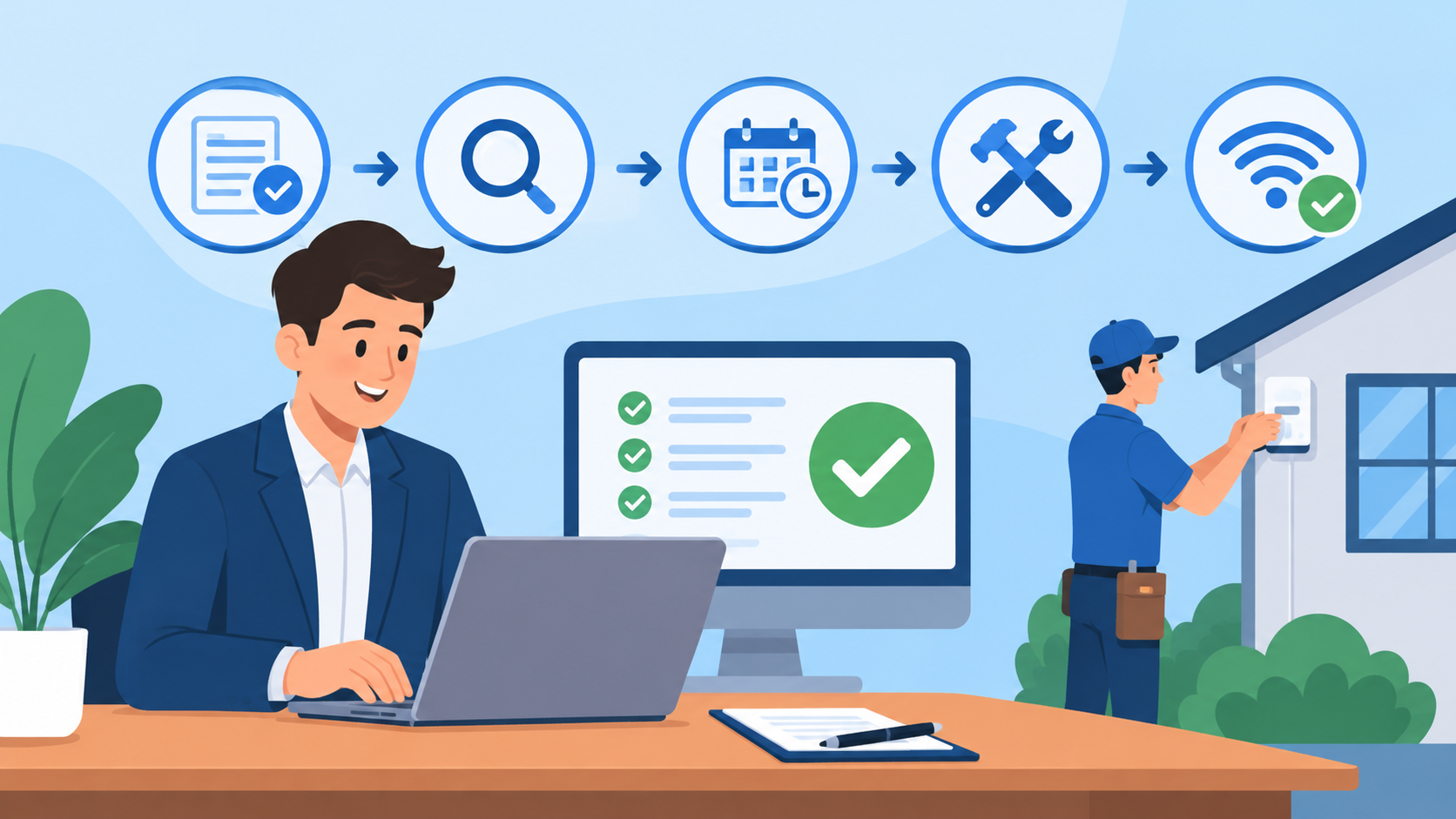
What Happens After a Telecom Dealer Submits an Order?
Nov 20, 2026

How to Build a Practical Telecom Dealer Marketing Budget
Nov 19, 2026

How to Handle Telecom Installation No-Shows and Rescheduling
Nov 18, 2026
How Telecom Dealers Can Reduce Chargebacks and Disputed Sales
Nov 17, 2026

20
Nov, 2026
DEALER
When a telecom dealer submits a customer order, the provider begins processing the application to...
19
Nov, 2026
DEALER
A well-planned telecom dealer marketing budget helps you attract qualified customers, control advertising expenses, and...
18
Nov, 2026
DEALER
A missed internet or telecom installation appointment can frustrate customers, delay service activation, and create...