BUSINESS IDEAS
How to Boost Consumer Conversion, Acquisition, and Retention
Turning potential customers into loyal buyers takes more than a great product or an effective...
Learn More

 April 7, 2026
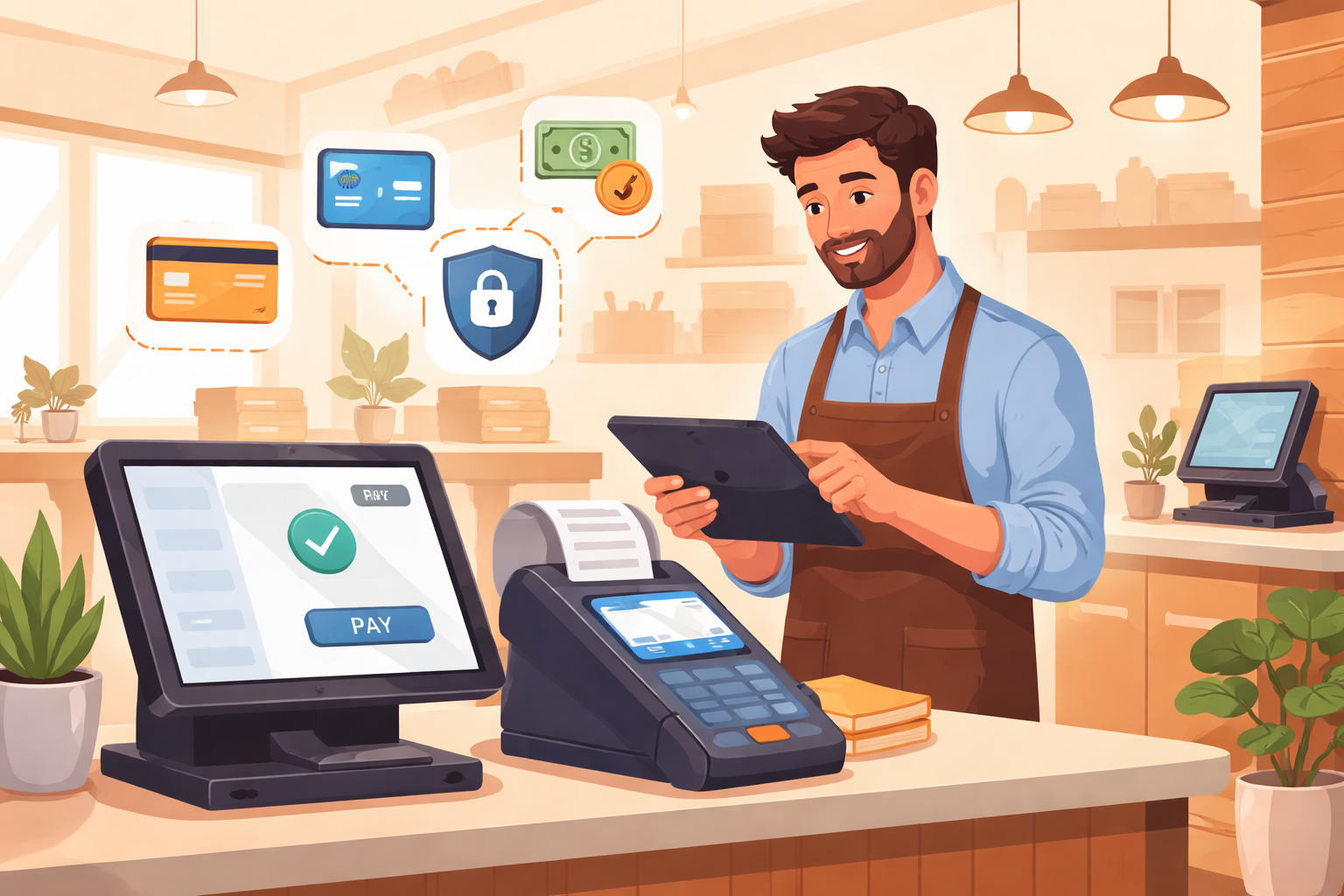
Payment processing is no longer optional—it’s essential for any small business that wants to stay competitive. Whether you’re running a physical store, an online shop, or both, customers expect fast, secure, and flexible ways to pay.
But choosing the right business payment processing solution can feel overwhelming. Between confusing fees, technical jargon, and dozens of providers, it’s easy to make a costly mistake.
This guide breaks everything down in a clear, practical way. You’ll learn how payment processing works, what pricing models to watch for, and how to choose the right setup for your business—without overpaying or locking yourself into the wrong contract.
Before comparing providers, it helps to understand how payment processing actually functions behind the scenes. Once you know the basics, it becomes much easier to spot good deals—and avoid bad ones.
Every card transaction involves several parties working together in seconds:
Customer – The person making the payment
Merchant (You) – The business accepting the payment
Payment Processor – Handles transaction data between parties
Issuing Bank – The customer’s bank
Acquiring Bank – Your business bank
Card Networks – Visa, Mastercard, American Express, Discover
Each of these players takes a small piece of the transaction fee, which is why costs can add up quickly.
A merchant services account allows your business to accept credit cards, debit cards, and digital payments.
Without it, you’re limited to cash or bank transfers—which can significantly reduce your sales potential.
Most providers bundle this account with payment processing tools, making setup easier. However, the pricing and features can vary widely.
An Independent Sales Organization (ISO) is a third-party provider authorized by banks to sell and manage merchant accounts.
Unlike traditional banks, ISOs often offer:
More flexible pricing
Faster onboarding
Better customer support
Advanced payment technology
For many small businesses, ISOs provide a more tailored experience compared to large financial institutions.
Interchange fees are the base cost of processing card payments. These are set by card networks—not your provider.
Every payment processor must pay interchange, but they add their own markup on top. That’s where pricing differences come in.
Understanding this is key:
👉 You can’t avoid interchange, but you can control how much extra you pay on top of it.
Not all pricing structures are created equal. The model you choose can significantly impact your monthly costs.
Here are the three most common pricing models—and how they work.
This model charges a fixed percentage per transaction.
Example:
2.9% + $0.30 per transaction
Best for:
Small businesses with low volume
Startups needing simple pricing
Pros:
Easy to understand
No hidden fees
Cons:
Can get expensive as your business grows
No flexibility in pricing
In this model, transactions are grouped into tiers:
Qualified
Mid-qualified
Non-qualified
Each tier has different rates—but the problem is, providers control how transactions are categorized.
Why this matters:
Many everyday transactions get pushed into higher-cost tiers, making this one of the most expensive options.
Best for:
This model works like a membership.
You pay:
A monthly fee
Direct interchange rates
A small fixed transaction fee
Best for:
Growing businesses
High transaction volume
Pros:
Transparent pricing
Lower long-term costs
Predictable monthly expenses
Cons:
Monthly fee required
Not ideal for very low volume
While pricing is important, choosing a payment processor based on cost alone can lead to bigger problems later.
A cheaper provider with poor support or limited features can cost you more in lost sales, downtime, and frustration.
Here’s what else you need to evaluate.
Modern businesses don’t operate in just one place. You may sell:
In-store
Online
Through mobile devices
Via invoices or subscriptions
Your payment processor should support all of these seamlessly.
Omnichannel support (online + offline in one system)
Real-time reporting dashboards
Inventory and POS integration
Recurring billing options
Mobile payment compatibility
Having everything in one platform simplifies operations and gives you better visibility into your business performance.
Payment data isn’t just about transactions—it’s about insights.
The right provider will give you access to:
Sales trends
Customer behavior
Peak transaction times
Revenue breakdowns
These insights can help you make smarter business decisions and improve profitability.
Payment processing is mission-critical. If your system goes down, you can’t accept payments—and that directly impacts revenue.
24/7 availability
In-house support team (not outsourced)
Fast response times
Dedicated account manager
A reliable support team can make a huge difference, especially during high-traffic periods or technical issues.
Not all costs are obvious upfront. Many providers include hidden fees that can quietly increase your expenses.
Setup or onboarding fees
Monthly minimum fees
PCI compliance fees
Chargeback fees
Early termination fees
Always review the contract carefully and ask for a full fee breakdown before signing.
Selecting the right provider comes down to aligning their offerings with your business needs.
Evaluate your sales channels
Do you sell online, offline, or both?
Estimate your monthly volume
This helps determine the best pricing model.
List required features
POS, invoicing, subscriptions, analytics, etc.
Compare at least 3 providers
Don’t settle for the first option.
Read the fine print
Look for hidden fees and contract terms.
Test customer support
Reach out before signing to gauge responsiveness.
Avoid these common pitfalls when choosing a payment processor:
Choosing based on price alone
Ignoring contract terms
Overlooking integration needs
Not planning for business growth
Failing to compare multiple providers
Making an informed decision upfront can save you thousands in the long run.
Business payment processing doesn’t have to be complicated—but it does require careful evaluation.
The right provider should offer:
Transparent pricing
Reliable technology
Strong customer support
Scalable solutions
When you take the time to understand how payment processing works and compare your options properly, you position your business for smoother operations and long-term growth.
For additional money-saving strategies that can support your overall business expenses, you can also explore practical travel cost-saving tips as part of broader financial planning.

Telecom Lead Management: Follow Up Without Losing Sales
Oct 19, 2026

Franchise Law Basics: What Every Owner Should Know
Oct 16, 2026
How Cox Business Products Help Dealers Drive Growth
Oct 15, 2026

7 Reasons to Become a Vivint Authorized Reseller
Oct 14, 2026

Why Become an Internet Provider Dealer? 7 Key Benefits
Oct 13, 2026


9
Oct, 2026
BUSINESS IDEAS
Turning potential customers into loyal buyers takes more than a great product or an effective...
7
Sep, 2026
HOME SECURITY
Choosing the right home security system is about more than installing a few cameras or...

19
Aug, 2026
HOME SECURITY
Customer lifetime value telecom dealer performance depends on one core metric — CLV — the...