VIVINT DEALER
7 Reasons to Become a Vivint Authorized Reseller
Becoming a Vivint authorized reseller can be an opportunity for entrepreneurs who want to enter...
Learn More

 July 13, 2026
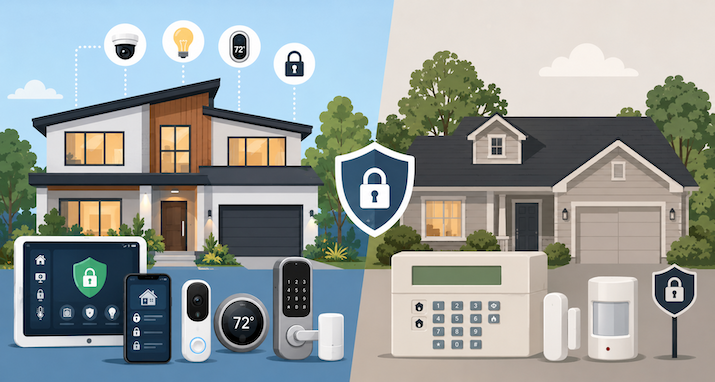
Choosing the right home security system is about more than protecting your property—it’s about finding a solution that fits your lifestyle, budget, and long-term needs. As smart home technology continues to evolve, homeowners are no longer limited to basic alarm systems. Modern solutions like Vivint combine security, automation, and remote control into a single platform, while traditional home security systems continue to offer dependable protection with proven reliability.
If you’re comparing Vivint vs. traditional home security systems, understanding the differences in equipment, monitoring, installation, smart home integration, and customization can help you make a confident decision. Whether you’re upgrading an existing system or securing a new home, this guide breaks down the key features, advantages, and trade-offs of both options.
If you’re still exploring different home security system packages and what they include, you can learn more by reviewing these home security system package options before deciding which setup best fits your home.
Vivint Smart Home is one of the leading providers of professionally installed smart home security systems. Founded in 1999, the company has grown beyond traditional alarm services by combining advanced security equipment with home automation features that make managing your home easier from virtually anywhere.
Unlike conventional security providers that focus primarily on intrusion detection, Vivint creates an interconnected ecosystem where security devices and smart home products work together seamlessly.
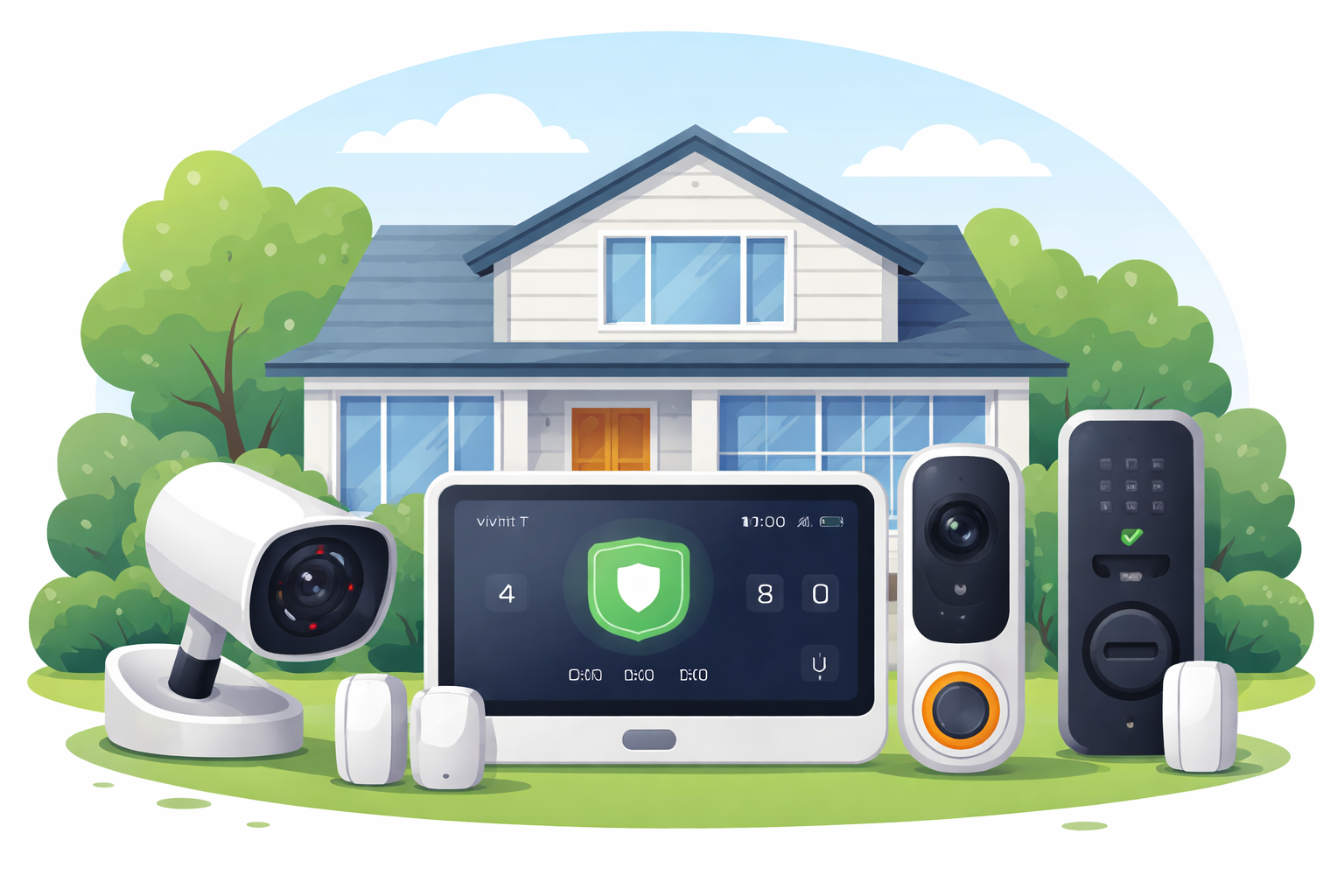
A typical Vivint system may include:
All of these devices connect to a central Smart Hub and are controlled through the Vivint mobile app, allowing homeowners to monitor and manage their homes remotely.
One feature that sets Vivint apart is its commitment to professional installation. Every device is installed and configured by trained technicians who ensure the system functions correctly from day one.
Because the equipment communicates wirelessly through cellular technology, homeowners don’t need a traditional landline phone connection, making installation cleaner and more flexible than older wired systems.
Every Vivint system includes professional monitoring services. When an alarm is triggered, trained monitoring specialists verify the event and coordinate with emergency responders when necessary.
Combined with instant mobile alerts, live video access, and automation features, Vivint delivers more than security—it provides ongoing visibility and control over your entire home.
Traditional home security systems have protected homes for decades by focusing on dependable intrusion detection and emergency response. While many providers now offer wireless equipment and mobile apps, conventional systems typically emphasize core security functions rather than comprehensive home automation.
Depending on the provider, homeowners can choose between professionally monitored systems or self-monitored solutions.
Traditional systems commonly include:
Some providers also offer optional devices like flood sensors, garage door monitoring, and environmental protection equipment.
Many traditional providers offer flexible monitoring choices.
Professional monitoring ensures that emergency services are contacted when alarms are verified, while self-monitoring sends notifications directly to your smartphone, allowing you to respond personally.
Monthly monitoring costs generally range from $20 to $60, depending on the provider and selected features.
Unlike Vivint, traditional security companies often give customers the option between professional installation and DIY setup.
DIY installation appeals to homeowners looking to save money or customize placement, while professional installation offers convenience for larger or more complex homes.
The biggest difference between Vivint and many traditional security providers is the equipment itself.
Vivint was designed from the ground up as a smart home platform, while traditional systems were originally built as standalone alarm systems and later expanded to include smart features.
Let’s compare them more closely.
Vivint primarily uses wireless devices that communicate with a central Smart Hub using secure wireless and cellular connections.
This approach provides several advantages:
Many traditional security systems, especially older ones, rely on wired sensors connected directly to a control panel. Although wired systems have earned a reputation for reliability, adding new equipment often requires running additional cables through walls.
Modern traditional providers increasingly offer wireless equipment, but many still support wired configurations for existing homes.
Vivint offers one of the most comprehensive smart home ecosystems available.
Homeowners can integrate:
Because Vivint designs much of its own hardware, these devices work together seamlessly within one unified platform.
Traditional security companies typically offer fewer proprietary devices and often rely on third-party hardware from multiple manufacturers. While this can provide flexibility, the user experience may vary depending on device compatibility.
As your needs change, expanding a Vivint system is relatively simple.
Adding another camera, smart lock, or thermostat usually requires pairing a new wireless device with the existing system rather than installing new wiring.
Traditional wired systems often require additional installation work, making upgrades more time-consuming and potentially more expensive.
One of Vivint’s strongest advantages is consistency.
Instead of managing multiple apps for different devices, homeowners use one centralized dashboard to:
For users who value convenience and automation, this unified experience is difficult for many traditional providers to match.
A security system is only as effective as the monitoring behind it. While cameras and sensors detect potential threats, monitoring determines how quickly someone responds when an alarm occurs.
Vivint includes professional monitoring with every system.
Its monitoring centers operate 24 hours a day, seven days a week, receiving alarm signals and coordinating emergency response whenever necessary.
This means homeowners don’t need to monitor alerts themselves.
Benefits include:
Professional monitoring is especially valuable for families, vacation homes, elderly homeowners, and anyone who spends long periods away from home.
Many traditional security systems offer self-monitoring as an alternative.
Instead of contacting emergency responders automatically, the system sends notifications directly to your smartphone.
You decide whether an event requires calling police or emergency services.
Advantages include:
However, response time depends entirely on how quickly you notice the alert and take action.
The answer depends on your priorities.
Choose professional monitoring if you want:
Choose self-monitoring if you:
Both approaches provide meaningful protection, but professional monitoring generally delivers a higher level of security for homeowners seeking comprehensive coverage.
One area where Vivint clearly distinguishes itself is smart home integration.
Rather than functioning as a standalone alarm system, Vivint serves as the central hub for connected devices throughout your home.
The Vivint mobile app allows homeowners to manage nearly every aspect of their property from one interface.
With a few taps, users can:
This centralized experience simplifies everyday home management while enhancing security.
Vivint supports integration with several well-known smart home platforms and products, including:
These integrations make it possible to automate daily routines while keeping security at the center of the smart home experience.
Many traditional security providers have introduced smart home compatibility in recent years, but their capabilities often remain more limited.
Depending on the provider, users may need multiple mobile apps to manage cameras, lighting, thermostats, and security devices separately.
For homeowners seeking a fully connected smart home with centralized controls, Vivint generally provides the more seamless experience.
Every homeowner has different security priorities. Some want a simple alarm system, while others want complete control over cameras, lighting, locks, and energy management. The ability to customize your system plays a major role in choosing between Vivint and a traditional home security provider.
Vivint allows homeowners to build a security system around their specific needs rather than selecting a one-size-fits-all package.
You can customize your system with devices such as:
As your needs change, additional devices can be added without replacing the existing system.
Many traditional security providers offer equipment bundles designed for apartments, small homes, or larger properties.
While additional devices can usually be purchased, customization options are often more limited than Vivint’s smart home ecosystem. Some providers also restrict which devices can be integrated into their platform.
For homeowners who prefer a highly personalized setup, Vivint generally provides greater flexibility.
Installation is another major difference between Vivint and traditional security systems.
Vivint requires professional installation for every system.
A certified technician installs the equipment, verifies that all devices communicate correctly, and ensures cameras, sensors, and automation features are positioned for optimal performance.
Benefits include:
Professional installation is especially valuable for homeowners investing in multiple cameras, smart locks, and automation devices.
Traditional providers usually offer one of two installation options.
Professional installation is similar to Vivint’s approach and is often recommended for larger homes or more complex systems.
Many newer security companies also offer DIY installation.
Equipment arrives preconfigured, allowing homeowners to install sensors and cameras themselves by following step-by-step instructions.
DIY installation can reduce upfront costs, but it may require additional time and technical confidence.
Price is often one of the biggest deciding factors when choosing a home security system.
While comparing monthly fees is important, homeowners should also consider equipment quality, professional monitoring, installation, and long-term value.
Vivint pricing varies based on the equipment selected.
Costs generally include:
Because every system is customized, prices differ depending on the number of cameras, sensors, and automation devices included.
Although Vivint typically costs more than many DIY systems, homeowners receive a professionally installed smart home platform rather than a basic alarm system.
Traditional systems usually offer a wider range of pricing options.
Entry-level systems may include:
Higher-tier packages may add:
Professional monitoring often costs between $20 and $60 per month, while self-monitoring plans can significantly reduce ongoing expenses.
The least expensive option isn’t always the best value.
When comparing providers, consider:
A system that costs more upfront may provide greater convenience, better security, and lower replacement costs over time.
Contract requirements vary significantly between providers.
Vivint often offers financing options for equipment, which may involve longer service agreements depending on how the system is purchased.
Homeowners should review contract terms carefully to understand:
Traditional companies offer a wider variety of contract structures.
Depending on the provider, customers may choose:
This flexibility appeals to homeowners who prefer shorter commitments.
Both Vivint and traditional home security systems provide dependable protection, but they serve different types of homeowners.
Vivint is an excellent choice if you want:
A traditional home security system may be the better option if you:
Ultimately, the right choice depends on your home’s size, budget, lifestyle, and how much value you place on smart home convenience.
Vivint is generally the better option for homeowners looking for advanced smart home automation, professional installation, and integrated security. Traditional systems remain an excellent choice for those seeking dependable protection at a lower cost.
Yes. Every Vivint system is professionally installed to ensure all devices are configured correctly and working together as intended.
Many modern traditional systems support smart devices, but integration is usually more limited than Vivint’s unified smart home platform.
Professional monitoring offers around-the-clock protection and faster emergency response, making it worthwhile for many homeowners. Self-monitoring can reduce costs but requires you to respond to alerts yourself.
Traditional security systems generally have lower upfront costs and may offer self-monitoring plans. Vivint typically costs more because it includes premium equipment, professional installation, and advanced smart home capabilities.
Choosing between Vivint and a traditional home security system comes down to what matters most to you.
If you’re looking for a fully connected smart home with professional installation, advanced automation, and centralized control, Vivint stands out as one of the most comprehensive solutions available.
On the other hand, if affordability, flexibility, and straightforward security are your priorities, a traditional home security system can still provide reliable protection without many of the additional smart home features.
Before making a decision, consider your home’s layout, your family’s lifestyle, your budget, and whether you expect your security needs to grow over time. Investing in the right system today can provide years of confidence, convenience, and peace of mind.

Telecom Lead Management: Follow Up Without Losing Sales
Oct 19, 2026

Franchise Law Basics: What Every Owner Should Know
Oct 16, 2026
How Cox Business Products Help Dealers Drive Growth
Oct 15, 2026
7 Reasons to Become a Vivint Authorized Reseller
Oct 14, 2026

Why Become an Internet Provider Dealer? 7 Key Benefits
Oct 13, 2026

14
Oct, 2026
VIVINT DEALER
Becoming a Vivint authorized reseller can be an opportunity for entrepreneurs who want to enter...
30
Sep, 2026
FRANCHISING
Selling Vivint smart home products can provide a flexible sales opportunity for people who understand...
29
Jan, 2026
DEALER
Smart home security continues to evolve, and Vivint remains one of the most trusted names...