MARKETING
Common Small Business Startup Mistakes to Avoid
Starting a small business takes more than a good idea and the motivation to make...
Learn More

 April 1, 2026
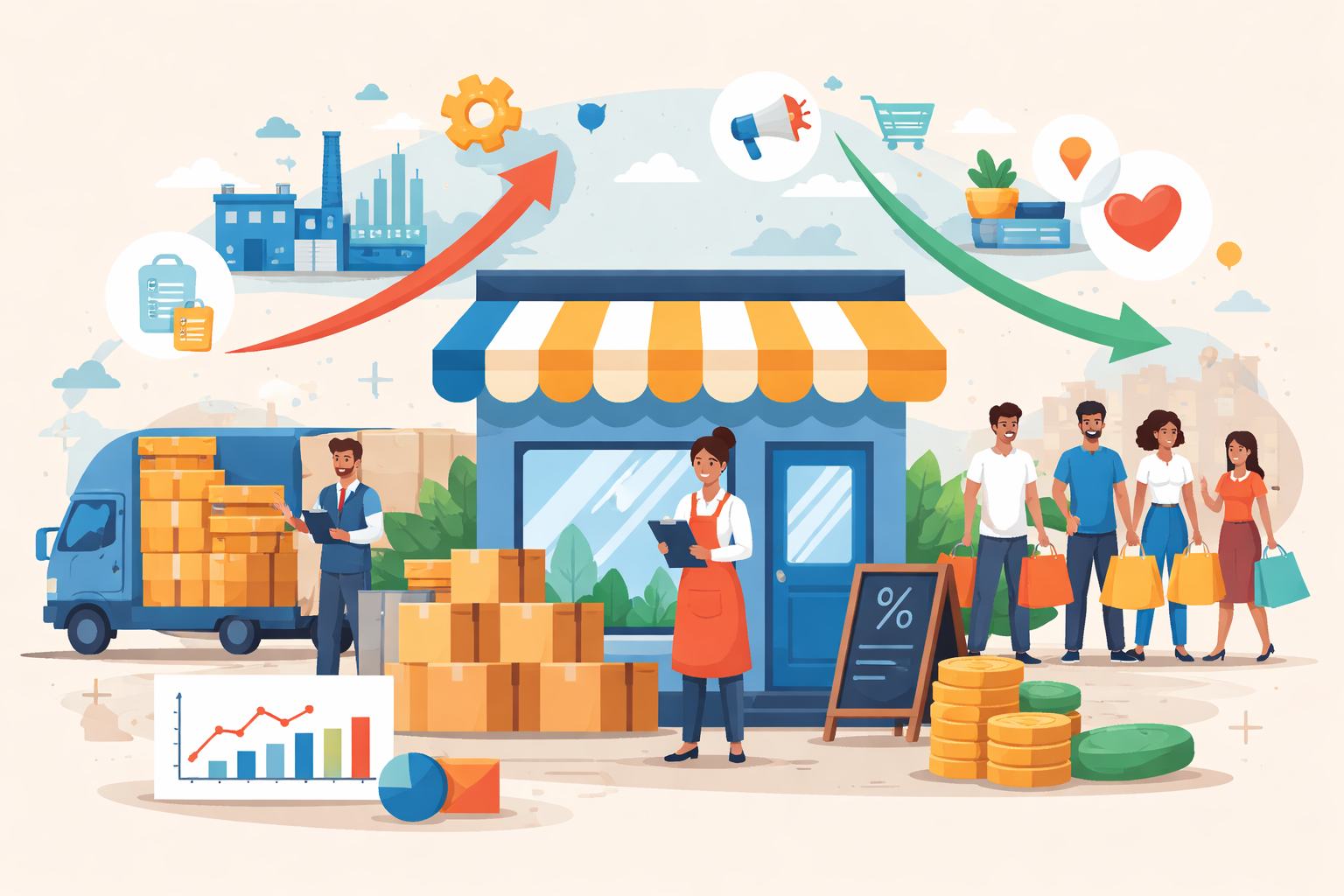
Understanding supply and demand is no longer just an economic concept—it’s a practical survival tool for small businesses. In today’s unpredictable market, shifting consumer behavior, inflation pressures, and ongoing supply chain challenges are directly affecting pricing, inventory, and profitability.
Whether you’re running a retail shop, offering services, or managing an online store, mastering supply and demand helps you make smarter decisions. From setting the right price to managing inventory levels, these core principles shape how your business grows and competes.
In this guide, we’ll break down supply and demand in simple, practical terms—and show you exactly how to use them to your advantage.
Supply and demand are the foundation of any market economy. They determine how goods and services are priced and how resources are allocated.
Demand refers to how much of a product or service customers are willing to buy at a given price.
When prices drop, demand usually increases because customers feel they’re getting more value. On the other hand, when prices rise, demand tends to decrease as fewer customers are willing to pay more.
However, demand isn’t driven by price alone. Factors like trends, income levels, seasonality, and consumer preferences all play a role.
Supply refers to how much of a product or service businesses are willing and able to offer at a certain price.
When prices are higher, businesses are more motivated to produce and sell more. When prices fall, production may slow down because profitability decreases.
Supply can also be affected by external factors such as raw material costs, labor availability, and logistics.
Supply and demand constantly interact to determine the market price of a product or service.
When supply and demand are balanced, the market reaches what’s called equilibrium. This is the point where the quantity supplied matches the quantity demanded, and prices stabilize.
But markets are rarely static. Changes in either supply or demand can shift this balance:
High demand + low supply = higher prices
Low demand + high supply = lower prices
These shifts are what create opportunities—and risks—for small businesses.
To apply supply and demand effectively, you need to understand the four key laws that drive market behavior.
When demand increases while supply stays the same, prices naturally rise.
This often happens when a product becomes trendy or when there’s a sudden surge in consumer interest. Businesses can take advantage of this by adjusting pricing or increasing production.
When demand drops and supply remains constant, prices tend to fall.
Businesses may need to introduce promotions or adjust their offerings to stimulate interest and avoid excess inventory.
When supply increases but demand stays the same, prices usually decrease.
This creates a competitive environment where businesses must differentiate themselves to maintain sales and margins.
When supply is limited but demand remains strong, prices go up.
Scarcity increases perceived value, which can benefit businesses that position their products strategically.
Supply and demand don’t exist in a vacuum. Several external forces can influence how they behave:
Inflation, unemployment, and consumer confidence all impact spending behavior.
Events like pandemics or geopolitical conflicts can disrupt supply chains and shift demand patterns overnight.
Certain products naturally experience higher demand during specific times of the year.
Taxes, regulations, and trade policies can affect production costs and pricing.
For example, the COVID-19 pandemic highlighted how quickly supply and demand can shift due to global disruption. If you want deeper context, reviewing the global COVID-19 impact overview shows how dramatically markets can change under pressure.
Pricing is one of the most direct ways supply and demand affect your business.
When demand is strong and supply is limited, you have the flexibility to increase prices. But when competition is high and supply exceeds demand, pricing becomes more sensitive.
To stay competitive, small businesses must:
Monitor customer behavior
Track competitor pricing
Adjust pricing dynamically
Understanding your cost structure is also essential. If you haven’t done this yet, reviewing a detailed breakdown of your small business labor cost guide can help you price more accurately while protecting your margins.
Knowing the theory is one thing—applying it effectively is what drives results. Here are actionable strategies you can use.
Lowering prices can increase demand, but it shouldn’t come at the expense of profitability.
Instead of permanent price cuts, consider:
Limited-time promotions
Bundle offers
Volume discounts
These tactics create urgency and boost demand without permanently lowering perceived value.
Limiting supply can make your product more desirable.
This strategy works particularly well for premium brands. By offering limited quantities or exclusive releases, you create a sense of urgency that encourages customers to act quickly.
Scarcity marketing also strengthens brand perception, positioning your business as unique and in demand.
Demand doesn’t always exist—you can create it.
Effective ways to generate demand include:
Educational content that explains product benefits
Customer testimonials that build trust
Visual storytelling that highlights real use cases
Strong customer experience also plays a major role. Businesses that prioritize service and engagement often see higher repeat purchases. If you’re refining this area, improving your customer experience engagement strategies can significantly influence demand.
Successful businesses don’t just react to demand—they anticipate it.
Analyze your customers’ buying habits:
What products sell best?
When do sales peak?
What price points perform well?
Use this data to refine your product offerings and inventory planning.
Supply disruptions can quickly impact your ability to meet demand.
To stay resilient:
Diversify suppliers
Maintain safety stock for key items
Build strong relationships with vendors
Flexibility is key. Businesses that can quickly adapt to supply changes are better positioned to maintain customer satisfaction and revenue.
Modern small businesses have access to powerful data tools that make forecasting easier.
You can use:
Sales history
Website analytics
Customer feedback
to identify trends and predict future demand.
This allows you to:
Avoid overstocking
Prevent stockouts
Optimize pricing strategies
Even simple tracking methods can provide valuable insights over time.
Understanding supply and demand also means avoiding costly errors.
Failing to adjust pricing or inventory based on demand changes can lead to lost revenue.
Too much supply can force you into heavy discounts, reducing profit margins.
Running out of stock during high demand can damage customer trust and send buyers to competitors.
Markets change constantly. Pricing strategies should be flexible, not fixed.
Small businesses have one major advantage over large corporations: agility.
You can:
Adjust pricing quickly
Test new products faster
Respond to trends in real time
By actively managing supply and demand, you’re not just reacting to the market—you’re shaping your position within it.
The key is to stay informed, monitor trends, and continuously refine your approach.
Supply and demand aren’t just abstract concepts—they’re powerful tools that influence every aspect of your business.
From pricing and inventory to marketing and customer experience, understanding these dynamics helps you make smarter decisions and stay competitive.
As markets continue to evolve, small businesses that adapt quickly and apply these principles strategically will be the ones that thrive.

Telecom Lead Management: Follow Up Without Losing Sales
Oct 19, 2026

Franchise Law Basics: What Every Owner Should Know
Oct 16, 2026

How Cox Business Products Help Dealers Drive Growth
Oct 15, 2026

7 Reasons to Become a Vivint Authorized Reseller
Oct 14, 2026

Why Become an Internet Provider Dealer? 7 Key Benefits
Oct 13, 2026


24
Sep, 2026
MARKETING
Starting a small business takes more than a good idea and the motivation to make...

17
Sep, 2026
BUSINESS IDEAS
Selling solar panels can be profitable, but the actual earnings depend on factors such as...

11
Sep, 2026
BUSINESS IDEAS
Becoming a successful telecom reseller is about more than selling internet, phone, or communication services....