BUSINESS IDEAS
How to Boost Consumer Conversion, Acquisition, and Retention
Turning potential customers into loyal buyers takes more than a great product or an effective...
Learn More

 October 1, 2026
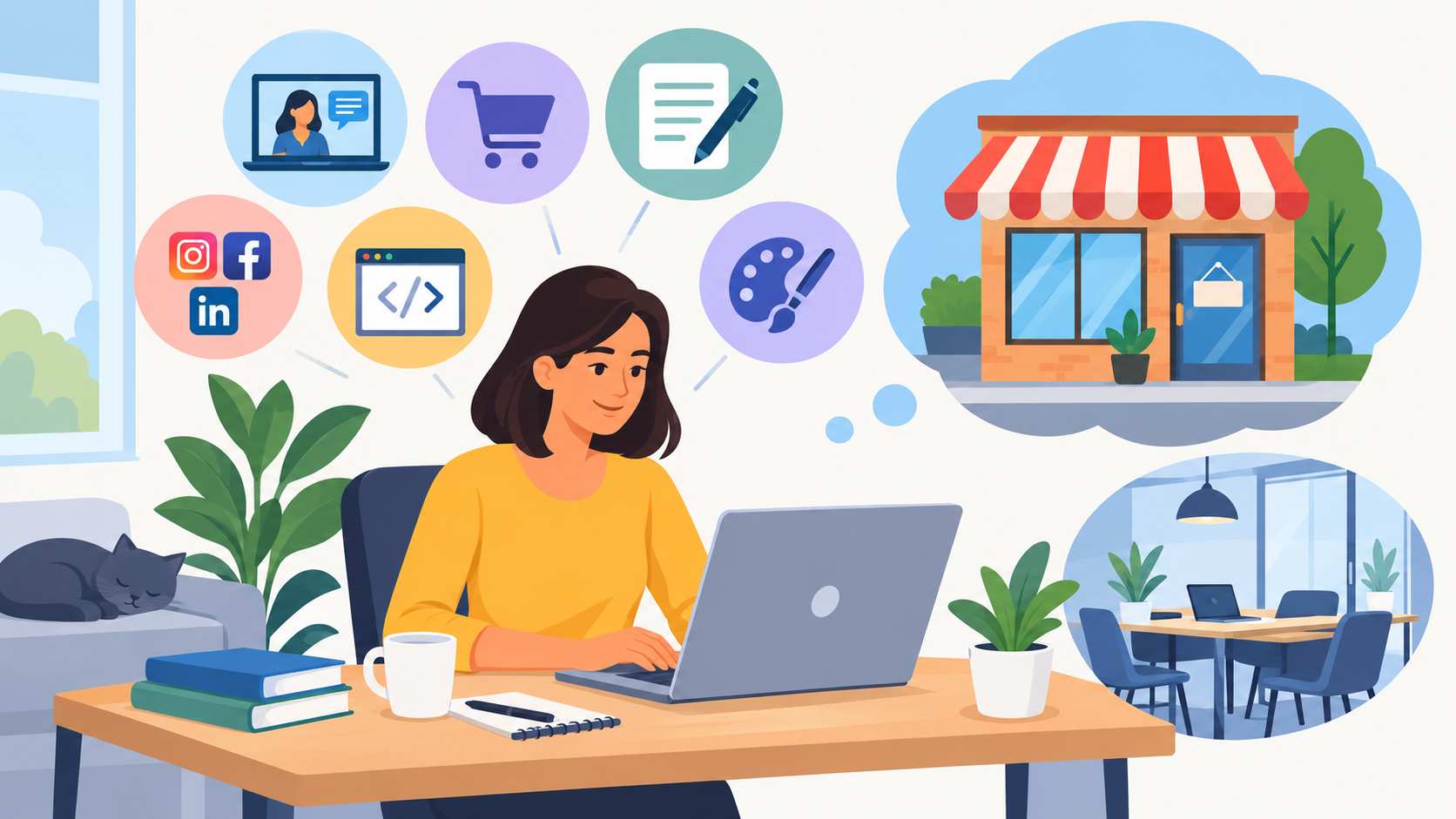
Do you need a physical location to run a small business? Not necessarily. Many modern businesses can operate successfully without a traditional office, storefront, or commercial space. With the right business model, reliable technology, and a strong online presence, you can serve customers from home or virtually anywhere.
The right setup depends on what you sell, how you serve customers, and whether your business requires equipment, inventory, face-to-face meetings, or a dedicated workspace. Service-based businesses, online stores, consultants, freelancers, and digital professionals often have more flexibility than businesses that depend on walk-in customers.
Starting a business without a physical location can also reduce overhead costs. Instead of paying commercial rent, utilities, maintenance, and other facility expenses, you can invest more of your budget into marketing, technology, customer service, and business growth.
You do not need a physical location to start every type of small business. Many businesses can operate remotely as long as they have the appropriate tools, business registration, customer communication systems, and online presence.
A physical location becomes more important when customers need to visit you, when you need significant storage or equipment, or when your business depends on a specific location.
For example, a restaurant needs a suitable commercial space, while a freelance writer can work from a home office. An online consultant may only need a computer, internet connection, video conferencing software, and a professional website.
Before renting an office or storefront, consider whether the location directly contributes to your ability to generate revenue.
Many small businesses can be location-independent or primarily remote. Examples include:
Online coaching and consulting
Freelance writing and editing
Digital marketing services
Social media management
Search engine optimization services
Web design and development
Graphic design
Programming and software services
Online education and eLearning
Virtual assistance
Content creation
Online retail and certain dropshipping businesses
The common factor is that these businesses can deliver most or all of their services digitally.
For example, a business coach can meet clients through video calls, while a web developer can communicate with customers, build websites, and provide support remotely.
If you’re considering starting a business from home, exploring small home business ideas you can start today can help you identify models that fit your skills, budget, and available space.
Although many businesses can operate remotely, some business models require a dedicated location.
Retail stores, restaurants, salons, repair shops, warehouses, manufacturing businesses, medical practices, and other customer-facing operations may need physical facilities.
A location may be necessary when your customers need to visit you, when you store products, or when your business requires specialized equipment.
A physical location may be useful or necessary for businesses such as:
Restaurants and cafés
Retail stores
Beauty salons and barbershops
Gyms and fitness studios
Auto repair shops
Warehouses and distribution centers
Manufacturing operations
Childcare facilities
Medical and professional offices
Businesses that require specialized equipment
However, even businesses in these categories may have ways to reduce their physical footprint.
For example, an online retailer may use a third-party fulfillment company instead of maintaining its own warehouse. A consultant may meet clients at coworking spaces instead of leasing an office. A service professional may travel directly to customers rather than operating from a storefront.
The goal is not simply to avoid having a physical location. The goal is to determine whether the cost of a location makes sense for your business model.
Running a business remotely requires more than simply working from home. You need systems that allow you to communicate with customers, manage projects, collect payments, market your services, and maintain a professional image.
Fortunately, most of these functions can now be handled online.
Relationships remain important even when your business operates online.
If you currently work for another company, start building professional relationships within your industry. Connect with former coworkers, potential partners, suppliers, and other professionals who may eventually become customers or referral sources.
Platforms such as LinkedIn can help you build your professional network and establish credibility before officially launching your business.
Networking can also lead to opportunities that are difficult to find through online advertising alone. A recommendation from someone who knows your work can become a valuable source of new business.
Freelancing can be a practical way to test a location-independent business before leaving your current job.
You can begin with smaller projects during evenings, weekends, or other available hours. This gives you an opportunity to learn how to find customers, price your services, manage deadlines, and communicate professionally.
Freelancing also helps you build a portfolio.
When you eventually launch your own business, potential customers will want to know what you can do and whether you have experience delivering results. Completed freelance projects can give you examples to showcase on your website.
You should also set realistic expectations. A new freelance business may take time to generate consistent income, so building your client base gradually can provide a more stable transition.
A website is one of the most important assets for a location-independent small business.
Without a storefront, customers cannot simply walk into your business. Your website can fill part of that role by explaining what you offer, showing your work, answering common questions, and giving potential customers a way to contact you.
Your website should clearly communicate:
What your business does
Who your services are for
What products or services you provide
Why customers should consider your business
How customers can contact you
How customers can request information or make a purchase
A professional website can also help your business appear in search results when people look for the products or services you provide.
The best website platform depends on your business needs, technical experience, budget, and long-term plans.
A website builder can be suitable for someone who wants to create a simple business website without much technical knowledge. A content management system such as WordPress can provide greater flexibility through themes, plugins, and customization options.
Your website does not need hundreds of pages when you’re starting out. A well-organized site with clear service information, contact details, useful content, and strong calls to action can be more effective than a large website with poorly organized information.
You will also need a domain name and web hosting before launching your site.
A common mistake among new business owners is waiting until launch day to start building an online presence.
Your business can begin establishing credibility before you officially transition into full-time entrepreneurship.
Create profiles on relevant professional and social platforms. Publish useful information related to your industry. Share examples of your work and make it easy for potential customers to understand what you offer.
The goal is to create a consistent digital presence across the channels your customers actually use.
You don’t need to be active on every social media platform. Focus on the channels that make sense for your target audience and business model.
Operating without an office does not mean operating without structure.
Cloud-based tools can help replace many functions traditionally handled from a physical workplace.
For example, you can use online platforms for:
Customer communication
Video meetings
Project management
File storage
Accounting
Invoicing
Online payments
Appointment scheduling
Email marketing
Customer support
Team collaboration
These tools allow business owners and employees to work from different locations while keeping important information organized.
A reliable internet connection is also essential for many location-independent businesses. If your work depends on video meetings, cloud applications, file transfers, or online customer support, internet reliability should be treated as part of your business infrastructure.
Not having a permanent office does not mean you can never use a professional workspace.
Coworking spaces can provide an alternative when you occasionally need a meeting room, professional environment, reliable internet, or a place to work outside your home.
This approach can provide flexibility without committing to a long-term commercial lease.
For example, you might work from home most days but rent a meeting room when you need to meet an important client. This can give you access to professional facilities while keeping fixed overhead lower than a traditional office.
Before signing a commercial lease, ask yourself a few practical questions.
If customers rarely need to meet you in person, a permanent office may not be necessary.
A consultant, designer, developer, or online service provider may be able to handle customer interactions through phone calls, email, video meetings, or other digital channels.
Inventory can change the equation.
If you sell physical products, determine whether you can store inventory at home, use a fulfillment provider, rent storage space, or operate from another cost-effective facility.
You may not need a customer-facing storefront simply because your business sells physical products.
Some businesses require equipment that cannot reasonably be used from a home office.
Manufacturing, automotive repair, food production, and certain professional services may require dedicated facilities because of equipment, safety, zoning, or regulatory requirements.
In these cases, the physical location is part of the business operation rather than simply an administrative expense.
A physical location should have a clear business purpose.
If a storefront brings in walk-in customers, increases visibility, provides necessary workspace, or enables you to deliver your service, its cost may be justified.
If it mainly serves as an expensive place to sit and answer emails, a remote setup may be worth considering.
A business without a storefront can still benefit from physical marketing.
Business cards, printed materials, signage, branded merchandise, brochures, and other offline marketing tools can help build recognition and support sales.
This is especially useful when your business involves networking, events, local partnerships, or face-to-face meetings. Using physical marketing tools that can help increase sales can complement your digital marketing efforts without requiring you to maintain a permanent storefront.
The important thing is to make sure offline marketing supports your overall customer acquisition strategy rather than becoming an unnecessary expense.
A location-independent business can offer several practical benefits.
Commercial rent can be one of the biggest fixed expenses for a small business. Operating remotely can reduce costs associated with rent, utilities, maintenance, office furniture, and other facility expenses.
That money can instead be allocated toward marketing, software, employees, equipment, or business development.
Remote businesses can give owners more flexibility over where and when they work.
Depending on the industry, you may be able to serve customers across different cities, states, or even countries without opening additional locations.
A digital business may be able to acquire new customers without opening a new office in every market.
For businesses that deliver services online, growth can come from reaching more customers rather than increasing physical space.
Avoiding a commercial lease can reduce the amount of money needed to launch.
This can be particularly helpful for first-time entrepreneurs who want to validate their business idea before making a major financial commitment.
Operating without a physical location also comes with challenges.
Working from home can create distractions, and some entrepreneurs find it difficult to maintain boundaries between work and personal life.
You may also need to work harder to establish trust with customers who expect a physical office. A professional website, business email address, clear policies, strong customer service, and consistent branding can help address this concern.
Another challenge is collaboration. If you eventually hire employees, you need reliable communication and project management systems to keep everyone aligned.
The solution is not necessarily to rent an office. Instead, identify the specific problem and determine whether technology, coworking spaces, virtual meetings, or occasional in-person meetings can solve it.
You do not always need a physical location to run a small business.
Service-based and digital businesses can often operate remotely.
A physical location may be necessary for retail, restaurants, manufacturing, repairs, and other location-dependent businesses.
Start by determining whether customers, inventory, equipment, or regulations require a dedicated facility.
A professional website can act as the digital home of a location-independent business.
Freelancing can help you build experience and a portfolio before launching full-time.
Coworking spaces can provide professional facilities without the cost of a permanent office.
Lower overhead can allow new business owners to invest more money into marketing and growth.
A remote business still needs reliable systems for communication, payments, customer service, and project management.
The best location strategy is the one that fits your business model and customers rather than simply following a traditional office setup.
In many cases, yes, but requirements vary depending on your location, business type, zoning rules, licenses, permits, and industry regulations. Check the requirements that apply to your specific business before operating from home.
Many digital and service-based businesses can operate without an office. Examples include consulting, coaching, freelance writing, marketing, web development, graphic design, virtual assistance, online education, and certain types of e-commerce.
Not every business needs a traditional office address, but certain registrations, licenses, banking services, or business requirements may require an address. The specific requirements depend on your location and business structure.
Yes. Many online businesses can be operated from a home office with a computer, reliable internet connection, appropriate software, and a professional website.
It can be. Eliminating commercial rent and related facility expenses can reduce overhead, although remote businesses still have costs such as software, internet, marketing, equipment, insurance, and professional services.
It depends on whether an office provides a clear operational or financial benefit. If your customers do not need to visit you and your work can be completed remotely, you may be able to start without one.
Yes. Many businesses acquire customers through search engines, websites, social media, referrals, email marketing, online advertising, and other digital channels. Growth depends more on the business model and customer demand than simply having a storefront.
So, do you need a physical location to run a small business? For many entrepreneurs, the answer is no.
If your business provides digital services, consulting, coaching, marketing, development, education, or other services that can be delivered online, you may be able to operate successfully without renting a traditional office.
The smarter approach is to start with the requirements of your business. Consider your customers, services, inventory, equipment, regulations, and budget before committing to a physical location.
If you can deliver your product or service effectively without a permanent facility, starting lean may give you more flexibility and allow you to put more resources into building your brand, finding customers, and growing the business.

Why Become an Internet Provider Dealer? 7 Key Benefits
Oct 13, 2026

Veterans Guide to Small Business Loans and Funding
Oct 12, 2026

How to Boost Consumer Conversion, Acquisition, and Retention
Oct 9, 2026
How to Choose the Best Location for Your Business
Oct 8, 2026

Must-Have Sales Training Tools for Your Business
Oct 7, 2026

9
Oct, 2026
BUSINESS IDEAS
Turning potential customers into loyal buyers takes more than a great product or an effective...
7
Oct, 2026
BUSINESS IDEAS
Effective sales training is about more than giving employees a collection of videos, PDFs, or...

23
Sep, 2026
BUSINESS IDEAS
Starting a business involves more than choosing a name, building a website, and finding your...