DEALER
How Telecom Dealers Handle Customer Complaints Right
Customer complaints are unavoidable in the telecom industry. When customers rely on stable internet, mobile...
Learn More

 January 28, 2026
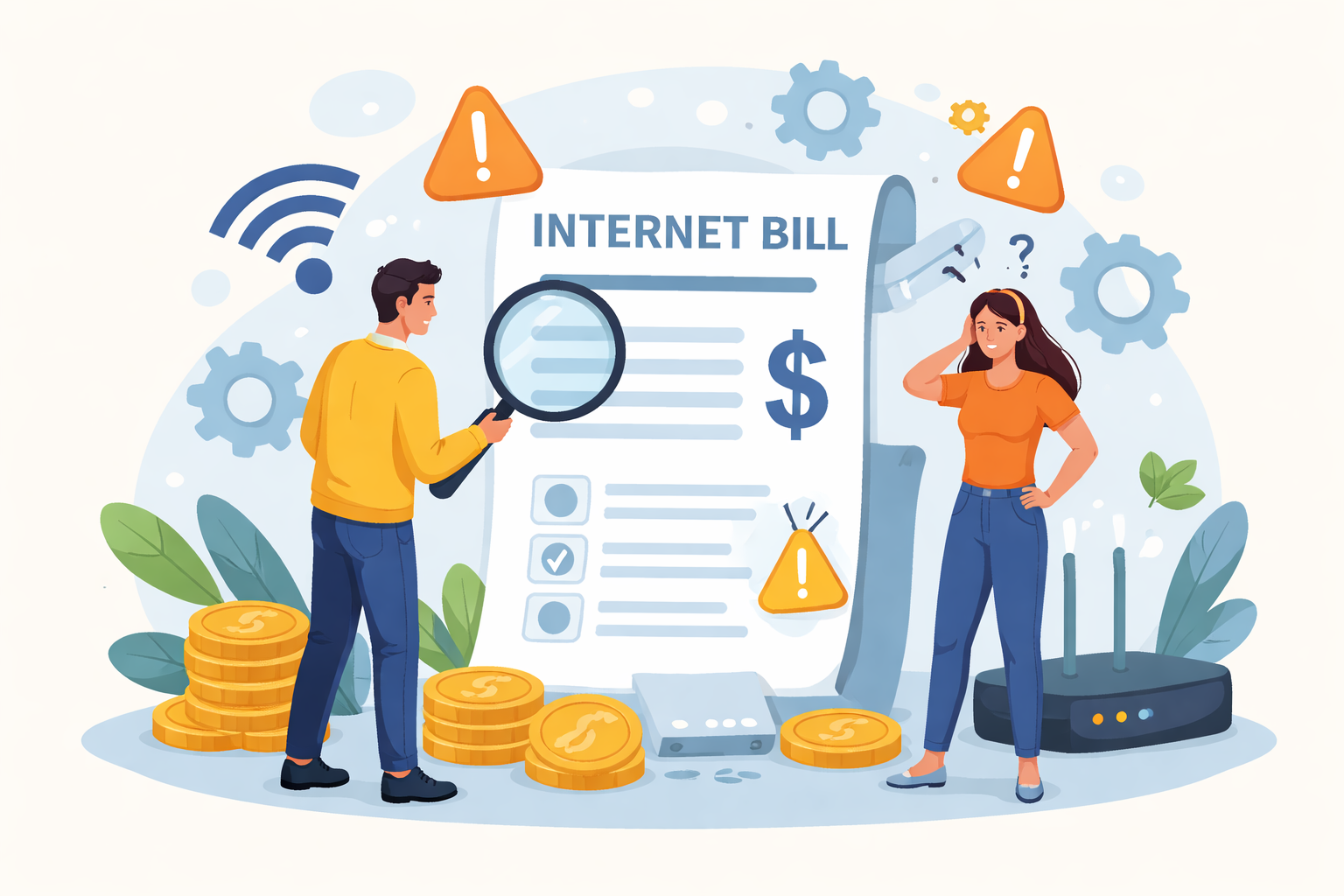
You glance at your internet bill and something feels off. The price is higher than expected—again. There’s an extra charge you don’t remember agreeing to, buried in the details. It’s frustrating, and you’re not alone.
Hidden fees are one of the most common reasons people feel misled by internet providers. This isn’t about blaming companies—it’s about helping you understand what you’re paying for, why these charges appear, and how to avoid unnecessary costs in the future. Once you know what to look for, those “surprise” fees become a lot easier to spot—and avoid.
Hidden fees are charges that aren’t clearly emphasized when you sign up. They rarely appear in big, bold numbers next to the advertised monthly price, yet they quietly inflate your bill over time.
Some are technically disclosed in the fine print. Others feel intentionally vague. Either way, they all come out of your pocket.
Common examples include:
Installation or activation fees
Equipment rental charges for modems or routers
Early termination or contract cancellation fees
Data overage fees tied to usage caps
Maintenance or infrastructure surcharges
Regulatory fees, taxes, or miscellaneous add-ons
If customers dislike hidden fees so much, why do they exist at all? The answer usually comes down to pricing strategy and regulations.
Providers often use extra charges to:
Advertise lower base prices while recovering operating costs elsewhere
Protect profit margins without raising the headline rate
Pass along government-mandated fees and surcharges
Rely on the fact that many customers won’t notice until after signup
The result is a bill that looks very different from what you originally expected.
Let’s break down the charges most people encounter—and often overlook.
That “$50 per month” internet plan may not include the hardware needed to use it. Many providers charge a monthly rental fee for a modem, router, or both. Over time, these rental fees can cost far more than simply buying your own equipment upfront.
In some cases, providers sell equipment at inflated prices, locking you into proprietary hardware.
Getting connected often comes with a one-time cost. Installation or activation fees may cover technician visits, wiring, or account setup. These charges can range from modest to surprisingly high, especially if they aren’t waived as part of a promotion.
Plans with data limits can become expensive fast. If you exceed your monthly cap—even by a small amount—you may face automatic overage fees. These are particularly frustrating because they often apply without real-time warnings.
Streaming, gaming, and remote work can push usage higher than expected.
Contracts typically last 12 to 24 months. If you cancel early, you may be charged a flat fee or required to pay out the remaining months. These penalties can easily outweigh any short-term savings from promotional pricing.
These charges go by many names: facility fees, infrastructure costs, regulatory recovery fees. Some are government-mandated, others are provider-defined. Either way, they’re rarely highlighted during signup and often feel unavoidable.
Hidden fees become much clearer when you compare providers side by side. Satellite internet is a good example, especially when looking at Starlink and Viasat.
Both serve rural and remote users, but their pricing models differ significantly—especially when it comes to hardware costs, data policies, and long-term fees. Understanding these differences can save you hundreds of dollars over time.
If you’re weighing your options, this breakdown is worth reading:
Starlink vs Viasat: Which Is Best For You
A little preparation can prevent a lot of frustration later. Before committing to a plan, take these steps:
Read the fine print — Terms and conditions usually list all potential fees.
Ask for the real monthly cost — Request the total price, including equipment and surcharges.
Calculate total cost of ownership — Factor in setup fees, rentals, and long-term charges.
Check contract details — Understand early termination penalties and how they decrease over time.
Review usage limits — Know whether your plan includes data caps or throttling rules.
Even careful shoppers get caught sometimes. If your bill suddenly increases, don’t ignore it.
Contact customer support and ask for a full itemized explanation
Request fee waivers or credits—many providers will negotiate
Mention competitor pricing to gain leverage
Evaluate whether switching providers makes financial sense
Transparency matters just as much as price.
If hidden fees keep stacking up, switching providers may be the smartest move. The goal isn’t just a cheaper plan—it’s a clearer one.
Understanding how pricing is built helps explain why some companies are more transparent than others.
You’re not completely unprotected. Many regions require internet providers to disclose mandatory fees and avoid misleading advertising.
Key points to keep in mind:
Required taxes and fees must be disclosed
Deceptive pricing practices can face penalties
Consumer protection agencies may help resolve billing disputes
Knowing your rights makes it easier to challenge unfair charges.
You can’t eliminate every fee, but you can reduce their impact:
Buy your own modem or router instead of renting
Avoid long-term contracts unless the savings are clear
Monitor data usage to avoid overage charges
Be cautious with bundles and promotional pricing
Review your bill regularly, especially after promotions expire
Small adjustments can lead to meaningful savings.
Hidden internet fees are frustrating, but they’re not unavoidable. The more informed you are, the more control you have over your monthly costs. By reading contracts carefully, understanding usage limits, and comparing providers honestly, you can avoid most surprises.

How to Run a Successful Franchise Without Guesswork
Mar 20, 2026

Fix WiFi Sign-In Issues on Android (2026 Guide)
Mar 18, 2026

Equipment Loans: Smart Funding or Costly Mistake?
Mar 17, 2026

5G / 6G: What Dealers Must Prepare For
Mar 16, 2026

Comcast Business vs Residential Internet (2026 Guide)
Mar 13, 2026


26
Feb, 2026
DEALER
Customer complaints are unavoidable in the telecom industry. When customers rely on stable internet, mobile...
30
Dec, 2025
TELECOM SOLUTIONS
Operating as a telecom dealer in the United States comes with real opportunity—and serious responsibility....

15
Oct, 2025
DEALER
Telecommunication companies and dealers play a vital role in connecting people, businesses, and governments. But...