BUSINESS LOAN
How Much Business Financing Does Your Company Need?
Determining the right amount of business financing is one of the most important financial decisions...
Learn More

 December 26, 2025
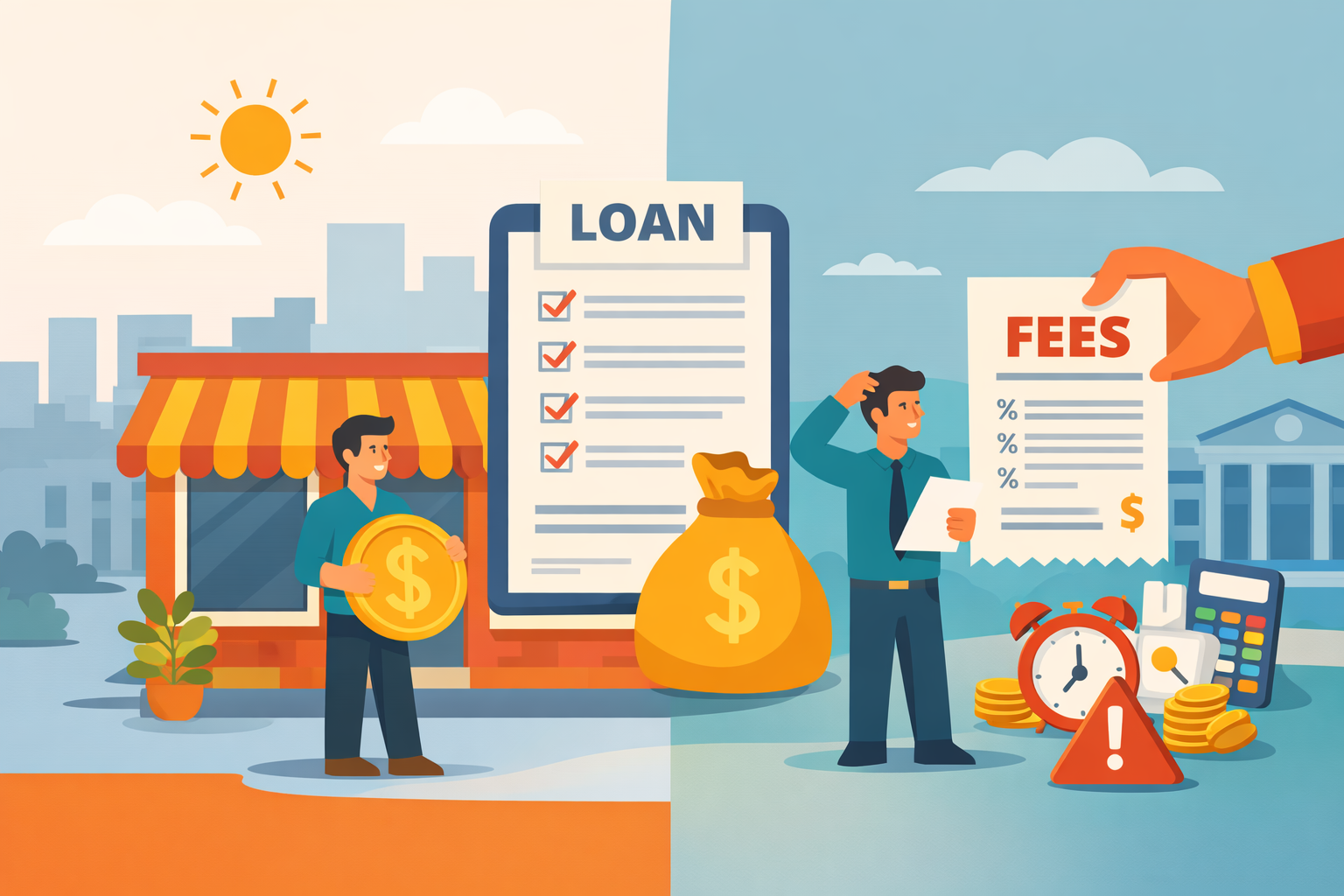
Taking out a business loan can feel like a smart, strategic move. Whether you’re launching a startup, scaling operations, purchasing equipment, or stabilizing cash flow, access to capital often creates opportunity. But beyond the advertised interest rate, many borrowers discover that the real cost of a business loan includes fees that aren’t always obvious at first glance.
Hidden business loan fees can quietly increase your repayment total, strain monthly cash flow, and, in some cases, push businesses into a cycle of debt. Understanding how these fees work, where they appear, and how lenders structure them gives you a critical advantage before signing any loan agreement.
This guide breaks down the most common hidden business loan fees, explains why lenders charge them, and helps you recognize their impact so you can borrow with clarity and confidence.
In a perfect world, borrowing money would involve only the principal and a simple interest rate. In reality, lenders generate revenue through a combination of interest and fees that cover risk, administrative costs, and profit margins.
Business loan fees are charges applied at different stages of the lending process. Some are paid upfront, others are deducted from your loan proceeds, and some appear only if certain conditions are triggered. While many fees are legitimate, they are often buried in loan agreements or written in language that’s easy to overlook.
These charges directly affect your total borrowing cost, not just your monthly payment. Even a loan with a competitive interest rate can become expensive once fees are factored in. That’s why reviewing the fine print and asking direct questions before accepting financing is essential.
Not all fees are inherently bad, but surprises are. Below are the most common business loan fees borrowers encounter and how they typically show up.
An application fee covers the lender’s cost of reviewing your loan request, verifying documents, and evaluating risk. This process often includes pulling your credit score, reviewing financial statements, and assessing business viability.
Application fees may be charged upfront or rolled into the loan balance. While some lenders waive them, others use them as a screening tool to discourage unqualified applicants. The key is knowing whether the fee is refundable and whether it’s charged regardless of approval.
Origination fees are among the most common and impactful business loan charges. They compensate the lender for processing and issuing the loan. Unlike application fees, origination fees are almost always non-refundable.
These fees are typically calculated as a percentage of the loan amount, often ranging from 1% to 5%, though some lenders charge more. In many cases, the fee is deducted from the loan proceeds, meaning you receive less cash than the approved loan amount while still repaying the full balance.
Even well-managed businesses can experience cash flow disruptions. When a loan payment is late, lenders may apply late payment fees as either a flat charge or a percentage of the overdue amount.
Over time, repeated late fees can significantly increase the cost of borrowing. Setting up automatic payments and maintaining sufficient account balances can help reduce the risk of triggering these penalties, especially for businesses managing multiple obligations.
Paying off a loan early often feels like a financial win. However, some lenders include prepayment penalties that charge borrowers for settling their balance ahead of schedule.
These penalties exist because early repayment reduces the lender’s expected interest earnings. If your business anticipates higher revenue or plans to refinance, prepayment terms should be reviewed carefully before accepting financing.
Automatic loan payments can simplify repayment, but they also come with risk. If a lender attempts to withdraw funds and your account lacks sufficient balance, you may be charged a non-sufficient funds (NSF) fee.
These flat fees can accumulate quickly, especially if multiple payment attempts are made. Monitoring cash flow closely and keeping buffer funds in your account can help avoid unnecessary charges.
Many business owners associate closing costs with mortgages, but business loans can carry them as well. Closing costs often bundle multiple fees together, including origination, processing, underwriting, and administrative charges.
Because closing costs vary widely between lenders, understanding what’s included ensures you’re not paying for duplicate or unnecessary services. Transparency at this stage helps confirm whether a loan’s pricing aligns with its advertised terms.
For businesses using a line of credit, draw fees are a common expense. Each time you access funds, the lender may charge a draw fee calculated as a percentage of the amount withdrawn.
While draw fees may seem minor individually, frequent withdrawals can make them a meaningful cost over time. Understanding how and when these fees apply helps businesses plan borrowing strategies more effectively.
Some loans, particularly those backed by government programs, include guarantee fees. With SBA loans, lenders pay a fee in exchange for a government guarantee that reduces their risk.
These costs are often passed on to the borrower and are based on the loan amount and repayment term. While SBA financing offers favorable terms, guarantee fees should be factored into the total cost of capital.
Hidden fees don’t just increase what you pay — they affect how your business experiences debt. Unexpected charges can disrupt budgeting, reduce working capital, and limit flexibility during slow periods.
Two loans with the same interest rate can have vastly different total costs depending on how fees are structured. That’s why comparing offers requires looking beyond the headline rate and focusing on the full repayment picture.
Understanding these charges also strengthens your negotiating position. When you know which fees are standard and which are flexible, you’re better equipped to ask informed questions and avoid unfavorable terms.
The best defense against hidden fees is preparation. Reviewing loan documents carefully, requesting a clear breakdown of all charges, and understanding repayment conditions before signing can prevent costly misunderstandings.
Using a structured checklist like a business loan requirements overview helps ensure you evaluate offers consistently and identify red flags early. Clear communication with lenders and proactive financial planning allow you to borrow with confidence rather than uncertainty.
Business loans can be powerful tools for growth, stability, and opportunity. But the true cost of borrowing extends beyond interest rates alone. Hidden business loan fees — from origination charges to prepayment penalties — can quietly reshape your repayment experience.
By understanding how these fees work and where they appear, you position your business to make smarter financing decisions. Transparency, comparison, and awareness turn borrowing from a risk into a strategic advantage.
Understanding fees is only one part of securing the right funding. Working with lenders who value transparency and alignment can make a meaningful difference in how financing supports your long-term goals.


How to Negotiate Better Dealer Program Contracts
Mar 31, 2026
Why Cox Authorized Dealer And Retailers Are Worth It in 2026
Mar 30, 2026

How to Verify a Telecom Dealer Before You Partner
Mar 27, 2026

How to Run a Successful Franchise Without Guesswork
Mar 20, 2026

Fix WiFi Sign-In Issues on Android (2026 Guide)
Mar 18, 2026


1
Feb, 2026
BUSINESS LOAN
Determining the right amount of business financing is one of the most important financial decisions...

5
Jan, 2026
BUSINESS LOAN
Starting a business is exciting, but financing it can feel like a major hurdle. Getting...

21
Nov, 2025
BUSINESS LOAN
Online lending continues to grow as a major part of business online, offering fast approvals, minimal...