HOME SECURITY
Practical Ways to Market Your Business Online
Marketing your business online is no longer optional—it’s a fundamental part of modern growth. Whether...
Learn More

 February 18, 2026
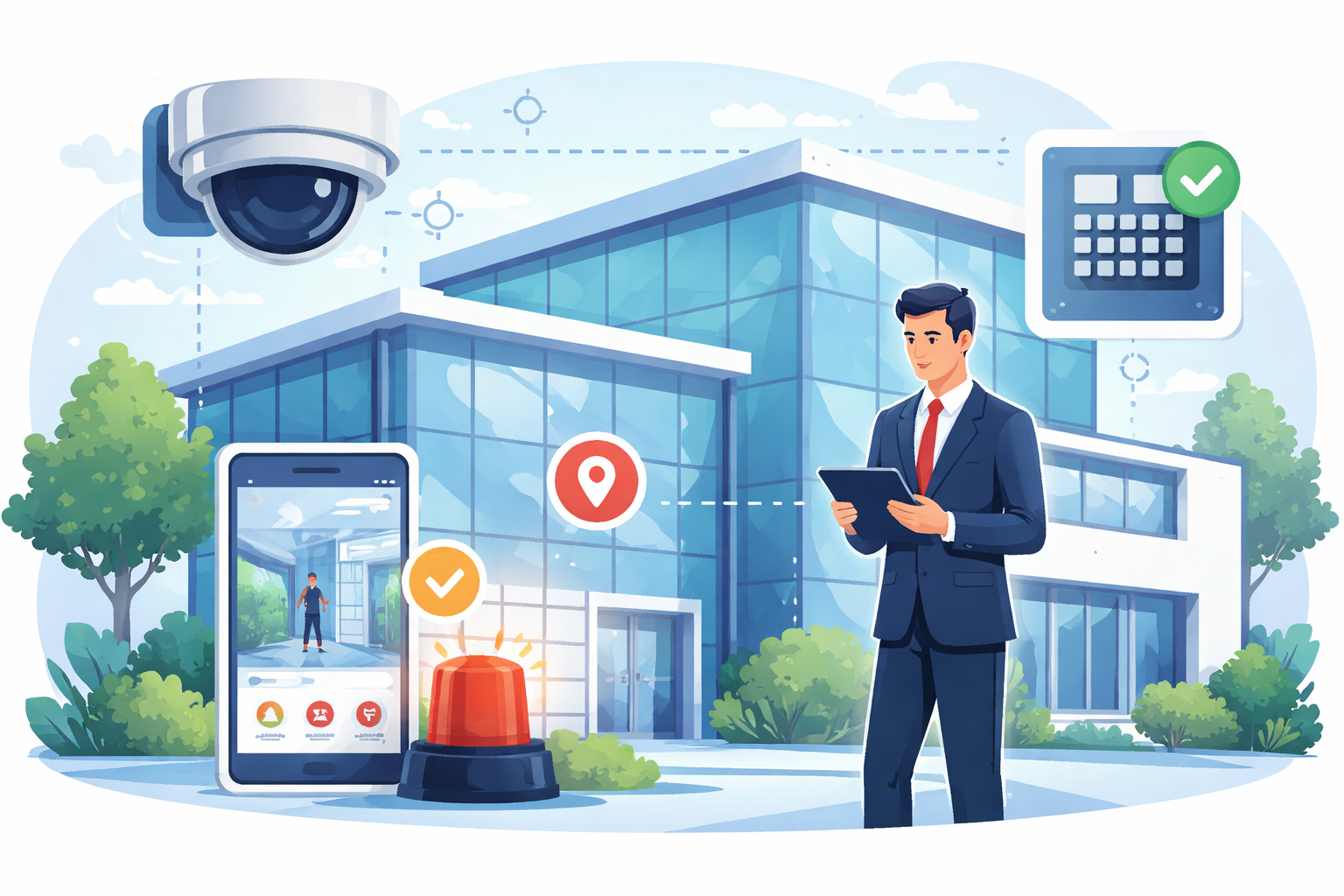
Business security has moved far beyond traditional alarm systems and basic CCTV cameras. Today’s smart home security technology provides real-time monitoring, automation, AI-powered detection, and cloud-based evidence storage — all accessible from a mobile device or centralized dashboard.
The global smart security market continues expanding as businesses prioritize loss prevention, employee safety, liability protection, and operational visibility. Increasing crime rates, remote workforce trends, and advances in IoT (Internet of Things) technology are accelerating adoption across retail, offices, warehouses, and service-based businesses.
Understanding how smart security ecosystems work alongside automation platforms is critical. Many business owners first explore core automation concepts before expanding into full security infrastructure.
A well-designed smart security system does more than record incidents. It actively prevents them, supports operational efficiency, and reduces legal and financial risk exposure.
Smart surveillance allows business owners and managers to monitor operations in real time from any location. Whether managing multiple branches or supervising remote staff, cloud-connected cameras provide immediate situational awareness.
Beyond security, video analytics help evaluate workflow efficiency, customer behavior patterns, and staff productivity trends. This operational intelligence can influence staffing decisions, store layout optimization, and service quality improvements.
Visible smart cameras and integrated alarm systems act as strong deterrents. Criminal behavior is significantly less likely when surveillance is clearly present and actively monitored.
Modern systems also include:
Motion-triggered alerts
Facial recognition (where legally permitted)
License plate recognition
AI behavior detection
Recorded footage also provides reliable forensic evidence when incidents occur.
Security systems help create safer work environments by:
Reducing workplace harassment incidents
Monitoring restricted areas
Detecting unauthorized access attempts
Supporting emergency response protocols
Employees typically perform better when they feel safe and protected in their workplace.
False injury claims, staged incidents, and fraudulent disputes can create major financial exposure. High-resolution timestamped footage provides verifiable documentation for insurance claims and legal defense.
Many insurers now offer premium discounts for businesses implementing monitored smart security systems.
Wireless systems reduce installation complexity and support future expansion. Businesses can easily add cameras, sensors, or monitoring zones without rewiring.
Benefits include:
Cleaner installations
Faster deployment
Reduced structural disruption
Easier relocation when moving locations
Modern alarm systems do more than trigger sirens. They integrate with:
Mobile alerts
Emergency dispatch services
Smart locks
Access control systems
Real-time notifications ensure business owners can react instantly to security threats.
Cloud-based monitoring is essential for modern business security. Remote access enables owners to view live footage, receive alerts, and review event logs from anywhere.
Key capabilities include:
Multi-location dashboard monitoring
Role-based access permissions
Real-time push notifications
Secure cloud storage with redundancy
While DIY systems exist, professional installation offers advantages such as:
Optimal camera placement based on threat modeling
Network bandwidth optimization
Secure system hardening
Integration with fire alarms and building systems
Professional integrators also ensure compliance with local surveillance regulations.
Security systems are mission-critical infrastructure. Vendor reliability should be evaluated based on:
SLA response times
Firmware update frequency
Cybersecurity patch history
Technical support availability
Downtime or system compromise can create serious operational risk.
Camera selection directly affects system effectiveness. Important technical specifications include:
Minimum recommended standard for business use is 4MP or 4K resolution.
Look for:
Infrared night vision
Starlight sensors
Wide dynamic range (WDR)
Higher frame rates improve motion clarity during fast incidents.
Mobile integration is now a standard requirement. Essential mobile features include:
Real-time video streaming
Alert notifications
Event playback
System control and automation triggers
Business owners increasingly manage security entirely through mobile platforms.
AI can distinguish between:
Employees vs unknown individuals
Normal vs suspicious behavior
Animals vs humans
Authorized vs unauthorized vehicles
This reduces false alarms and improves response accuracy.
Modern smart security integrates with:
Smart locks
Biometric scanners
RFID employee badges
Visitor management systems
This creates a unified security ecosystem.
Advanced systems monitor more than intrusions. Additional sensor integrations include:
Smoke detection
Flood detection
Temperature monitoring
Gas leak detection
This protects both assets and personnel.
Security investments vary based on:
Cameras
Sensors
Control hubs
Storage devices
Professional labor
Network upgrades
Infrastructure preparation
Video storage plans
Monitoring services
Software licensing
A total cost of ownership (TCO) analysis is recommended before deployment.
Cheap systems often fail during critical incidents.
Unsecured cameras can be hacked if firmware is outdated.
Coverage gaps reduce system effectiveness.
Businesses often outgrow entry-level systems quickly.
Evaluate vendors using:
Industry certifications
Client case studies
Integration capabilities
Warranty coverage
Compliance with local privacy laws
Request live system demonstrations before purchasing.
Fully cloud-managed systems are replacing on-prem DVR setups.
Cameras will process AI detection locally for faster response.
Security will merge with energy management and building automation.
Smart security is no longer optional for modern businesses. It directly impacts loss prevention, liability protection, operational intelligence, and employee safety.
Choosing the right system requires evaluating hardware quality, software intelligence, vendor reliability, and scalability potential. Businesses that invest in properly designed smart security infrastructure gain long-term operational stability and measurable risk reduction.

How to Run a Successful Franchise Without Guesswork
Mar 20, 2026
Fix WiFi Sign-In Issues on Android (2026 Guide)
Mar 18, 2026

Equipment Loans: Smart Funding or Costly Mistake?
Mar 17, 2026

5G / 6G: What Dealers Must Prepare For
Mar 16, 2026
Comcast Business vs Residential Internet (2026 Guide)
Mar 13, 2026


4
Mar, 2026
HOME SECURITY
Marketing your business online is no longer optional—it’s a fundamental part of modern growth. Whether...

20
Feb, 2026
HOME SECURITY
In an increasingly competitive business environment, companies are under constant pressure to operate more efficiently...
26
Jan, 2026
HOME SECURITY
Smart home technology is meant to make life easier and safer. From smart locks and...