CREDIT SCORE
Responsible Credit Card Use: Smart Financial Habits
Using a credit card responsibly can play a major role in building long-term financial stability....
Learn More

 March 17, 2026
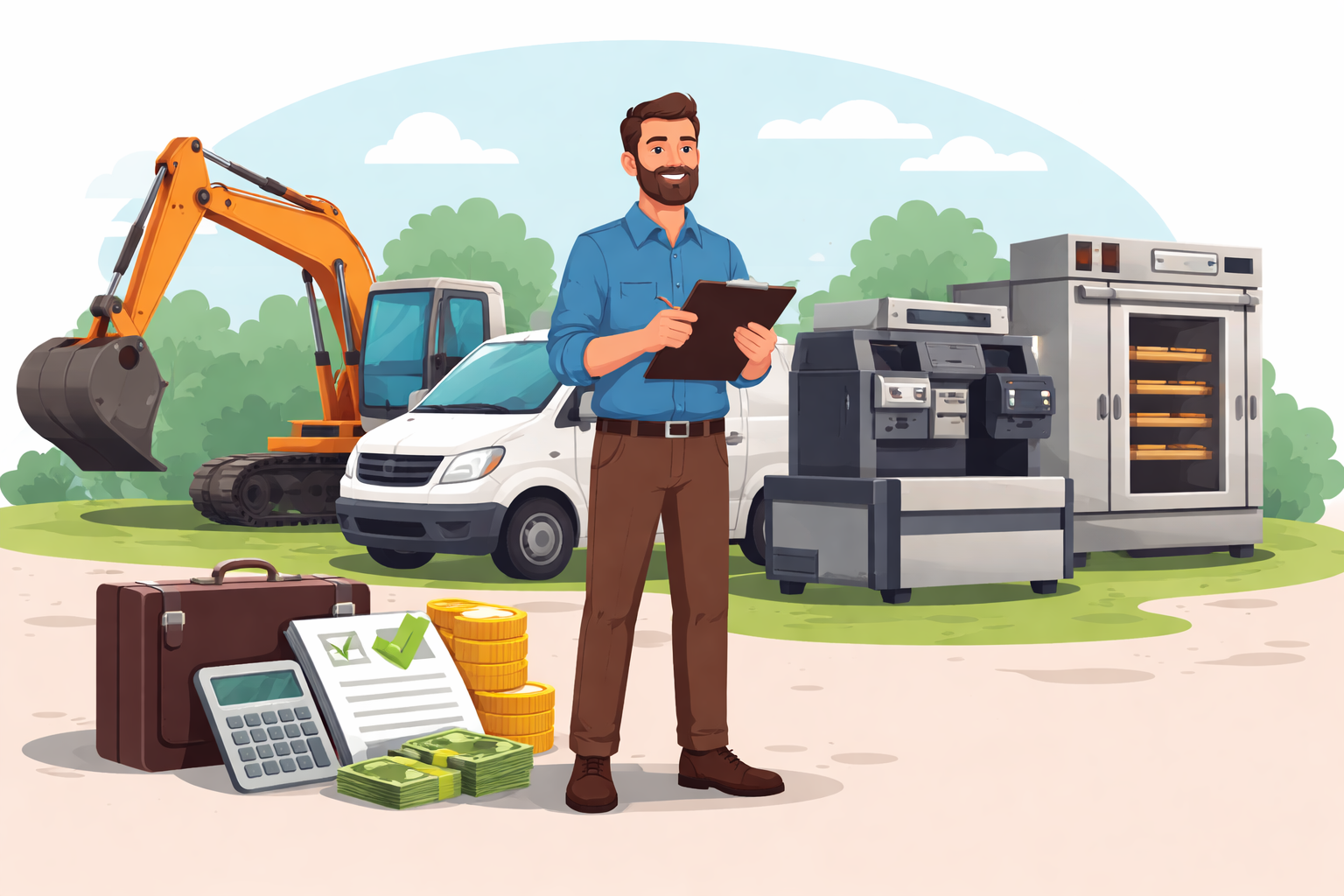
Every growing business depends on equipment in one way or another. For some, that means heavy machinery, company vehicles, or specialized tools. For others, it means commercial ovens, medical devices, office systems, or production equipment that keeps daily operations moving. When that equipment is essential but expensive, many owners turn to equipment loans to bridge the gap.
An equipment loan can be a practical way to buy, replace, or repair the tools your business needs without draining cash reserves. That can be a major advantage when you need to preserve working capital, maintain productivity, and keep revenue flowing. At the same time, equipment financing is not always the right fit. It comes with limits, borrowing costs, and long-term obligations that deserve a careful look before you sign.
So, what are the pros and cons of equipment loans? The answer depends on your cash flow, your timeline, the type of equipment you need, and how central that equipment is to your business model. Below, we break down the real benefits and drawbacks of equipment loans so you can decide whether this financing option makes sense for your company.
An equipment loan is a type of business financing designed specifically to help a company buy business-related equipment. Instead of paying the full purchase price upfront, the borrower makes monthly payments over a set term. In many cases, the equipment itself serves as collateral for the loan.
That structure makes equipment loans different from broader funding options. Unlike general-purpose financing or extra business working capital options, this money is meant for a specific business purpose. That can be a strength when you need focused funding, but it also means less flexibility.
Equipment loans are commonly used for:
Construction companies, manufacturers, and logistics businesses often use equipment loans for expensive machines that are essential to operations. These purchases can be difficult to make in cash, especially during growth periods.
Commercial vans, trucks, trailers, and other work vehicles may also qualify. For businesses that depend on transportation, financing these assets can preserve liquidity while still supporting expansion.
Some businesses use equipment loans to finance computers, servers, production systems, or specialized software-related hardware. For fast-moving industries, timing matters, and delayed upgrades can hurt performance.
When mission-critical equipment breaks down, waiting to save up for a repair or replacement is rarely ideal. Financing can help restore operations before lost time turns into lost revenue.
The structure is usually straightforward. A lender provides financing for approved equipment, and the borrower repays that amount over time with interest. The repayment period may vary based on the value and expected lifespan of the asset.
In many cases, the lender requires a down payment, though this is not always the case. Loan amounts, repayment terms, and rates depend on factors such as:
Your business credit profile
Time in business
Revenue and cash flow
The cost and type of equipment
Whether the equipment is new or used
Because the equipment often secures the loan, some lenders are more willing to approve these loans than unsecured financing. That can make equipment loans attractive to business owners who need access to capital but want to avoid pledging other assets.
Equipment loans can be a strong financing option when the purchase supports revenue, efficiency, or long-term growth. Here are the biggest benefits.
This is the most obvious advantage, but it is also the most important. Equipment is often too expensive to purchase outright, especially for small businesses trying to manage payroll, rent, inventory, and marketing at the same time.
An equipment loan lets you move forward with a purchase now instead of waiting months or years to build enough cash. That can be a major competitive advantage when your equipment directly affects your ability to serve customers or complete jobs on time.
If your restaurant oven fails, your printing machine breaks down, or your team needs upgraded production tools, delay is expensive. Financing gives you a way to act faster.
Cash flow matters more than many owners realize until it gets tight. Even a profitable business can feel pressure if too much money is tied up in a large purchase all at once.
Equipment financing helps spread the cost over time. Instead of draining your reserves in one transaction, you make manageable monthly payments. That leaves more cash available for day-to-day operations and short-term needs.
This is especially useful for seasonal businesses or companies balancing multiple growth expenses at once. By keeping more cash on hand, you create room to manage the unexpected.
One of the strongest features of an equipment loan is that the equipment itself often serves as the collateral. That can reduce the need to secure the financing with other assets like property, savings, or vehicles you already own.
For business owners who want to limit risk exposure, this can be a meaningful advantage. You are still taking on debt, but you may not need to put unrelated assets on the line.
That is one reason equipment loans are sometimes easier to qualify for than other forms of borrowing, especially compared with certain traditional term loans.
When equipment increases productivity, speed, capacity, or service quality, it can directly improve revenue potential. That makes the financing easier to justify because the purchase is tied to business performance.
A manufacturer may complete orders faster with upgraded machinery. A construction company may take on bigger jobs with better equipment. A medical practice may improve patient experience and expand services with newer tools. In each case, the financed equipment is not just a purchase. It is an investment in stronger operations.
Done right, the return on that investment can outweigh the borrowing cost.
When you take out an equipment loan, you are typically financing a purchase that leads to ownership. That can be an advantage when the equipment has a long useful life and continues delivering value after the loan is paid off.
For assets that stay relevant for years, ownership may be more cost-effective than paying ongoing lease payments with nothing to keep at the end. This is especially true for equipment that does not become obsolete quickly.
For the right asset, ownership gives you long-term value, resale potential, and greater control.
Compared with certain conventional business loans, equipment financing can be more streamlined. Since the loan has a defined purpose and the equipment often secures the financing, some lenders are able to move more quickly.
That matters when timing is critical. If you need to replace broken equipment or secure a machine before a busy season, a slow approval timeline can create real business problems.
Faster access to funds can make equipment loans a practical solution for urgent operational needs.
Even with those benefits, equipment loans are not perfect. They solve a specific problem, but they also come with trade-offs.
The biggest limitation is built into the loan itself. Equipment loan funds are meant for equipment purchases, and that is usually where they must stay.
If your business needs a more flexible source of funding for multiple expenses, this loan type may not help enough. You cannot typically use the money for payroll, rent, inventory, marketing, or other general business costs.
That matters when your cash needs are broader than one purchase. In those situations, more flexible financing may make more sense than a restricted-purpose loan. Businesses evaluating their options often compare equipment financing with solutions like a merchant cash advance option or other funding structures depending on how quickly they need capital and how freely they need to use it.
While equipment loans can offer competitive rates, they still come at a cost. Over time, interest and fees increase the total amount you pay for the equipment.
If you qualify for a lower-cost traditional loan, equipment financing may not always be the cheapest option. This is especially true for highly qualified borrowers with strong credit and established business performance.
That is why it is important to compare financing offers instead of focusing only on monthly payments. A manageable payment can still hide a higher total cost if the term is longer or the rate is higher than expected.
Ownership is not always a benefit. Some equipment depreciates quickly, becomes outdated, or requires expensive maintenance as it ages.
If you finance equipment that loses value fast, you may end up paying for something that no longer delivers the return you expected. This is one of the key differences between buying and leasing.
For short-life or quickly changing assets, leasing may sometimes make more sense. For long-term assets with lasting usefulness, ownership is often the better move. The right answer depends on the nature of the equipment, not just the financing terms.
Spreading out the cost helps cash flow, but it also creates a recurring expense that your business must handle month after month. That is manageable when revenue is stable. It becomes harder when business slows down.
If you finance more equipment than your cash flow can support, the loan can create pressure instead of relief. This is why realistic budgeting matters. Before taking on any new financing, you need a clear picture of what your business can comfortably afford.
A strong credit profile can help you secure better terms, which is why many owners review good credit standing tips before applying.
Equipment loans can be easier to access than some other forms of financing, but approval is never guaranteed. Lenders still evaluate risk.
If your business has weak revenue, limited time in operation, or poor credit, you may receive a smaller loan, higher rates, or stricter terms. Some lenders may also prefer certain equipment types over others based on resale value and risk.
That means equipment financing is not automatically simple just because the loan is asset-backed. The strength of your application still matters.
Sometimes business owners focus on equipment financing because the equipment purchase feels urgent, but the real issue is broader financial pressure. If your company is already struggling with operating costs, overdue bills, or unstable revenue, an equipment loan may only address part of the problem.
In some cases, what seems like an equipment need is actually a cash flow management issue. Financing the asset may help temporarily, but it may not fix the root cause. That is why it helps to look at the full financial picture before deciding on any funding product.
Many business owners compare equipment loans and equipment leases before making a decision. Both can help you access costly assets without paying the full purchase price upfront, but they work differently.
An equipment loan is often the better choice when:
You want to own the equipment
The equipment has a long useful life
You expect to use it for many years
You want to build long-term value from the purchase
This can be a smart move for durable business assets that will stay relevant and productive over time.
Leasing may be the better fit when:
The equipment becomes outdated quickly
You want lower upfront costs
You prefer easier upgrades
You do not want to keep aging equipment
That is often the case for certain technology, short-life equipment, or tools that need frequent replacement.
The best option depends on how the equipment fits into your business strategy, not just which monthly payment looks smaller.
Equipment financing can be a smart move if most of the following are true:
If your business cannot function properly without the asset, financing may protect revenue and prevent bigger losses.
The strongest financing decisions are tied to measurable business benefits. If the equipment helps you serve more customers, complete more jobs, or improve efficiency, the loan may pay for itself over time.
Using financing instead of cash can help you hold onto funds for payroll, overhead, and other necessary expenses. That flexibility matters, especially during growth stages.
The longer the equipment stays valuable and productive, the more sensible ownership becomes. Financing durable assets often makes more financial sense than financing something that will need replacing quickly.
There are also situations where an equipment loan may not be your best option.
If your business needs money for payroll, inventory, rent, and operations in addition to equipment, a restricted-use loan may not go far enough.
If the asset will need replacing in a short time, ownership may not be ideal. Leasing or another strategy may offer more flexibility.
Even if the equipment is important, new monthly debt can be risky when revenue is unstable. Financing should support the business, not create more financial strain.
Depending on your profile, a broader small business funding solution might offer more flexibility or a better overall fit for your needs.
Before moving forward with an equipment loan, ask yourself a few practical questions.
Look at the return, not just the price. If the equipment helps generate more revenue, cut labor costs, reduce downtime, or improve turnaround times, the financing becomes easier to justify.
Do not base your decision on the best-case month. Base it on a realistic view of your regular cash flow, including slower periods.
Think beyond the financing. Consider maintenance, depreciation, resale value, and how long the equipment will stay useful to your business.
Not every business need should be solved with the same type of financing. Compare structure, flexibility, total cost, and timeline before choosing.
Equipment loans can be one of the most practical financing tools available to business owners who rely on expensive equipment to operate, grow, and compete. They help preserve cash flow, reduce upfront pressure, and make it possible to invest in assets that support daily operations and long-term revenue.
At the same time, equipment financing is not automatically the right choice for every business. The funds are limited to equipment-related use, the loan adds a recurring payment, and ownership is not always ideal for assets that depreciate quickly.
The smartest approach is to match the financing to the role the equipment plays in your business. If the equipment is essential, long-lasting, and likely to improve revenue or efficiency, an equipment loan can be a strong move. If your needs are broader or the asset may lose value quickly, another financing option may serve you better.
The key is to evaluate the cost, the benefit, and the timing carefully. When those three line up, equipment financing can help your business move forward with confidence.

How to Negotiate Better Dealer Program Contracts
Mar 31, 2026
Why Cox Authorized Dealer And Retailers Are Worth It in 2026
Mar 30, 2026

How to Verify a Telecom Dealer Before You Partner
Mar 27, 2026
How to Run a Successful Franchise Without Guesswork
Mar 20, 2026

Fix WiFi Sign-In Issues on Android (2026 Guide)
Mar 18, 2026

4
Feb, 2026
CREDIT SCORE
Using a credit card responsibly can play a major role in building long-term financial stability....
24
Nov, 2025
FINANCE
Every small business reaches a stage where growth requires more than time and effort—it requires...

14
Nov, 2025
LOAN
A personal loan can be a smart way to manage expenses, consolidate debt, or secure...