FINANCE
Simple Ways to Make Customers Feel Welcome Everywhere
Businesses today operate in a competitive environment where customer experience often determines success. Whether someone...
Learn More

 February 12, 2026
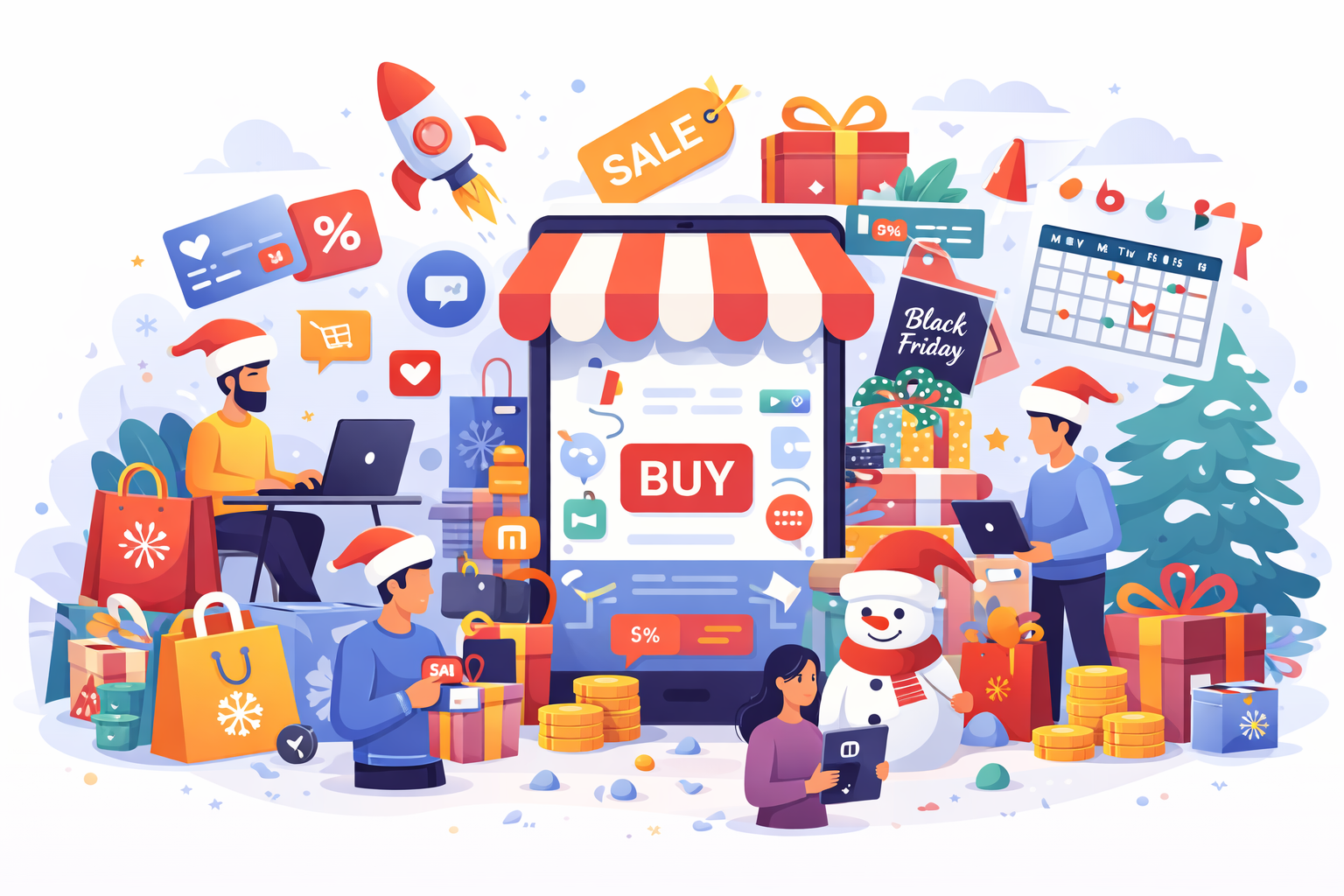
Holiday marketing campaigns are one of the most powerful revenue drivers for small businesses. From late November through December, consumer spending spikes across nearly every industry, creating a rare opportunity to attract new customers, increase repeat purchases, and strengthen brand loyalty.
The modern holiday shopping season is no longer limited to a few traditional celebrations. Today, it spans multiple global events including Black Friday, Cyber Monday, and extended holiday promotions that can last weeks. For small businesses, this extended window creates more chances to compete with larger brands — if the marketing strategy is prepared early and executed correctly.
Many small business owners underestimate how competitive this period can be. Large retailers begin planning holiday campaigns months in advance. However, small businesses still have a strong advantage: agility. They can adapt messaging quickly, personalize offers, and connect with customers more authentically.
When executed properly, holiday marketing does not just increase short-term sales. It also helps businesses build long-term customer relationships that continue generating revenue long after the season ends.
Holiday campaigns often require higher marketing budgets due to increased advertising competition. Paid ad costs typically rise during peak shopping periods, making early budgeting essential.
When building your holiday marketing budget, account for:
Increased advertising costs
Seasonal employee wages or overtime pay
Inventory expansion
Shipping and logistics costs
Unexpected operational expenses
Planning ahead helps prevent last-minute financial stress and allows your business to take advantage of early promotional opportunities.
Holiday demand can increase dramatically depending on your industry. Retail stores, restaurants, service providers, and eCommerce businesses all experience seasonal traffic spikes.
If you expect increased customer volume, consider:
Hiring temporary staff
Extending business hours
Increasing customer support availability
Preparing inventory early
Operational readiness is just as important as marketing performance during the holidays.
Repeat customers are often more valuable than new customers. Returning buyers typically spend more, convert faster, and require less marketing effort to close a sale.
During the holiday season, a strong returning customer base can stabilize revenue even when advertising costs increase.
If you operate both physical and online retail, monitoring inventory carefully is critical. Whether you run a physical store or an e-commerce website through e-commerce website platforms, running out of stock can quickly push customers toward competitors.
Stock planning is especially important if this is your first time running a holiday campaign. Ordering slightly more inventory than expected can help prevent missed sales opportunities.
To keep existing customers engaged during holiday promotions, consider offering:
Early access sales
Exclusive holiday discounts
Free product samples
Personalized thank-you emails
Holiday contests or giveaways
Holiday contests are particularly effective because customers enjoy interactive experiences and the chance to win rewards.
Relying on a single marketing channel limits your reach. Modern holiday marketing requires reaching customers across multiple touchpoints.
Effective multi-channel strategies include combining:
Email marketing
SMS promotions
Social media campaigns
Paid advertising
Direct mail marketing
In-app notifications
Successful campaigns focus on delivering the right message at the right moment across the customer journey.
Holiday marketing success is not about using every available channel. It is about using the right channels based on customer behavior.
Creative messaging often outperforms high ad spend alone. Personalized messaging, seasonal storytelling, and targeted offers can generate stronger engagement than generic promotions.
You can also expand business strategy knowledge by exploring finance software platforms that help track seasonal revenue and manage campaign budgets more effectively.
Your website is often the first place potential customers interact with your brand. If your site loads slowly, looks outdated, or lacks key information, customers may leave before making a purchase.
Customers often search online before visiting a physical location or purchasing from a service provider. First impressions matter significantly during high-competition seasons.
An updated website should include:
Accurate business information
Updated holiday hours
Clear product or service details
Mobile-friendly design
Fast page load speed
To maximize holiday website performance:
Ensure full mobile optimization
Test site performance on multiple devices
Add holiday-themed banners or messages
Highlight seasonal promotions
Offer limited-time free shipping or bundles
Seasonal website updates help create urgency and encourage faster purchasing decisions.
Holiday seasons increase workload across marketing, operations, and customer service. Technology can reduce manual work and improve efficiency.
Useful tools include:
CRM systems for customer tracking
POS software for sales processing
Marketing automation platforms
Payroll and workforce management software
Automation allows your team to focus on customer experience rather than repetitive tasks.
Technology also provides valuable customer insights. When you understand customer behavior, you can create better promotions, improve product offerings, and increase conversion rates.
Data-driven marketing helps reduce wasted ad spend and improves return on investment.
Every business should define clear holiday marketing objectives. Without measurable goals, it becomes difficult to evaluate campaign success.
Common holiday goals include:
Increasing total sales revenue
Acquiring new customers
Boosting repeat purchase rates
Increasing brand awareness
Expanding email or SMS subscriber lists
Many small businesses try to run too many promotions at once during the holidays. This often leads to poor campaign execution.
Instead, focus on a few high-impact strategies and execute them extremely well. Simpler campaigns often perform better when supported by strong messaging and consistent branding.
Short flash sales create urgency and encourage impulse purchases. Limited-time promotions can significantly increase conversion rates.
Bundling related products increases average order value and makes purchasing decisions easier for customers.
Partnering with local businesses can increase brand visibility and expand customer reach during the holidays.
Gift cards help capture revenue even if customers do not purchase products immediately. They also help introduce new customers to your brand.
Holiday marketing is not only about seasonal revenue. It is about building brand loyalty and creating customer relationships that continue into the next year.
Businesses that provide strong holiday experiences often see higher retention rates and increased customer lifetime value.
The holiday season can serve as a powerful brand-building period if campaigns focus on customer experience, personalization, and value.
Holiday marketing is one of the most important growth opportunities for small businesses. With proper planning, strong customer retention strategies, multi-channel marketing, and smart use of technology, businesses can maximize both seasonal and long-term revenue.
The businesses that succeed during the holidays are not always the ones spending the most money. They are the ones that plan early, communicate clearly, and focus on customer experience.
By combining preparation, creativity, and smart marketing execution, small businesses can compete successfully with larger competitors during the busiest shopping season of the year.
How to Run a Successful Franchise Without Guesswork
Mar 20, 2026

Fix WiFi Sign-In Issues on Android (2026 Guide)
Mar 18, 2026

Equipment Loans: Smart Funding or Costly Mistake?
Mar 17, 2026

5G / 6G: What Dealers Must Prepare For
Mar 16, 2026

Comcast Business vs Residential Internet (2026 Guide)
Mar 13, 2026


6
Mar, 2026
FINANCE
Businesses today operate in a competitive environment where customer experience often determines success. Whether someone...
19
Feb, 2026
MARKETING
Customer experience has become the defining factor in modern retail success. With increased competition, higher...

22
Dec, 2025
DIGITAL MARKETING
Customer retention is one of those business fundamentals everyone agrees is important—yet many companies still...