DIGITAL MARKETING
How to Know Your Business Is Truly Growing
Running a business is exciting, but growth doesn’t just happen overnight. If you’re wondering whether...
Learn More

 February 24, 2026
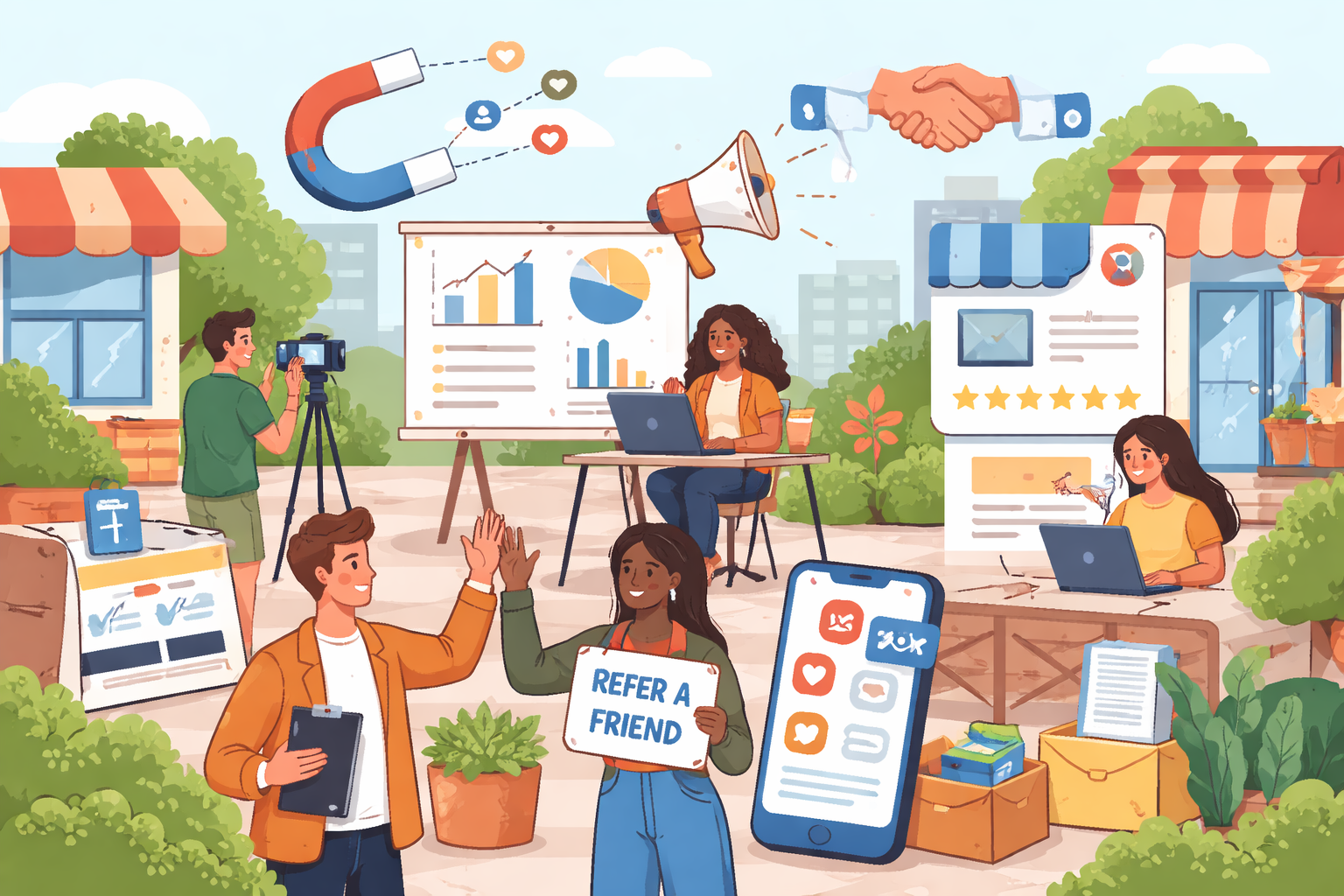
Free advertising is one of the most powerful growth strategies available to small businesses. While paid campaigns can accelerate visibility, not every business has the budget to run ads consistently. The good news is that there are proven ways to promote your business online and offline without spending money.
If you’re a small or medium-sized business operating with limited marketing funds, leveraging free advertising strategies can significantly increase brand awareness, customer trust, and organic traffic. With the right approach, you can compete in crowded markets without stretching your budget.
This guide breaks down practical, results-driven free advertising ideas that help you build visibility, strengthen your brand, and attract customers consistently.
Promoting your business across multiple platforms increases exposure and builds familiarity with your target audience. The more often people see your brand, the more likely they are to trust and choose you.
Here’s why free advertising works:
It increases public awareness of your products and services.
It creates multiple customer touchpoints across platforms.
It strengthens brand recognition and authority.
It reduces reliance on paid ads.
It builds credibility through visibility and social proof.
When implemented strategically, free promotion becomes a long-term growth asset rather than a temporary tactic.
A website is the foundation of modern free advertising. If customers cannot find your business online, you risk losing them to competitors who are easier to discover.
A professional website allows you to:
Present your services clearly
Share your brand story
Display testimonials and reviews
Capture leads through contact forms
Publish content that ranks on search engines
Search Engine Optimization (SEO) plays a critical role here. By targeting relevant keywords related to your industry, you can generate organic traffic from Google without paying for ads. Over time, this becomes one of the most cost-effective marketing channels available.
Your website also acts as a central hub that connects your social media, directory listings, email campaigns, and blog content.
Social media platforms are no longer just social networks—they are business ecosystems. A consistent presence on platforms such as Facebook, Instagram, LinkedIn, or X (formerly Twitter) allows you to connect directly with your audience.
You do not need to be everywhere. Instead, focus on platforms where your target market spends time.
To use social media effectively:
Create a dedicated business profile
Post consistently with value-driven content
Share updates, behind-the-scenes content, and customer stories
Use compelling visuals and concise messaging
Include clear contact details in your profile
Engagement matters more than follower count. Responding to comments and messages demonstrates professionalism and builds trust. When customers see active interaction, they view your brand as reliable and approachable.
A Google Business Profile (formerly Google My Business) is one of the most powerful free advertising tools available to local businesses.
When optimized correctly, your profile allows your company to:
Appear in Google Maps results
Display customer reviews
Show business hours and contact details
Feature photos and updates
Rank in local search results
Make sure your business name, address, and phone number are accurate and consistent across all platforms. Upload high-quality images and select the most relevant business categories.
Encouraging customers to leave reviews improves visibility and builds trust with potential clients who are comparing options.
Online directories may not be as dominant as they once were, but they still provide valuable exposure and search engine benefits.
Submitting your business to reputable local and industry directories helps:
Increase brand visibility
Create additional backlinks to your website
Improve local SEO performance
Offer another way for customers to contact you
Ensure that your business details are consistent everywhere. Even small discrepancies in contact information can affect search rankings.
Focus on quality directories rather than submitting your business everywhere indiscriminately.
Customer reviews act as free advertising through social proof. Prospective customers often rely on reviews before making a purchasing decision.
You can collect reviews through:
Google Business Profile
Industry-specific review platforms
Follow-up email requests
Responding to reviews—both positive and negative—shows that you value feedback. When handling negative reviews, remain calm and professional. Offer solutions and demonstrate your commitment to improvement.
Consistent positive feedback builds authority and increases conversion rates without any advertising cost.
Email marketing remains one of the most cost-effective digital marketing strategies. Many platforms offer free plans that allow you to manage contacts and send campaigns.
To build an email list:
Add a signup form to your website
Promote your newsletter on social media
Offer incentives such as discounts or exclusive updates
Use email campaigns to:
Announce new products or services
Share promotions
Provide educational content
Re-engage inactive customers
Unlike social media algorithms, email gives you direct access to your audience. This makes it a powerful long-term advertising asset.
Blogging helps position your business as an authority in your industry. It also improves your website’s search engine performance.
By publishing valuable, keyword-focused articles, you can:
Answer common customer questions
Target long-tail search queries
Drive organic traffic
Increase time spent on your website
For example, businesses that want structured digital growth strategies often invest in professional marketing services for business growth to amplify their online presence and brand positioning.
Well-written blog content builds trust and supports long-term visibility.
Strategic partnerships allow you to tap into another business’s audience without paying for advertising.
Collaboration ideas include:
Co-hosting events
Cross-promoting services
Sharing each other’s content
Bundling complementary services
When two businesses align with similar audiences, both benefit from expanded reach.
Community involvement increases brand recognition while strengthening your reputation.
You can:
Sponsor small local events
Participate in community programs
Offer free workshops
Support charitable initiatives
Even online communities—such as Facebook groups or local forums—can generate visibility when you provide helpful insights rather than promotional messages.
Video content consistently performs well across platforms. Short-form videos explaining your services, showcasing results, or answering questions can increase engagement significantly.
You can:
Record product demonstrations
Share customer testimonials
Post behind-the-scenes clips
Offer educational tips
Video builds familiarity quickly and humanizes your brand.
Platforms like Reddit, Quora, and industry-specific forums allow you to share expertise.
Focus on:
Providing genuine value
Answering industry-related questions
Avoiding overt promotion
By positioning yourself as knowledgeable and helpful, you naturally attract interest in your business.
Word-of-mouth remains one of the strongest forms of advertising.
Encourage satisfied customers to refer friends and family. You can offer:
Small discounts
Loyalty rewards
Exclusive perks
Even without monetary incentives, exceptional service often motivates customers to recommend your business.
Maximize the reach of every piece of content you create.
For example:
Turn blog posts into social media snippets
Convert articles into email newsletters
Transform FAQs into short videos
If your business leverages technology-driven marketing platforms to automate distribution, solutions like custom business mobile app solutions can centralize communication and improve customer engagement.
Repurposing content multiplies visibility without additional cost.
On-page SEO strengthens your ability to rank organically.
Focus on:
Optimized page titles and meta descriptions
Proper heading hierarchy
Internal linking
Fast page load speed
Mobile responsiveness
Search engines reward websites that provide structured, relevant, and user-friendly content.
Free advertising works best when applied consistently. One social media post or one blog article will not create meaningful traction. However, a structured and steady strategy builds momentum over time.
Track your progress through:
Website traffic analytics
Engagement metrics
Lead conversions
Search rankings
Refine what works and eliminate what does not.
Free advertising is not about cutting corners—it is about using available resources strategically. With a well-optimized website, active social media presence, strong local listings, email marketing, and consistent content creation, small businesses can generate sustainable growth without heavy advertising budgets.
The key is alignment. Each platform should support the others, creating a cohesive and recognizable brand presence across every touchpoint.
When executed properly, free advertising does more than increase visibility—it builds authority, credibility, and long-term customer relationships.

How to Verify a Telecom Dealer Before You Partner
Mar 27, 2026
How to Run a Successful Franchise Without Guesswork
Mar 20, 2026

Fix WiFi Sign-In Issues on Android (2026 Guide)
Mar 18, 2026
Equipment Loans: Smart Funding or Costly Mistake?
Mar 17, 2026

5G / 6G: What Dealers Must Prepare For
Mar 16, 2026


2
Jan, 2026
DIGITAL MARKETING
Running a business is exciting, but growth doesn’t just happen overnight. If you’re wondering whether...
30
Dec, 2025
DIGITAL MARKETING
Consumer trust used to be built face-to-face. A handshake at the counter, a familiar smile...

22
Dec, 2025
DIGITAL MARKETING
Customer retention is one of those business fundamentals everyone agrees is important—yet many companies still...