TELECOM
Business Loan Documents Guide for Telecom Dealers
If you’re a telecom dealer looking to grow your business, you’ve probably considered applying for...
Learn More

 February 6, 2026
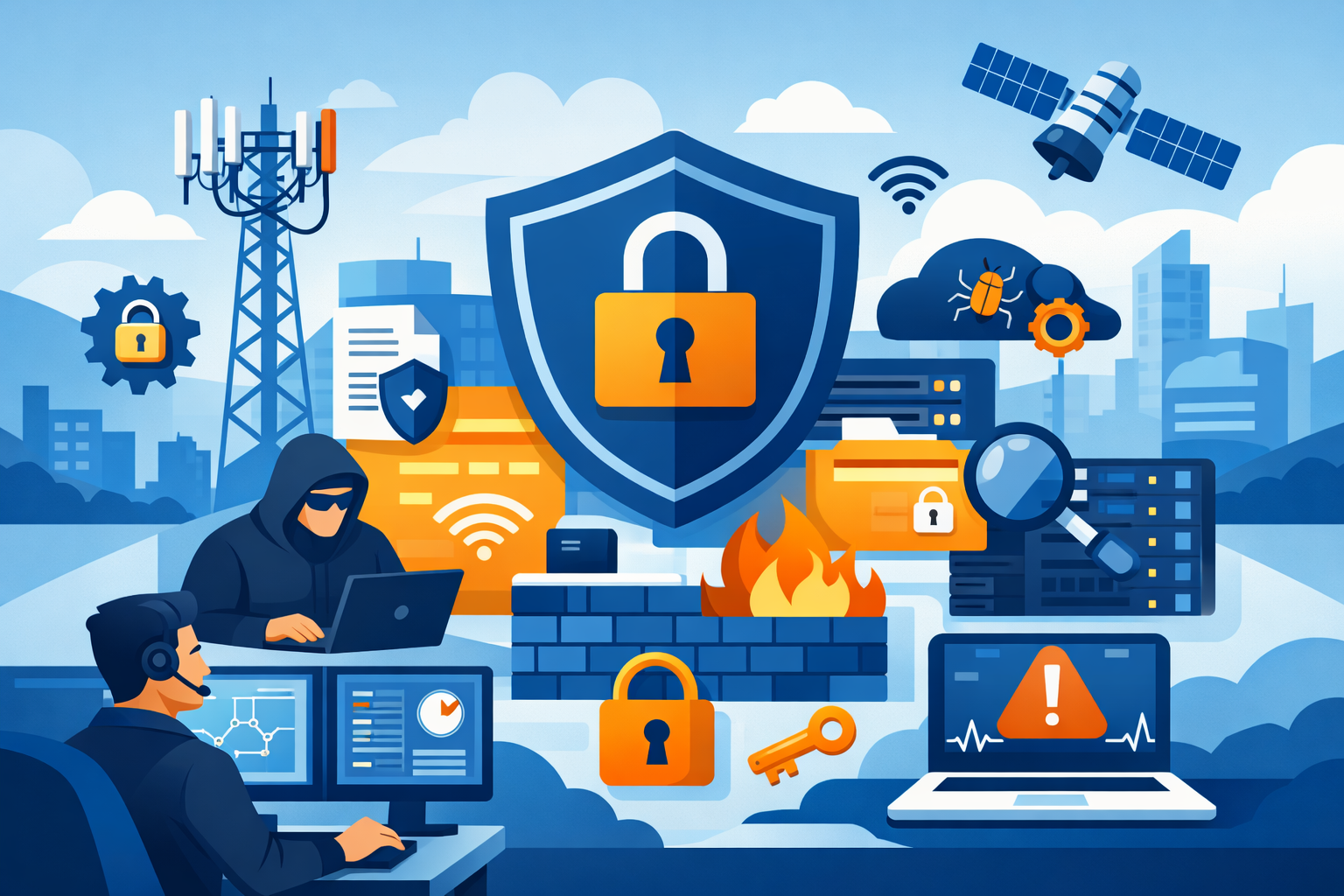
Telecom businesses are the backbone of modern communication, connecting millions of people and powering digital services worldwide. But with great connectivity comes great responsibility. Handling sensitive customer data, managing critical infrastructure, and ensuring uninterrupted service makes telecom networks prime targets for cybercriminals.
In this article, we’ll explore cybersecurity essentials for telecom businesses, providing actionable strategies to protect your network, safeguard data, and maintain trust in an increasingly digital world.
Telecommunications companies manage vast amounts of sensitive information—customer records, billing data, and voice or video traffic. Any breach can have serious consequences, from financial losses to reputational damage and regulatory penalties.
Moreover, telecom systems are often integrated with multiple third-party vendors, cloud platforms, and IoT devices, expanding potential attack surfaces. A single vulnerability can compromise entire networks.
Investing in robust cybersecurity isn’t just about protecting data—it’s about ensuring business continuity, maintaining customer trust, and complying with evolving regulations.
To build a strong defense, telecom businesses need a multi-layered approach. These core strategies form the foundation of a secure network:
Controlling who has access to sensitive network segments is critical. Unauthorized access is often the entry point for cyberattacks.
Use role-based access to limit privileges according to job function.
Employ multi-factor authentication (MFA) for administrative accounts.
Regularly review permissions and remove unnecessary access.
By enforcing strict access controls, telecom companies reduce the risk of insider threats and external breaches.
Software vulnerabilities are a common exploitation point for attackers. Regular system updates and patch management help protect against known threats.
Schedule automated updates for critical systems.
Monitor vendor security alerts to quickly address newly discovered vulnerabilities.
Prioritize updates for high-risk areas such as network controllers and customer data platforms.
This proactive approach ensures that your telecom infrastructure stays resilient against evolving cyber threats.
Cyber threats are increasingly sophisticated, making real-time monitoring essential. Telecom businesses should deploy detection systems that identify anomalies before they escalate into breaches.
Use intrusion detection systems (IDS) to monitor network traffic for suspicious activity.
Implement Security Information and Event Management (SIEM) solutions for centralized alerting and analytics.
Integrate behavioral analysis tools to detect unusual patterns in employee or system activity.
These techniques allow telecom providers to respond swiftly and minimize the impact of cyber incidents.
Encryption is no longer optional—it’s a critical safeguard for telecom communications. By encrypting data in transit, businesses ensure that intercepted communications remain unreadable to unauthorized parties.
Secure voice calls with end-to-end encryption protocols.
Protect data transmissions between servers, devices, and cloud platforms.
Use strong encryption standards such as AES-256 for sensitive information.
Encrypting both stored and transmitted data is essential for regulatory compliance and maintaining customer trust.
Even the most advanced technology cannot fully compensate for human error. Employees are often the first line of defense against cyber threats. Regular cybersecurity training empowers staff to identify risks and respond effectively.
Conduct phishing awareness sessions to help employees recognize malicious emails.
Train staff on safe handling of sensitive data and secure password practices.
Simulate cyberattack scenarios to test employee readiness.
Educated employees reduce the likelihood of accidental breaches and strengthen the organization’s overall security posture.
Related Post: Cybersecurity Best Practices
A secure telecom network requires more than software defenses—it demands resilient infrastructure. Designing networks to withstand attacks and minimize downtime is key.
Implement redundancy in critical systems to ensure service continuity during disruptions.
Segment networks to contain potential breaches and prevent lateral movement.
Employ firewalls and VPNs to protect internal communications.
A resilient infrastructure allows telecom companies to maintain operations even in the face of targeted attacks or natural disasters.
Telecom cybersecurity is complex, and threats evolve rapidly. Partnering with specialized cybersecurity firms provides insights and expertise that internal teams may lack.
Gain access to threat intelligence on emerging attacks.
Leverage incident response support to mitigate breaches quickly.
Conduct joint penetration testing to identify vulnerabilities before attackers do.
Collaborating with experts ensures that your security measures remain effective and aligned with industry best practices.
Regular audits are critical to identify vulnerabilities and verify the effectiveness of cybersecurity measures. A structured audit schedule helps telecom businesses stay compliant and proactive.
Evaluate network architecture and data storage practices.
Review access logs and account activity for unusual behavior.
Test incident response plans to ensure readiness.
Frequent audits allow companies to detect and fix issues before they escalate into serious breaches.
Artificial intelligence (AI) is revolutionizing telecom cybersecurity. By analyzing patterns and predicting potential threats, AI systems enhance detection and response capabilities.
Automate threat detection using machine learning models.
Predict potential attacks based on historical data and traffic anomalies.
Integrate AI with SIEM tools for real-time alerts and rapid mitigation.
AI-driven solutions provide telecom businesses with a competitive edge, enabling proactive defense in a constantly evolving threat landscape.
Telecom companies must comply with strict regulations regarding data privacy and security. Non-compliance can result in hefty fines and legal issues.
Familiarize yourself with frameworks such as GDPR and CCPA.
Ensure customer data is stored and transmitted securely.
Document security policies and incident response procedures.
Integrating compliance into your cybersecurity strategy strengthens trust and reduces legal exposure.
Beyond technology and policies, a cybersecurity-focused culture is vital. Encouraging all employees to prioritize security ensures long-term protection.
Promote security awareness campaigns throughout the organization.
Recognize employees who proactively follow best practices.
Foster collaboration between IT, operations, and management teams.
Embedding cybersecurity into daily operations reduces risk and supports continuous improvement.
Telecom businesses face growing cybersecurity challenges, from sophisticated cyberattacks to regulatory pressures. Implementing strong access controls, encryption, employee training, AI-driven detection, and expert partnerships creates a comprehensive defense strategy.
By prioritizing cybersecurity, telecom companies can protect critical infrastructure, safeguard customer data, and ensure uninterrupted service, all while staying ahead of emerging threats.
Investing in these cybersecurity essentials isn’t just smart—it’s essential for securing the future of your business and the trust of your customers.

How to Verify a Telecom Dealer Before You Partner
Mar 27, 2026

How to Run a Successful Franchise Without Guesswork
Mar 20, 2026

Fix WiFi Sign-In Issues on Android (2026 Guide)
Mar 18, 2026

Equipment Loans: Smart Funding or Costly Mistake?
Mar 17, 2026

5G / 6G: What Dealers Must Prepare For
Mar 16, 2026


10
Feb, 2026
TELECOM
If you’re a telecom dealer looking to grow your business, you’ve probably considered applying for...