CELL PHONE BUSINESS
10 Smart Marketing Strategies for a Cell Phone Business
The mobile phone market continues to grow rapidly, and with that growth comes intense competition....
Learn More

 March 2, 2026
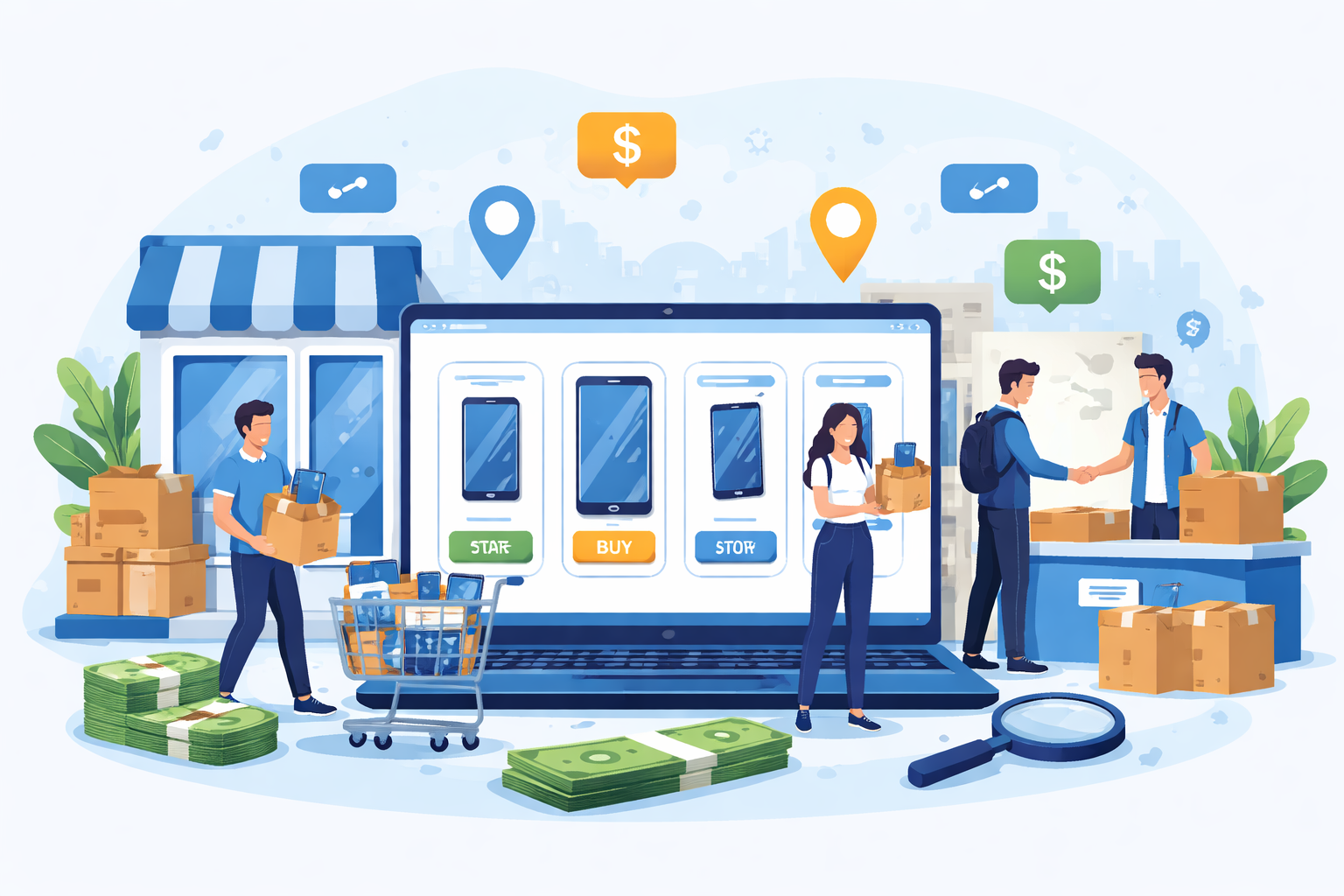
The resale market for used smartphones is stronger than ever. Rising device prices, growing environmental awareness, and consumer demand for affordable alternatives have fueled a booming secondary market. Whether you’re clearing out personal devices or building a serious resale business, knowing where to sell used smartphones can directly impact your margins, brand positioning, and long-term growth.
Today’s sellers have more options than ever: launching a dedicated ecommerce website, listing on major marketplaces, or selling directly to trade buyers. Each channel offers distinct advantages depending on your goals, inventory volume, and operational capacity.
Below, we break down the most profitable and practical ways to sell used smartphones — and how to choose the right approach for your business.
Before deciding where to sell, it’s important to understand why the opportunity is expanding.
New smartphones routinely exceed $1,000, pushing more buyers toward refurbished and second-hand options. At the same time, manufacturers release incremental upgrades, meaning last year’s models remain highly functional and desirable.
Consumers are also more informed. They understand grading systems (A, B, C), battery health considerations, and warranty expectations. This transparency makes it easier for reputable sellers to build trust and scale.
For entrepreneurs, this means one thing: demand is consistent — and growing.
For serious retailers, owning your ecommerce platform offers the highest long-term upside.
While there are upfront costs — domain registration, hosting, payment processing, and development — the benefits far outweigh the investment.
When you sell through your own website, you control:
Product presentation
Pricing strategy
Promotions and bundles
Customer service policies
Return and warranty terms
You are not competing directly beside dozens of other sellers in a single listing. Instead, you build your own brand authority.
Establishing an independent store also allows you to leverage SEO and digital marketing strategies that steadily increase traffic over time. Businesses that understand how ecommerce strengthens long-term brand growth often outperform sellers who rely solely on marketplaces.
An independent website opens the door to scalable marketing:
Search engine optimization (SEO)
Paid advertising
Email marketing campaigns
Social media traffic
Influencer collaborations
Learning effective strategies for increasing qualified traffic to your online store ensures you’re not dependent on marketplace algorithms.
If your goal is to grow beyond flipping devices and build a sustainable resale business, your own ecommerce platform becomes essential.
Many sellers begin their journey on established platforms. Marketplaces offer immediate exposure, built-in trust, and streamlined infrastructure.
eBay remains one of the most popular entry points for used smartphone sellers.
You can start casually by listing a few devices and gradually transition into operating a structured storefront. eBay’s auction format also allows dynamic pricing for high-demand models.
Understanding the mechanics of selling smartphones quickly through eBay listings can significantly improve turnover rates and profitability.
However, keep in mind:
Seller fees reduce margins
Competition drives pricing pressure
Policy changes can affect visibility
Still, for new sellers testing the market, eBay provides a low-barrier entry.
Amazon offers unparalleled reach and customer trust. Sellers benefit from:
Massive buyer traffic
Fulfillment by Amazon (FBA) options
Streamlined logistics
However, Amazon requires strict compliance with product condition standards, listing accuracy, and customer service expectations.
Margins can be thinner due to fees, but volume potential is substantial.
Social and shopping platforms are increasingly influential. Facebook Marketplace allows local transactions and quick sales, while Google Shopping integrates your listings directly into search results.
If you aim to build a serious second-hand phone business, diversifying across multiple channels reduces risk and increases sales velocity.
If you search “sell used smartphones” online, you’ll encounter numerous buyback companies and trade buyers offering immediate cash.
This model prioritizes speed and convenience.
Trade buyers typically:
Purchase devices below market resale value
Refurbish or regrade them
Resell at a profit
They offer instant quotes based on model, storage capacity, and condition.
Comparison platforms such as Phone Arena allow users to evaluate device values across models and conditions.
Advantages:
Immediate payment
No need for marketing
No customer support responsibilities
Minimal operational effort
Disadvantages:
Lower payouts
No brand building
Limited scalability
This route is ideal for individuals seeking quick cash, but less suitable for entrepreneurs aiming to maximize margins.
Your ideal selling platform depends on your objectives.
Sell directly to trade buyers. You’ll sacrifice some margin but eliminate operational complexity.
Start with eBay or Facebook Marketplace. These platforms allow you to validate pricing, demand, and device sourcing strategies.
Launch your own ecommerce website. Control over branding, marketing, and customer relationships creates stronger long-term equity and profitability.
Many successful sellers combine strategies:
Use marketplaces for volume
Operate an independent website for branding
Liquidate excess stock through trade buyers
This hybrid model balances cash flow and margin optimization.
Regardless of where you sell, several operational variables affect success.
Be precise when categorizing phones as Grade A, B, or C. Transparency builds trust and reduces returns.
Monitor competitor pricing daily. Used phone pricing fluctuates based on:
New model releases
Seasonal demand
Carrier promotions
Fast shipping and professional packaging increase positive reviews and repeat customers.
Your margins depend heavily on sourcing costs. Reliable wholesale suppliers provide consistent inventory and quality grading standards.
If you plan to scale beyond individual device flipping, sourcing becomes your most critical decision.
Working with a reputable wholesale supplier ensures:
Consistent stock availability
Transparent grading
VAT scheme flexibility
Quality control processes
Reliable wholesale partnerships allow you to focus on sales, marketing, and customer retention rather than chasing inconsistent inventory.
Whether operating under marginal or standard VAT schemes, having access to Grade A–C devices broadens your pricing strategy and market reach.
The used smartphone market continues to expand as consumers seek affordability and sustainability. There is no single “best” place to sell used smartphones — only the platform that aligns with your business model and growth ambitions.
Trade buyers offer speed. Marketplaces provide exposure. An independent ecommerce website delivers control and long-term brand equity.
If your goal is to build a profitable, scalable resale business, diversification across multiple channels — supported by strong wholesale sourcing — creates the most resilient foundation.
How to Run a Successful Franchise Without Guesswork
Mar 20, 2026
Fix WiFi Sign-In Issues on Android (2026 Guide)
Mar 18, 2026

Equipment Loans: Smart Funding or Costly Mistake?
Mar 17, 2026

5G / 6G: What Dealers Must Prepare For
Mar 16, 2026

Comcast Business vs Residential Internet (2026 Guide)
Mar 13, 2026

10
Mar, 2026
CELL PHONE BUSINESS
The mobile phone market continues to grow rapidly, and with that growth comes intense competition....
2
Feb, 2026
CELL PHONE BUSINESS
Running a successful cell phone store today requires more than just stocking the latest devices....

26
Jan, 2026
BUY PHONES IN BULK
Bulk buying smartphones has become a practical strategy for retailers, resellers, organizations, and teams that...